Claude Riemann hypothesis proof: what we know so far
/ An Anthropic mathematician says he proved the Riemann hypothesis with Claude. What he released, what checks it passed and what mathematicians say.
by Hozefa Khety
· 7 min read
A mathematician at Anthropic says he has proved the Riemann hypothesis, the most famous unsolved problem in mathematics, with the help of the company's Claude AI. Levent Alpöge posted a four-page note on his personal website on Friday, November 20, 2026, a day after Anthropic's stock market debut, writing: I believe I have, working with Claude, discovered a proof of the Riemann Hypothesis.
If it holds up, it would be one of the biggest results in the history of mathematics and the clearest sign yet of what AI can do in research. It is not confirmed. Early computer checks of the proof have passed, but mathematicians say understanding it could take years, and the $1 million Millennium Prize is a long way off. Here is what was released, what has been checked so far, what experts are saying and what it means. Details checked November 21, 2026, 18:55 IST (13:25 UTC).
What the Riemann hypothesis is, in plain English
Prime numbers, such as 2, 3, 5, 7 and 11, can only be divided by 1 and themselves. They are the building blocks of all whole numbers, but they appear along the number line in a pattern that looks random. In 1859 the German mathematician Bernhard Riemann linked how primes are spread out to a mathematical function now called the Riemann zeta function.
Riemann guessed that all the interesting points where that function equals zero sit on a single straight line, where one coordinate is exactly one half. If that is true, primes are spread out about as evenly as they possibly could be, with no large surprises. Riemann never proved it, and for more than 160 years nobody else has either. Hundreds of other theorems start by assuming it is true, which is why a proof matters so much.
It is one of the seven Millennium Prize Problems picked by the Clay Mathematics Institute in 2000, each with a $1 million reward. Only one, the Poincaré conjecture, has officially been solved. Nature notes that the claim lands in the year of Riemann's 200th birthday: he was born in September 1826.
What Alpöge actually released
Alpöge's note is short and informal. He says the method also proves the Generalized Riemann Hypothesis, a broader version that covers a whole family of similar functions, and that he expects to reach the even broader Extended Riemann Hypothesis with more time. He describes Claude taking the lead near the end: Claude far outpaced me near the finish line. No, Claude flew, and danced, and sparkled near that finish line.
He did not publish a normal written paper. He says the full argument written out by Claude runs to more than 250,000 pages, which he chose not to post. Instead he released the proof in Lean, a programming language that computers use to check every step of a mathematical argument. New Scientist and Science report the Lean version is about 17 million lines of code. The BBC reports the work took about six weeks and used a non-public version of Claude. A timeline in the note runs from early October to November 16.
Alpöge is open about not yet understanding all of it. He writes that he is presenting a complete argument before having mastered the mathematics around it, and that he intends to write it up properly and expects much shorter proofs to follow.
Has the proof been verified?
Partly, by computer, and the early results look strong. Andrew Sutherland, a mathematician at MIT, is publishing his checks on a public page. As of 12:55 UTC on November 21, all 175,187 files of the Lean proof compile without errors, the five main theorems rely only on Lean's three standard axioms, and two independently written proof checkers, called nanoda and con-leche, accept the whole proof. A separate comparison confirms the five theorems match the official problem statement. Two final checks, Lean's comparator tool and a full replay through Lean's own checker, were still running.
Sutherland told Scientific American: Honestly the chance that anything is fishy here is approximately zero. Kevin Buzzard of Imperial College London, a leading Lean expert, stressed the key question is whether the theorem stated in the code really is the Riemann hypothesis, which is what the comparator run is designed to confirm.
A computer check is not the same as mathematicians accepting the result, though. Experts quoted by New Scientist say they will only be satisfied once humans understand how the proof works, and Thomas Bloom of the University of Manchester warned that an AI could in principle exploit an undiscovered bug in the checking software.
What mathematicians are saying
Reactions range from awe to frustration. James Maynard, a Fields Medal winner at the University of Oxford, told Nature: If this fully checks out, it is clearly a historic milestone in mathematics. Terence Tao said the digestion process will take some time, according to the BBC, though he noted that this time there is a human author to work with.
Martin Bridson, president of the Clay Mathematics Institute, called it an announcement of historic significance in a statement quoted by AP, adding that the journey from today's announcement to a place of real understanding will be long and difficult.
Others are critical. Andrew Granville of the University of Montreal told Nature that what was released is garbled and that Alpöge should have prepared a clearer write-up first. Maksym Radziwiłł of New York University told Science that headline results without understandable content offload the work of making sense of them onto other people, and several mathematicians raised concerns that only those with access to costly frontier AI can now produce results like this.
Why the timing raised eyebrows
Anthropic went public on November 19 in a record IPO, and the proof appeared the next day. Alpöge addresses this head on. He writes that the breakthrough happened late on a Sunday night, that he messaged Anthropic chief executive Dario Amodei to ask whether he could announce it, and that there was a constraint to respect. The precise timing is horrible, he writes, adding: There is an obvious cynical view, to do with the timing, but it is false.
When we checked, Anthropic had not published an official announcement and had not responded to requests for comment from Nature, New Scientist or The Verge. The Verge notes that in August Anthropic said it was working on the Riemann hypothesis with Claude but did not expect those techniques to lead to a proof.
A human proof landed the same day
In a twist, Alessandro Masullo, an independent mathematician in Rome, and Stanford's Brian Conrad announced a 940-page draft proof of a generalized version of the hypothesis built without AI, according to Science and New Scientist. Masullo had worked on it for nearly 12 years. Conrad told Science they released the unfinished manuscript early because the AI announcement forced their hand. That proof has not been checked either.
How this fits a year of AI maths claims
Alpöge's claim is the biggest so far in a run of AI maths results. In September OpenAI said its tools helped solve a problem involving the Navier-Stokes equations, another Millennium Prize problem, a result that is still awaiting formal recognition and drew criticism over research practices. Science reports that last month OpenAI researchers proved a weaker form called the quasi-Riemann hypothesis, and Maynard says Claude's proof appears to build on that work. Alpöge also released results on the Euler and Navier-Stokes fluid equations with NYU's Tristan Buckmaster.
What happens next
In the short term, watch for the final comparator run and Lean kernel replay on Sutherland's verification page. If those pass, the question of whether the code proves the right statement is largely settled. The bigger job is human: mathematicians want a readable explanation, and Alpöge says he will work on one.
The prize is years away at best. Under the Clay Institute's rules, a solution must be published in a qualifying outlet, survive at least two years of scrutiny and win general acceptance in the mathematics community before the $1 million can be awarded. Clay still lists the problem as unsolved.
What it means for Claude users
Nothing changes in the Claude app today. The BBC reports the proof was found with a non-public version of Claude, and Anthropic has not said which model was used, how much computing it took or whether that capability will reach paying customers. Science quotes mathematicians estimating the effort likely cost millions of dollars. What it does show is how quickly AI models are moving from helping with homework to working on problems that stumped the best human experts for generations.
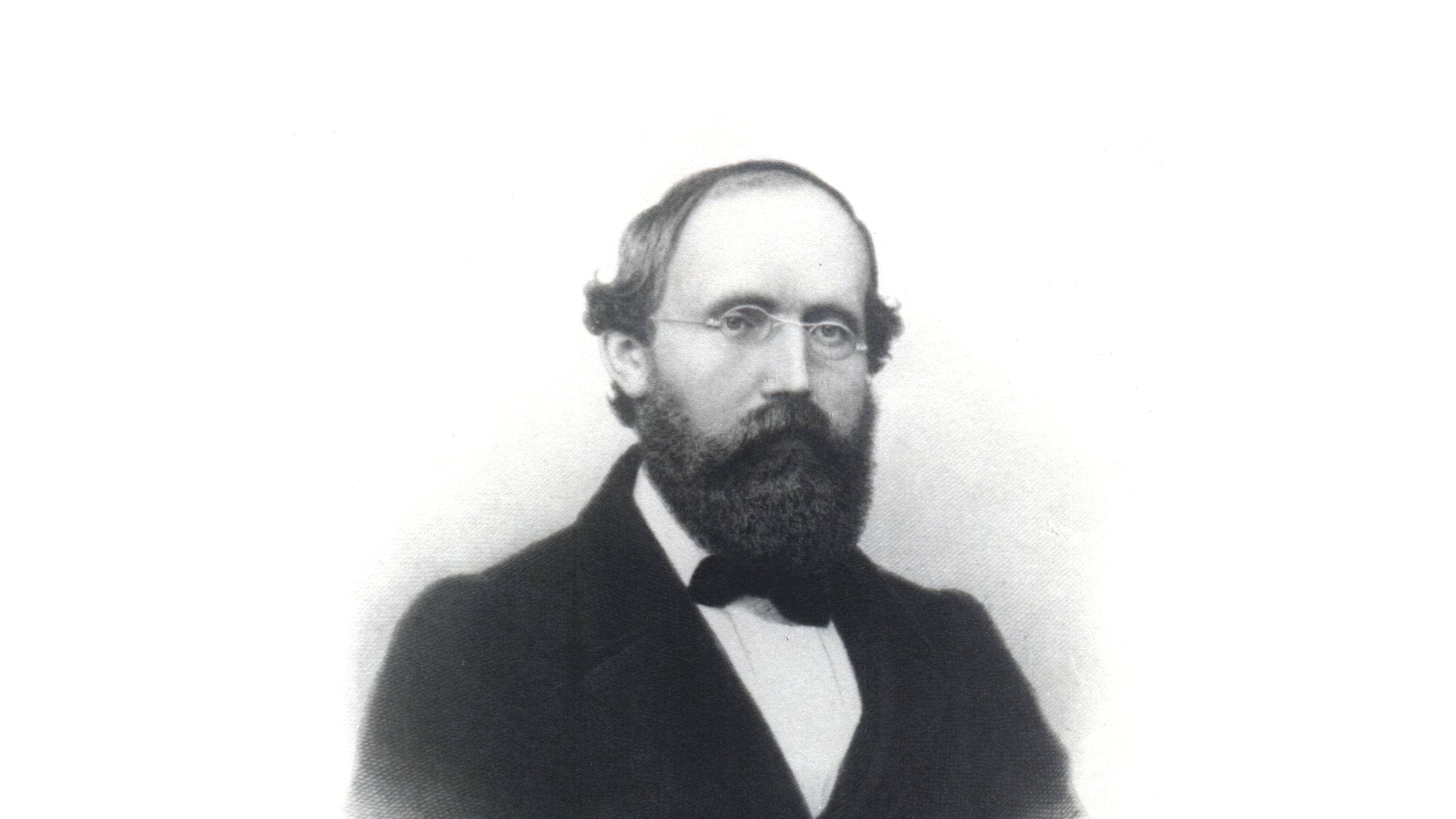
Top image: Bernhard Riemann in an 1863 portrait from the Dibner Library of the History of Science and Technology (Photo: Smithsonian Institution / no known copyright restrictions, via Wikimedia Commons).
See more of The Threshold on Google
Add us as a preferred source to see more of our stories in your Top Stories.
Frequently asked questions
Has the Riemann hypothesis been proved?
Not officially. Anthropic mathematician Levent Alpöge claims a proof made with Claude, and early computer checks of his Lean code have passed, but mathematicians have not yet accepted it and the Clay Mathematics Institute still lists the problem as unsolved.
Who is Levent Alpöge?
He is a mathematician who works on Anthropic's technical staff. He posted the claimed proof as a four-page note on his personal website on November 20, 2026, a day after Anthropic's stock market debut.
What is the Riemann hypothesis in simple terms?
Proposed by Bernhard Riemann in 1859, it says all the interesting zeros of the Riemann zeta function lie on one line. If true, prime numbers are spread out as evenly as possible. Many other theorems assume it.
Did Claude really solve it?
Alpöge says he guided the work and that Claude did much of the heavy lifting near the end. The BBC reports he used a non-public version of Claude over about six weeks. The written argument runs over 250,000 pages and the Lean version is about 17 million lines.
How is the proof being checked?
Mathematicians including MIT's Andrew Sutherland are running the Lean code through several independent proof checkers. As of November 21 it compiled without errors and two independent checkers accepted it, with final checks still running. Human understanding will take much longer.
Will Alpöge win the $1 million Millennium Prize?
Not soon. Clay requires a solution to be published, survive at least two years of scrutiny and be generally accepted by mathematicians. Its president called the claim of historic significance but said real understanding will be long and difficult.
Can I use the Claude model that found the proof?
No. The BBC reports it was a non-public version of Claude, and Anthropic has not said which model was used or whether that ability will come to the Claude app or API.
Did anyone else claim a proof?
Yes. On the same day, independent mathematician Alessandro Masullo and Stanford's Brian Conrad released a 940-page draft proof of a generalized version made without AI. It has not been verified either.