iPhone 18 Pro & the first foldable iPhone: Event date, leaked specs, price, and everything we know
/ Apple is splitting the iPhone 18 launch in two. Here's the expected September 8 event date, the 2nm A20 Pro, variable-aperture cameras, the $2,000-plus foldable iPhone, and why the iPhone 18 Pro is set to cost $200 more.
by Hozefa Khety
· 10 min read
Apple is about to break its own most reliable habit. For more than a decade, September has meant four new iPhones on one stage. This year, reporting from Bloomberg's Mark Gurman and a wall of supply-chain leaks point to something different: the iPhone 18 Pro and Pro Max arrive this September alongside Apple's first foldable — and the regular iPhone 18 doesn't show up until spring 2027. If that holds, the cheapest new iPhone announced this autumn will be the most expensive iPhone Apple has ever sold.
The caveat up front, and it matters more than usual this year: Apple has confirmed nothing. There is no invitation, no date, no product. Everything below comes from analysts, supply-chain leakers, and dummy-unit photography. Gurman has the strongest track record on Apple's internal calendar, and Ming-Chi Kuo on its supply chain, so we've flagged who said what throughout. Treat this as well-sourced expectation, not fact.
When is the Apple event? September 8 is the date to watch
Gurman points to Tuesday, September 8, 2026 as the most likely keynote date, with Wednesday, September 9 as the fallback. That would follow Apple's usual rhythm almost exactly: a Tuesday or Wednesday keynote in the first full week of September, pre-orders that Friday, and phones in hand roughly ten days later. On that timeline, the iPhone 18 Pro and Pro Max would go on sale around September 18.
One wrinkle worth holding onto: several reports suggest the foldable's manufacturing is tight, and that early supply may be limited. Apple has split a launch before when yields were difficult — the iPhone X was announced in September 2017 and didn't ship until November. If the foldable slips to October while the Pro models ship on time, that would be a repeat of a playbook Apple has already run.
The big change: Apple is splitting the iPhone 18 launch in two
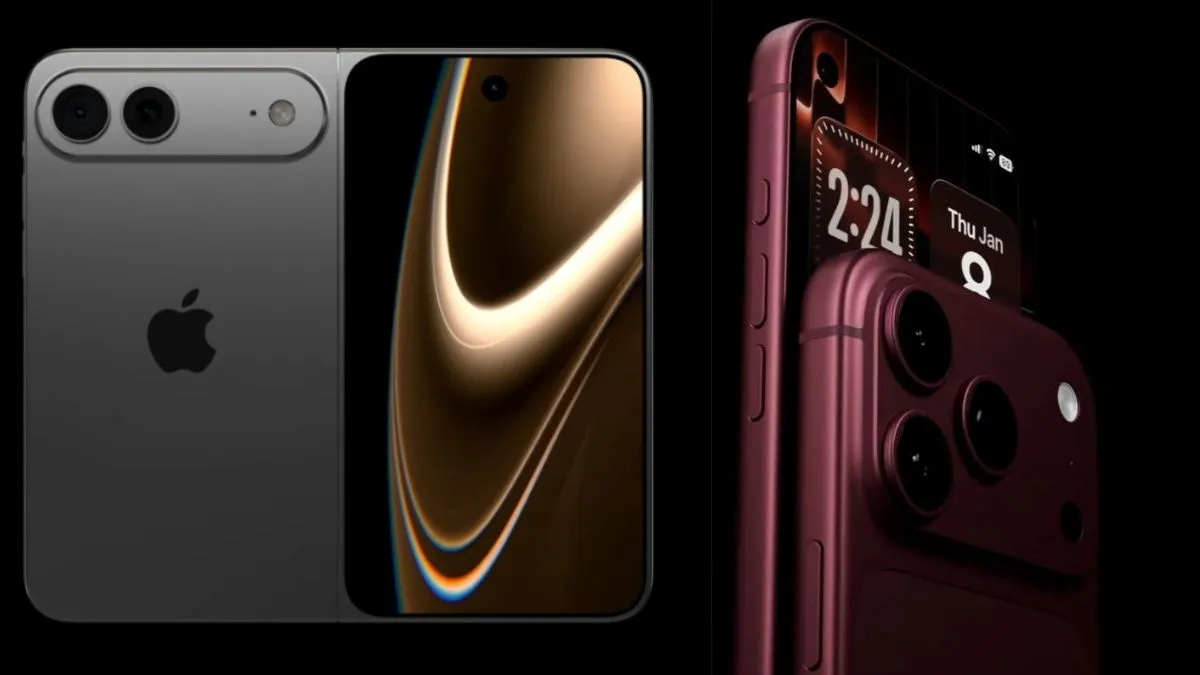
This is the structural story of the iPhone 18 generation, and it's bigger than any single spec. Instead of announcing four phones in September, Apple is reportedly staggering the lineup across two seasons. Fall 2026 gets the iPhone 18 Pro, the iPhone 18 Pro Max, and the first foldable. Spring 2027 gets the standard iPhone 18, the iPhone 18e, and possibly a second-generation iPhone Air.
The logic is straightforward enough: two launch moments a year means two marketing cycles, two news pushes, and a premium tier that never has to share a stage with a cheaper sibling. The consequence for buyers is less comfortable. If you were planning to pick up a standard iPhone 18 this September, you'll be waiting until early 2027 — or buying an iPhone 17 instead.
iPhone 18 Pro design: thicker, heavier, and a new dark cherry
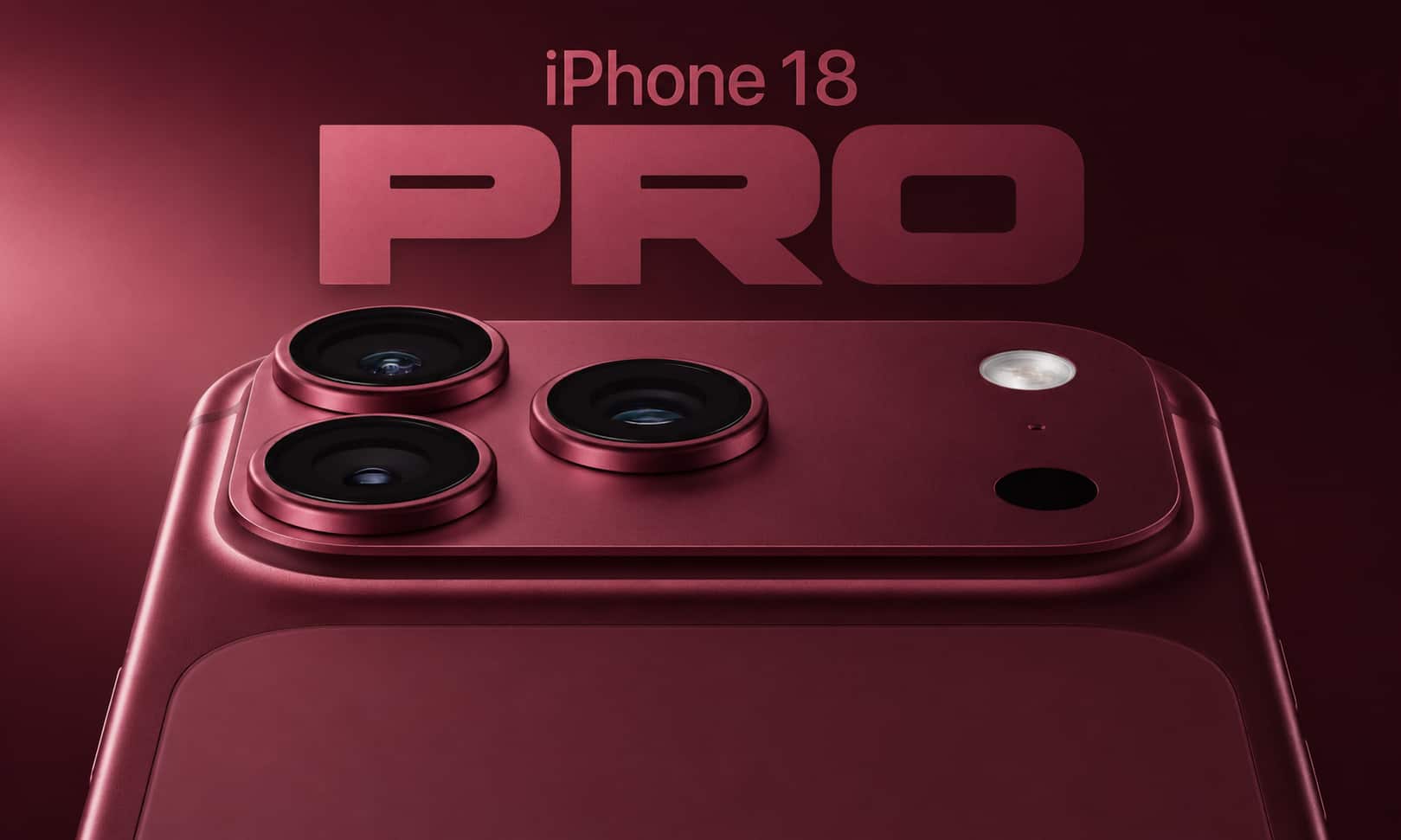
After years of Apple chasing thinness, the iPhone 18 Pro appears to be going the other way. Leaks describe a chassis around 9mm thick, up from 8.75mm, and roughly 7 grams heavier at about 240g. The camera plateau grows by around 2mm as well. That extra volume isn't waste — it's where the larger battery and the vapor-cooling live — but it does mean this is a slightly chunkier phone than the one it replaces.
The screen sizes stay put at 6.3 inches and 6.9 inches. The more curious detail is a reportedly 'slightly transparent' section of the Ceramic Shield covering, whose purpose nobody has convincingly explained yet — the leading guess is that it's a window for a relocated sensor. Apple is also said to be unifying the back glass to reduce the two-tone look of recent Pro models, and adding a new dark cherry finish (Pantone 6076) alongside light blue, dark gray, and silver.
On the display itself, expect an LTPO+ upgrade for better power efficiency. The Dynamic Island is genuinely contested: the leaker Ice Universe claims it shrinks about 35 percent, from 20.7mm to 13.5mm, by moving the flood illuminator beneath the display. Other supply-chain reports say it doesn't change at all until the iPhone 19. Under-display Face ID, meanwhile, is widely reported as not ready for 2026 — so that's a next-year story at the earliest.
A20 Pro: Apple's first 2nm chip, and why it costs so much
The A20 and A20 Pro are expected to be Apple's first chips built on TSMC's 2nm process, with early estimates of up to 15 percent better CPU performance and around 30 percent better power efficiency than the A19. Paired with the bigger batteries, the efficiency number is arguably the more meaningful one — this generation looks like it should last noticeably longer between charges.
The more interesting change is packaging. Apple is reportedly adopting Wafer-Level Multi-Chip Module (WMCM) construction, which integrates the RAM directly onto the chip package rather than beside it. That shortens the distance data has to travel, which helps both speed and efficiency — and it's the kind of change that pays off most in sustained AI workloads running on-device.
It is also expensive. TSMC's 2nm wafers are reported to cost at least 50 percent more than 3nm, and that lands on Apple's bill of materials at exactly the wrong moment. Which brings us to the price.
iPhone 18 Pro price: a $200 jump, and the memory crisis is why
Current projections point to roughly a $200 increase over the iPhone 17 Pro, putting the iPhone 18 Pro near $1,399 to start. The Pro Max at 1TB could be as much as $300 more than its predecessor. In India, early retail listings have the iPhone 18 Pro at around ₹1,39,900 — though these are unofficial placeholders on aggregator sites, not Apple pricing, and they move constantly before launch.
The reason isn't Apple being greedy in isolation — it's the memory crunch we covered earlier this month. The Wall Street Journal reports RAM costs have more than tripled, as AI data centre demand swallows global DRAM supply. Every phone maker is absorbing that: Apple has already raised Mac and iPad prices over it, Xiaomi warned about it, and Nothing's Carl Pei has said memory module costs could rise several times over by the end of 2026. Apple is simply the most visible company passing it along. The A20's 2nm premium stacks on top of that, not instead of it.
Cameras: a variable aperture, finally
The headline camera upgrade is a variable aperture on the main lens — a physical iris that can open and close, giving genuine optical control over depth of field and low-light capture rather than the computational approximation Apple has leaned on for years. Android flagships have shipped this before, but it would be a first for iPhone, and it's the kind of change that actually shows up in photos rather than just spec sheets.
Beyond that: larger apertures on both the main and telephoto lenses, a three-layer stacked Samsung image sensor in at least one model, and a jump to a 24MP front camera. There's also a persistent rumour about some form of teleconverter technology, though nobody has pinned down what that means in practice.
Battery and modem: the quiet upgrades
Leaked battery capacities put the iPhone 18 Pro at 4,288mAh and the Pro Max at 5,567mAh in US variants, with slightly smaller cells (4,056mAh and 5,391mAh) in Chinese models — a regional split Apple has used before to accommodate different regulatory and hardware configurations. Combined with 2nm efficiency, this should be a real battery-life generation.
Apple's own C2 modem is expected to take over, this time with mmWave 5G support that the first-generation C1 lacked. It reportedly brings a privacy feature called 'Limit Precise Location' that reduces how much location data carriers receive, and possibly 5G satellite connectivity via the NR-NTN standard. One caveat: some reports suggest US variants may still ship with a Qualcomm modem.
The foldable iPhone: everything we know
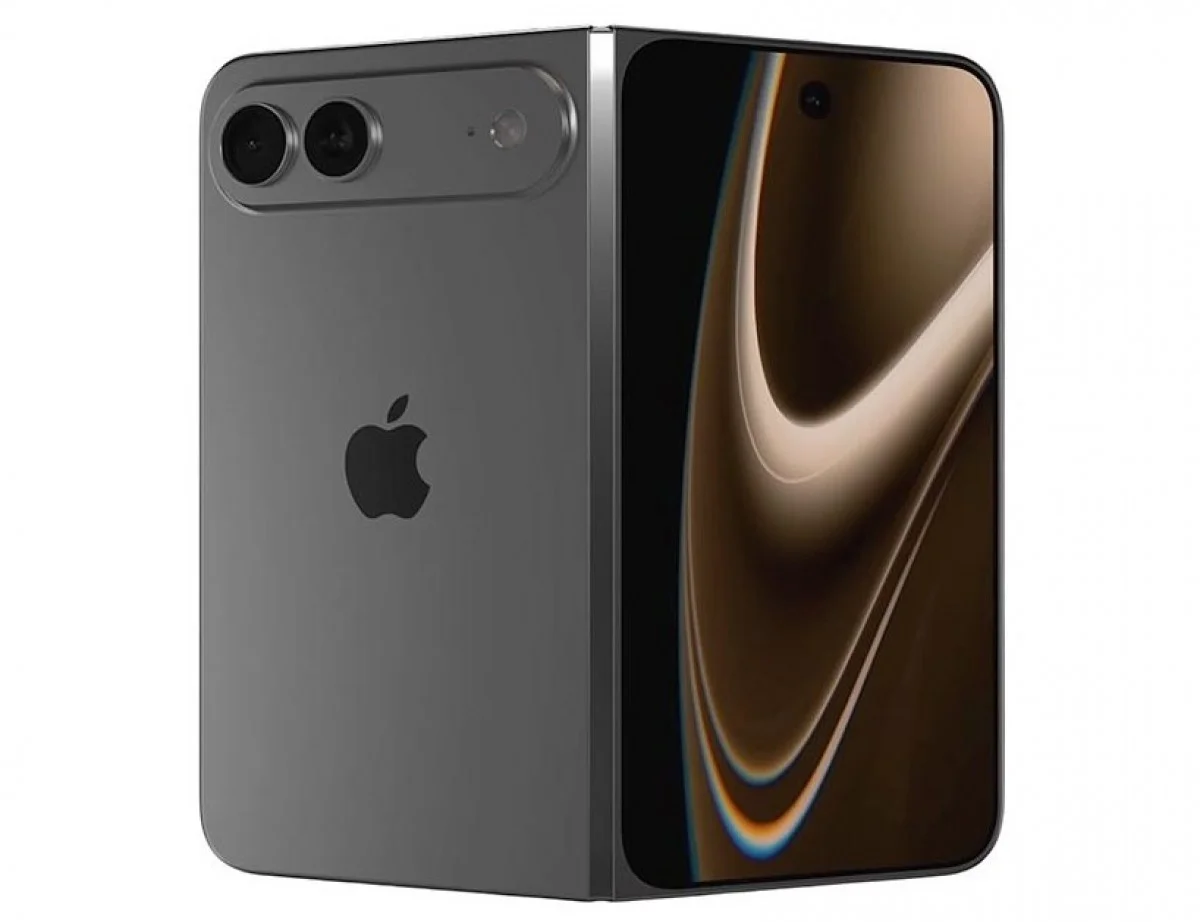
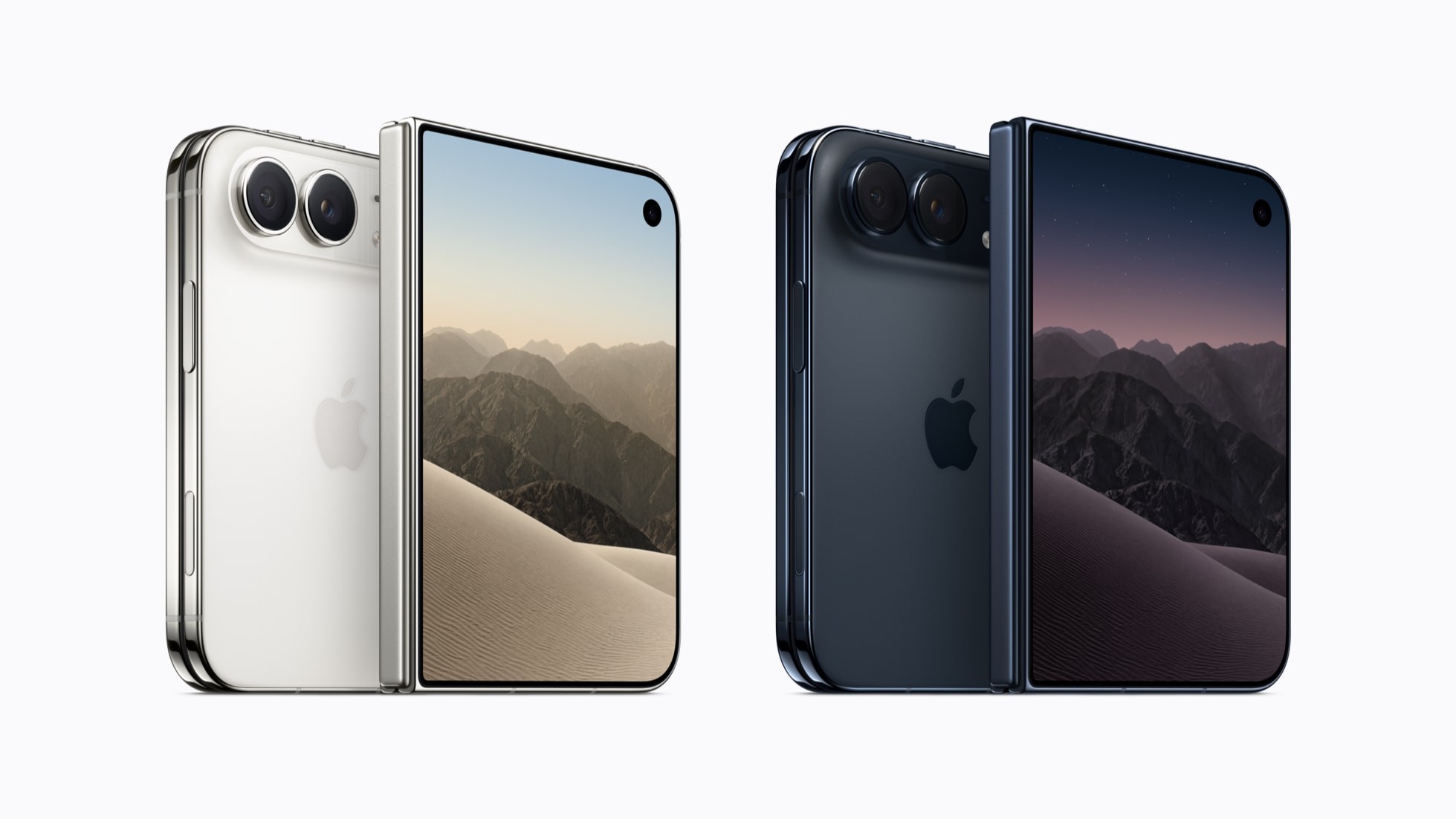
Apple's first foldable is the reason this event matters beyond the usual annual upgrade. Leaks consistently describe a book-style design — wider than tall, opening like a notebook — with a roughly 5.5-inch cover display (2,088 x 1,422) and a 7.8-inch inner display (2,713 x 1,920) at an iPad-like 4:3 aspect ratio. Reporting suggests Apple will brand it iPhone Ultra rather than iPhone Fold, following its Watch and CarPlay naming, and to avoid echoing Samsung's Galaxy Fold.
The crease is where Apple reportedly spent the most. Sources describe a pursuit of crease elimination 'regardless of cost,' with the current result described as nearly invisible — under 0.15mm in depth and less than 2.5 degrees of crease angle. If that survives contact with reality, it would be the best-executed foldable display in the industry, and the single most persuasive argument for buying one.
The trade-offs are real, though. There's no Face ID — the TrueDepth array won't fit — so authentication moves to a Touch ID side button, iPad-style. The rear camera system is two 48MP lenses (wide and ultra-wide) with no telephoto, a notable omission at this price. The front camera may be under-display or a hole-punch, possibly 24MP. And because of the thinness, reports say there's no Action Button and no MagSafe.
That thinness is genuinely extreme: around 4.5mm when open, which would make it the thinnest device Apple has ever shipped (the iPad Pro's 5.1mm is the current record), and 9 to 9.5mm folded. Inside, expect the A20, 12GB of RAM, a titanium-and-aluminium frame with a liquid-metal hinge, vapor chamber cooling, and a 5,400–5,800mAh battery — the largest ever in an iPhone. It's eSIM only, with no physical SIM slot anywhere.
How much will the foldable iPhone cost?
Nobody agrees, and the spread is wide. Gurman has said it will 'cross the $2,000 threshold' without specifying whether that's the starting price. Ming-Chi Kuo expects no lower than $2,000 and possibly north of $2,500. UBS is the most optimistic at $1,800–$2,000; Fubon Research says $2,400; IDC models an average around $2,500 with some configurations reaching $3,000. Leaked storage tiers suggest roughly $2,320 for 256GB, $2,610 for 512GB, and $2,900 for 1TB.
Put plainly: assume $2,000 is the floor and be pleasantly surprised if it's lower. For Indian buyers, import duties and the current rupee-dollar rate mean the local figure will land well above a direct conversion — a ₹2,00,000-plus phone is a realistic expectation.
iOS 27 and Siri
The iPhone 18 Pro will ship with iOS 27, whose rebuilt Siri we've been tracking through the developer betas — Siri moving into Messages, Camera, and Wallet, alongside long-overdue RCS fixes. There are also persistent reports that the new Siri is underpinned in part by Google's Gemini models, which would be a remarkable admission from Apple if confirmed. Apple has not publicly detailed that arrangement, so treat it as reported rather than established.
Should you wait for the iPhone 18 Pro?
If you're on an iPhone 15 Pro or older, this looks like a generation worth waiting for. The 2nm A20, a variable-aperture camera, meaningfully bigger batteries, and mmWave on Apple's own modem add up to a genuine step rather than a routine refresh — even with the price increase.
If you own an iPhone 17 Pro, the case is much weaker. You'd be paying roughly $200 more for efficiency gains, a camera iris, and a possibly-smaller Dynamic Island. And if you wanted a standard, affordable iPhone 18, the honest advice is to stop waiting for September — that phone is a spring 2027 product, and an iPhone 17 bought now will serve you better than six months of holding out.
The foldable is its own question entirely. First-generation Apple hardware is historically a rough place to spend money, and this one has no telephoto, no Face ID, no MagSafe, and a $2,000-plus asking price. If the crease really is invisible, it will still be the most interesting phone Apple has made in years. We'll know on or around September 8.
Frequently asked questions
When is the Apple iPhone 18 event?
Apple has not announced a date. Bloomberg's Mark Gurman points to Tuesday, September 8, 2026 as the most likely keynote, with September 9 as a fallback. On Apple's usual schedule, that would mean pre-orders that Friday and phones on sale around September 18.
Which iPhones are launching in September 2026?
Reports point to only three: the iPhone 18 Pro, the iPhone 18 Pro Max, and Apple's first foldable iPhone. The standard iPhone 18, the iPhone 18e, and a possible second-generation iPhone Air are expected in spring 2027 instead.
Why is Apple delaying the standard iPhone 18 to 2027?
Apple is reportedly splitting its iPhone launches across two seasons — premium models in the fall, more affordable models in the spring. This gives Apple two separate marketing moments each year and keeps the Pro lineup from sharing a stage with cheaper models. It also means budget-conscious buyers will wait until early 2027 for a new entry-level iPhone.
How much will the iPhone 18 Pro cost?
Projections point to around a $200 increase over the iPhone 17 Pro, putting the iPhone 18 Pro near $1,399. In India, early unofficial listings suggest around ₹1,39,900. The main driver is the global memory shortage — the Wall Street Journal reports RAM costs have more than tripled — compounded by TSMC's 2nm wafers costing at least 50 percent more than 3nm.
What is the A20 Pro chip?
The A20 Pro is expected to be Apple's first 2nm chip, built by TSMC, with up to 15 percent better CPU performance and around 30 percent better power efficiency than the A19. It also reportedly uses Wafer-Level Multi-Chip Module packaging, which integrates RAM directly onto the chip package to improve speed and efficiency.
Will the foldable iPhone have a crease?
Apple reportedly pursued crease elimination regardless of cost, and current leaks describe the result as nearly invisible — under 0.15mm deep with a crease angle below 2.5 degrees. If accurate, that would be the best foldable display crease in the industry, though it can't be verified until the device is in hand.
How much will the foldable iPhone cost?
Estimates vary widely. Mark Gurman says it will cross $2,000; Ming-Chi Kuo expects $2,000 to $2,500; UBS suggests $1,800 to $2,000; Fubon Research says $2,400; and IDC models an average near $2,500 with some configurations up to $3,000. Leaked storage tiers point to roughly $2,320 for 256GB, $2,610 for 512GB, and $2,900 for 1TB.
Does the foldable iPhone have Face ID?
No. Reports say the TrueDepth array won't fit in the roughly 4.5mm-thick chassis, so Apple is using a Touch ID side button instead, similar to recent iPads. Leaks also indicate there is no Action Button and no MagSafe, again because of thickness constraints.
Should I wait for the iPhone 18 Pro or buy an iPhone 17 Pro?
If you're on an iPhone 15 Pro or older, the iPhone 18 Pro looks worth waiting for — the 2nm A20, variable-aperture camera, and much larger battery are a real generational step. If you already own an iPhone 17 Pro, the upgrade is harder to justify at roughly $200 more. And if you specifically wanted a standard iPhone 18, that model isn't expected until spring 2027.