RTX Spark review: benchmarks, prices, verdict
/ RTX Spark laptops are on sale from $2,599. Reviews say NVIDIA's chip games like an RTX 5070 and leads Windows in local AI, but trails Apple on CPU and battery.
by Hozefa Khety
· 9 min read
NVIDIA's RTX Spark laptops went on sale worldwide on October 16, 2026, and the first independent reviews landed the same week. The short version: the graphics chip is the real deal, roughly matching a laptop with an RTX 5070, and nothing else running Windows handles local AI this well. But Apple's MacBook Pro chips are still faster at everyday processor work, battery life trails the Mac by a wide margin, and prices start at $2,599 and climb to about $7,000.
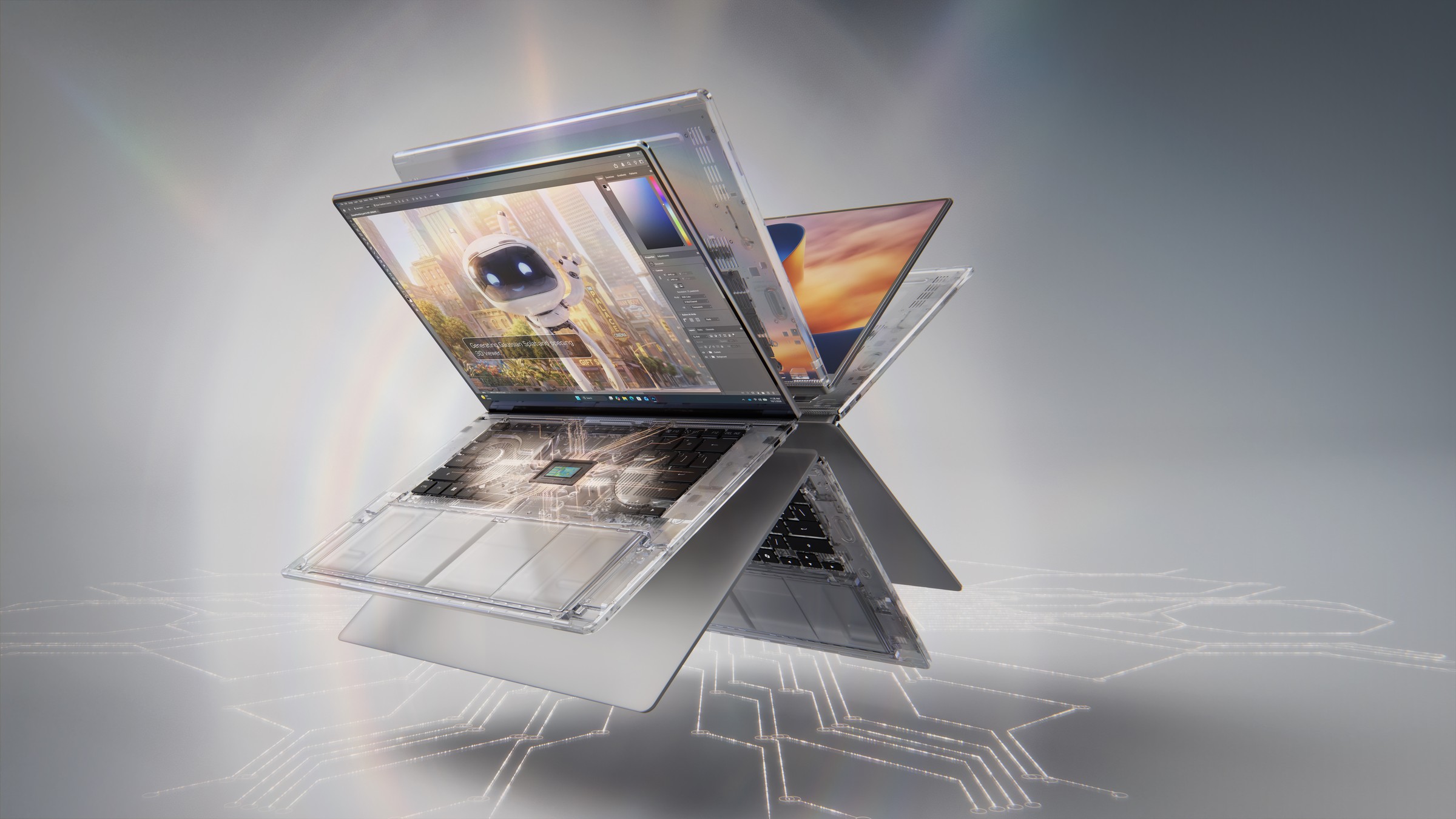
RTX Spark is NVIDIA's first processor for Windows laptops. It puts an NVIDIA Grace processor (built on Arm, like Apple's chips, rather than the x86 design Intel and AMD use) and a Blackwell RTX graphics chip on one piece of silicon with up to 128GB of memory that both share. NVIDIA says MediaTek helped design the processor side. Here is what the reviews found, what each laptop costs, and who should actually buy one.
RTX Spark laptops: prices and models
NVIDIA says RTX Spark laptops are available globally from ASUS, Dell, HP, Lenovo, Microsoft and MSI through their own stores and major retailers, starting at $2,599, and that pricing and configurations vary by region. Two chip versions are sold: an 18-core processor with a 5,120-core graphics chip in cheaper models, and a 20-core processor with a 6,144-core graphics chip at the top. US starting prices reported at launch (checked October 16-17, 2026):
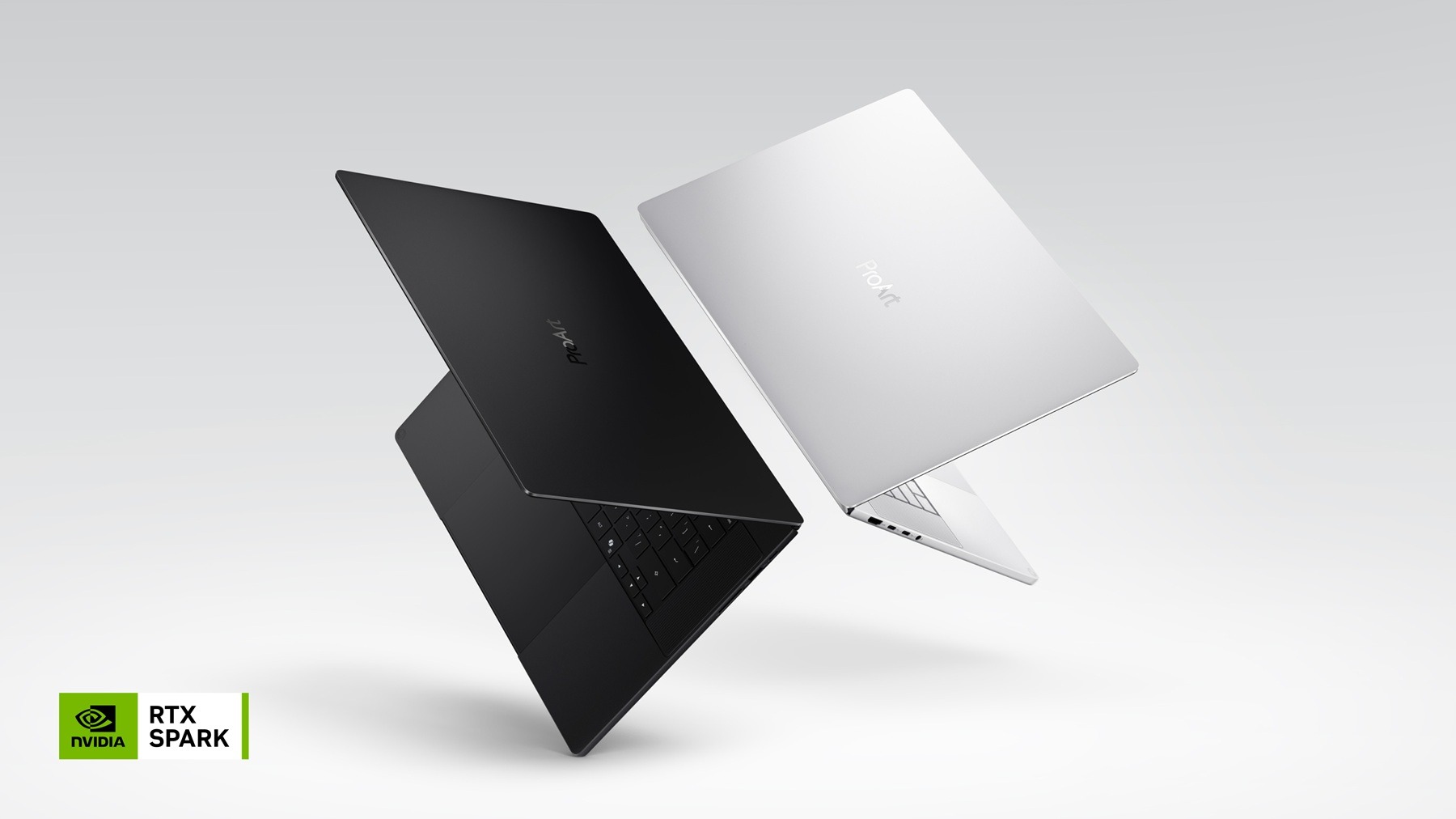
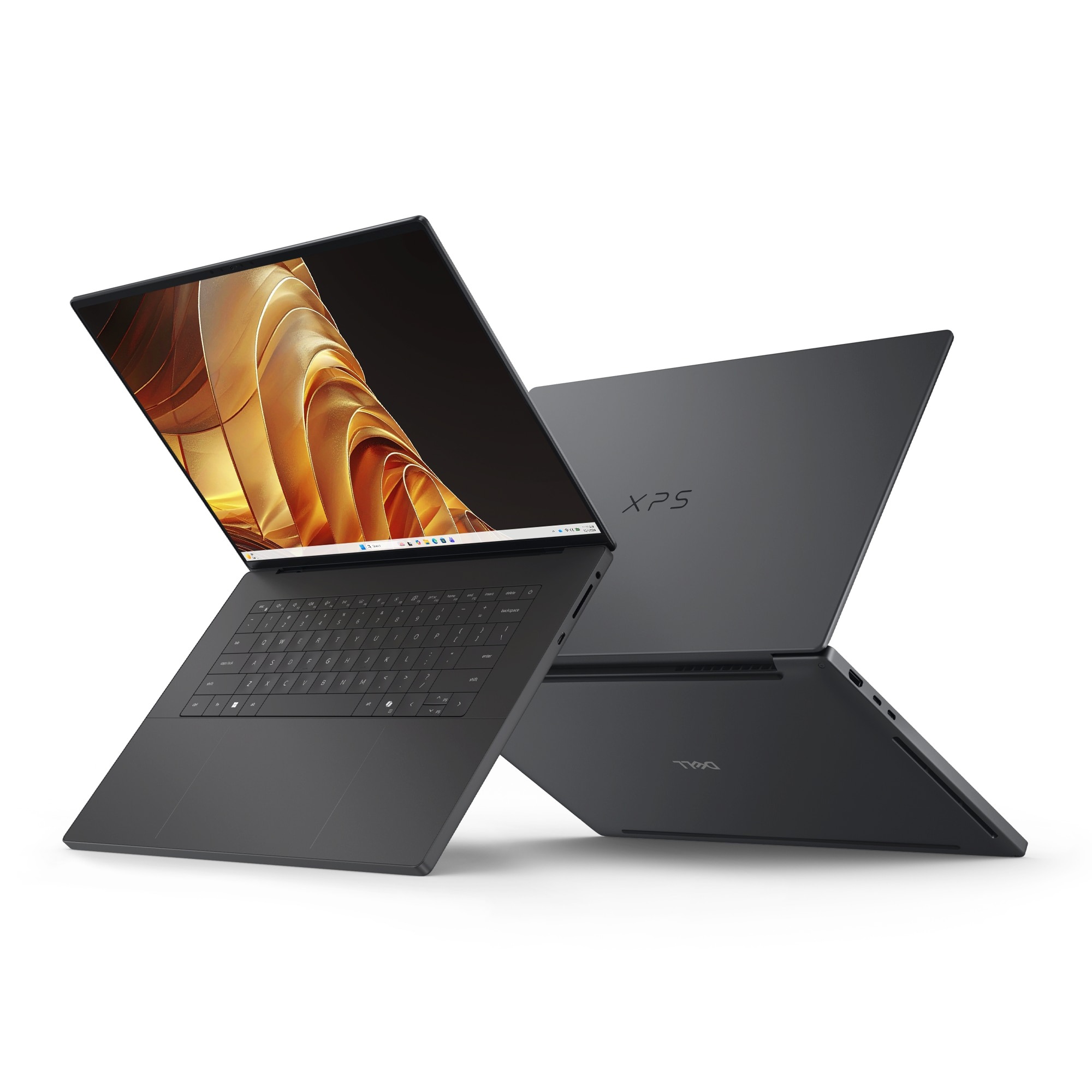
Microsoft Surface Laptop Ultra (15-inch mini-LED): from $2,599.99 with the 18-core chip and 24GB of memory. ASUS ProArt P14 and P16: from $2,599.99 at the ASUS Store and Best Buy, according to ASUS; PCMag lists the P16 from $2,799.99 with a 4K OLED and up to $6,999.99 for 128GB and 2TB. HP OmniBook X 14: from $2,999.99. HP OmniBook Ultra 16: from $3,199.99. Lenovo Yoga 9n 2-in-1 and Yoga Pro 9n: from $2,999.99. MSI Prestige N16 Flip AI+: from $3,299.99. Dell XPS 16 Creator Edition: from $3,799.99 at Best Buy with 32GB and a 512GB SSD.
Memory is where these laptops get expensive. The Verge's test machines ranged from $3,199.99 for a 32GB HP OmniBook Ultra to $6,999.99 for a 128GB ASUS ProArt P16, and HotHardware's fully loaded OmniBook Ultra 16 (128GB, 2TB) came to $6,229. The ongoing memory shortage is a big part of why.
Is RTX Spark faster than a MacBook Pro?
Not at processor work. In Tom's Guide's Geekbench 7 testing of a 20-core Surface Laptop Ultra, RTX Spark scored 2,604 single-core and 23,610 multi-core, against 3,690 and 29,659 for Apple's M5 Pro. It edged out AMD's Ryzen AI Max+ 395 and Intel's Core Ultra X9 388H and roughly tied Qualcomm's Snapdragon X2 Elite Extreme on multi-core. A 4K-to-1080p video transcode in HandBrake took 2 minutes 1 second on RTX Spark and 1 minute 45 seconds on the M5 Pro.
The Verge reached the same conclusion across three RTX Spark laptops. In Geekbench 6, the ASUS ProArt P16 scored 3,170 single-core against 4,330 for a 16-inch MacBook Pro with M5 Max, and around 20,300 multi-core against about 29,100. The Verge also points out that a 12-core M6 Mac mini, which it says starts at $900, scored about the same on multi-core. Where RTX Spark does keep up is graphics-heavy work: all three RTX Spark laptops tied the M5 Max MacBook Pro at 15 seconds in Blender's classroom render.
Gaming: about an RTX 5070 laptop
Gaming is where NVIDIA pulls ahead of every other Arm laptop. In Tom's Guide's tests, Cyberpunk 2077 at 1080p with Extreme settings and ray tracing ran at 39 frames per second without DLSS (NVIDIA's AI upscaling) and 80 with it, almost identical to an RTX 5070 gaming laptop at 35 and 81. Black Myth: Wukong at 1080p Cinematic ran at 36 fps against the RTX 5070 laptop's 30. Gears of War: E-Day hit 123 fps at 2180 x 1453 on Ultra with DLSS. Most games still run through Microsoft's x86 translation layer, and that did not stop them.
The Verge was a little less generous. Its reviewers put RTX Spark somewhere between an RTX 5070 Laptop GPU and an RTX 5060 Laptop GPU, and found the processor holds back crowded games: Helldivers 2 could not hold 60 fps on its hardest missions even at an upscaled 1080p, and Star Wars Zero Company stayed stuck around 37 to 39 fps whatever the settings. Tom Warren's advice was medium settings, 1440p and DLSS Performance for a steady 60 fps in most games. Fans get loud under load.
Local AI on RTX Spark: powerful, still rough
Running AI models on the laptop itself, without sending data to the cloud, is the main reason RTX Spark exists. NVIDIA rates it at up to one petaflop of AI performance (a theoretical figure for its lowest-precision math), and the shared memory lets large models fit that would not fit on a normal laptop graphics card. Tom's Guide measured 74.4 tokens per second on the small Phi 3.5 model and 50.9 on Llama 3.1 8B in UL's Procyon test, and said the chip got close to its RTX 5060 Ti desktop graphics card.
Apple still leads in some tests. PCMag's 64GB ASUS ProArt P16 generated about 50 tokens per second on Llama 3.1 8B in MLPerf Client, against 105 on a 128GB MacBook Pro with M5 Max, and 28 against 58 on the larger Phi 4 Reasoning 14B model. PCMag also noted that a 64GB machine cannot load the 120-billion-parameter-class models, so you need the 128GB versions for those. Where RTX Spark won PCMag over was ease of use: Microsoft's Get Started app installs agents such as Hermes, OpenClaw and Perplexity with a few clicks.
Real-world results were mixed. The Verge's Sean Hollister asked the Hermes agent, running the Qwen3.8 27B model, for a daily news briefing: it took 10 minutes and 10 percent of a 99.9 watt-hour battery, about twice as long as Anthropic's cloud-based Claude Opus 5.5, with weaker sourcing. Tom Warren called the whole local AI experience a beta aimed at developers for now. The upside is privacy: your files and prompts stay on the machine.
RTX Spark battery life
NVIDIA promised all-day battery life. Tom's Guide got 10 hours 15 minutes of web browsing from the Surface Laptop Ultra, close to a Snapdragon X2 Elite laptop (10:26) but less than half of the 16-inch M5 Pro MacBook Pro's 21 hours 25 minutes. Gaming on battery lasted 1 hour 38 minutes, which is still longer than the RTX 50-series gaming laptops it tested. One genuine win: performance barely changed when unplugged, as long as Windows is set to its best-performance power mode.
The Verge's ASUS ProArt P16, with a 99.9 watt-hour battery, lasted about 5 hours 40 minutes at best in real work at 50 percent brightness, and roughly 5 hours on other days. It does charge quickly: 0 to 50 percent in 20 minutes on a 140W USB-C charger. HotHardware listed mediocre battery life among the OmniBook Ultra 16's few downsides.
Which RTX Spark laptop is best?
Reviewers liked the hardware across the board: excellent haptic touchpads, keyboards, speakers and OLED screens. The Verge's Antonio Di Benedetto would pick the ASUS ProArt P16 for its three USB-C ports, very bright screen and full-size SD card slot. He found HP's OmniBook Ultra the best built but the heaviest at nearly five pounds, and called the Lenovo Yoga 9n 2-in-1, with its fold-back 16-inch OLED and stylus, his sleeper favorite. Tom Warren praised the Surface Laptop Ultra's magnetic USB-C charging and SD and USB-A ports, though he would have preferred an OLED to its mini-LED screen.
HotHardware gave the OmniBook Ultra 16 credit for excellent local AI speed, a stunning HDR OLED, cool and quiet running and premium build, against its price, battery life and underwhelming web and office performance. If you mostly need 32GB, Lenovo and HP start lowest after the base Surface and ASUS models. If you want 64GB or 128GB for big AI models, compare the memory upgrade price at each store, because it varies by hundreds of dollars.
RTX Spark in India
As of October 17, 2026, none of the six makers has announced official India prices for its RTX Spark laptops, and NVIDIA says pricing and availability vary by region. Indian price-tracking sites list several models as upcoming, but those are estimates, not official prices. Elsewhere in Asia, ASUS Japan says its ProArt P16 and P14 go on sale there from October 23. We will add official rupee prices when a maker announces them.
Should you buy an RTX Spark laptop?
Buy one if you build or run AI models and want them on your own machine, or if you edit video or 3D and want strong graphics without a bulky gaming laptop, and the 64GB or 128GB price fits your budget. The Verge's Tom Warren says these are the first Arm-based Windows laptops really capable of running games.
Skip it if you mainly browse, write and use office apps, if battery life matters most, or if you rely on older Windows software that might not run well under translation. A MacBook Pro is faster at processor work and lasts far longer on battery, and a regular RTX gaming laptop costs less for pure gaming. The Verge's reviewers said they want cheaper models and a faster second-generation chip, so if you are not in a hurry, waiting is reasonable.
Frequently asked questions
How much do RTX Spark laptops cost?
NVIDIA says RTX Spark laptops start at $2,599. US starting prices at launch were $2,599.99 for the Surface Laptop Ultra and ASUS ProArt models, $2,999.99 for HP OmniBook X 14 and the Lenovo Yoga 9n and Yoga Pro 9n, $3,199.99 for HP OmniBook Ultra 16, $3,299.99 for MSI Prestige N16 Flip AI+ and $3,799.99 for Dell XPS 16 Creator Edition (checked Oct 16-17, 2026). 128GB models reach about $7,000.
When did RTX Spark laptops go on sale?
NVIDIA announced global availability on October 16, 2026, from ASUS, Dell, HP, Lenovo, Microsoft and MSI. Pre-orders had opened on October 7.
Is RTX Spark faster than Apple's M5 Pro?
Not at processor tasks. Tom's Guide measured 2,604 single-core and 23,610 multi-core in Geekbench 7, against 3,690 and 29,659 for the M5 Pro. RTX Spark does lead in graphics tests such as 3DMark Steel Nomad (2,912 against 2,335) and ties the M5 Max in Blender rendering in The Verge's tests.
How good is RTX Spark for gaming?
About as good as an RTX 5070 gaming laptop in Tom's Guide's tests, for example 80 fps in Cyberpunk 2077 at 1080p with ray tracing and DLSS. The Verge placed it between an RTX 5070 and RTX 5060 laptop and found some crowded games limited by the processor.
What is the battery life of RTX Spark laptops?
Tom's Guide got 10 hours 15 minutes of web browsing from the Surface Laptop Ultra, against 21 hours 25 minutes for a 16-inch M5 Pro MacBook Pro. The Verge's ASUS ProArt P16 lasted about 5 to 5.7 hours of real work.
Can RTX Spark run large AI models locally?
Yes, with enough memory. NVIDIA rates it at up to 1 petaflop of AI performance with up to 128GB of shared memory. PCMag notes 64GB models cannot load 120-billion-parameter-class models, so you need the 128GB versions for those.
Does RTX Spark run normal Windows apps?
Yes. RTX Spark uses an Arm processor, so apps without a native Arm version run through Microsoft's translation layer. The Verge's reviewers ran their everyday apps without failures, but older or specialised x86-only software may still have issues.
Are RTX Spark laptops available in India?
No maker had announced official India prices as of October 17, 2026. NVIDIA says pricing and availability vary by region, and price-tracker listings in India are estimates.