Samsung Galaxy Glasses: Android XR, Gemini, 9-hour battery — everything from Unpacked
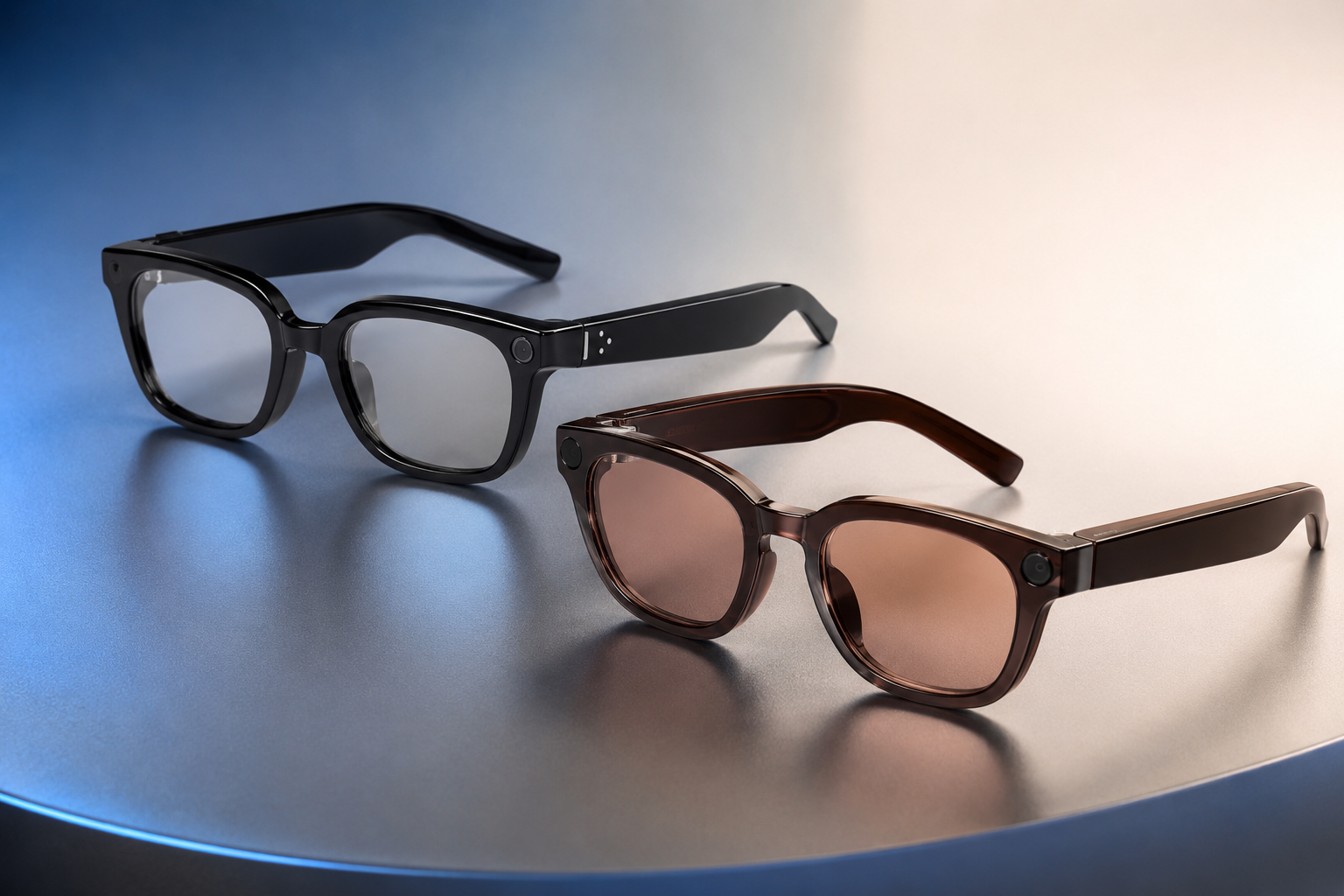
/ Samsung teased its first Android XR smart glasses at Galaxy Unpacked — no screen, a Gemini-first interface, ~9-hour battery, and designs from Gentle Monster and Warby Parker. Here's what's confirmed, what's still a leak, and how it takes on Ray-Ban Meta.
by Hozefa Khety
· 8 min read
The biggest thing at Samsung's Galaxy Unpacked in London was not on the spec sheet. Between the foldables and the watches, Samsung flashed a pair of smart glasses on stage for a matter of seconds — its first Android XR eyewear, built with Google, and the clearest sign yet that the company sees the face, not the wrist, as the next place to put a Galaxy device. Samsung is calling the category Intelligent Eyewear; almost everyone else is already calling it the Galaxy Glasses.
What Samsung actually confirmed is deliberately narrow, and it is worth separating from the flood of leaks that preceded the event. So here is the honest split: what was shown, what was merely implied, and what is still a rumour wearing a confident headline.
No screen — and that is the whole point
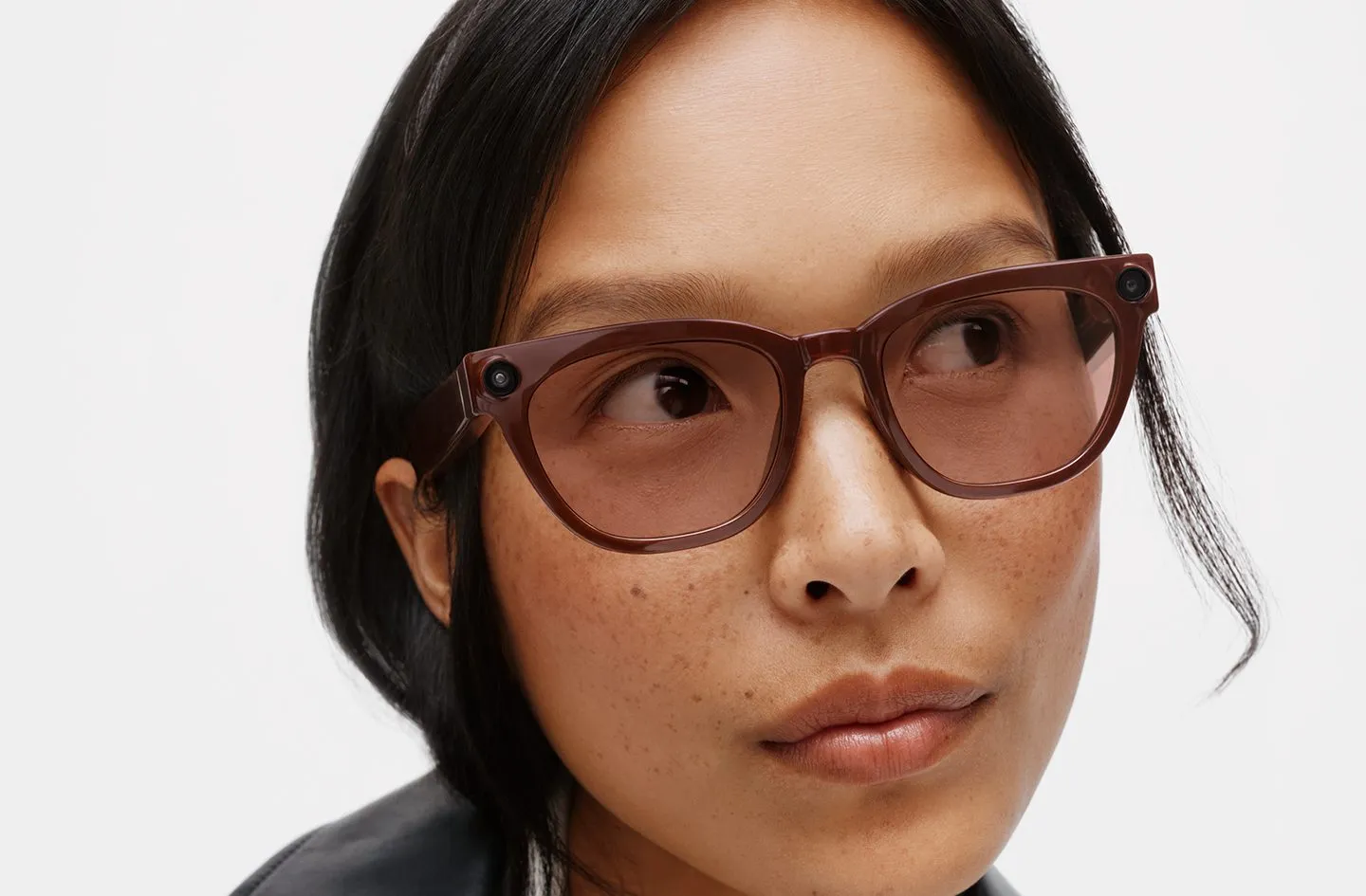
The single most important fact about this first pair is what it leaves out: there is no display. No lens projection, no AR overlay, nothing to look at. Samsung's debut Intelligent Eyewear is an audio-and-camera device — microphones, speakers, a camera, and Gemini — with a display-equipped follow-up widely expected only in 2027. If you were waiting for the Galaxy glasses that paint navigation arrows onto the street in front of you, this is not that product, and Samsung is not pretending otherwise.
That is a strategic choice, not a compromise forced by physics. A screen is what makes smart glasses heavy, hot, and short-lived on a charge. By skipping it, Samsung gets something that can pass for ordinary eyewear and run all day — which, for a device you are meant to wear on your face in public, may matter more than any heads-up graphic.
Gemini is not a feature. It is the interface
With no screen to tap through, the glasses are driven almost entirely by voice, and the voice is Gemini. Ask it to translate a conversation, summarise the messages that just came in, identify what you are looking at, or set a reminder, and it answers in your ears. Because the whole thing runs on Android XR — the platform Google and Samsung built together — it plugs into the wider Galaxy and Google ecosystem rather than living in a walled-off companion app.
This is the part that should worry Meta. Samsung is not trying to out-gadget the Ray-Ban Meta glasses on hardware; it is betting that the assistant does more, and does it more naturally, than Meta AI. Whether that holds up depends entirely on how Gemini behaves out in the noise and chaos of the real world, hands-free, with no screen to fall back on — and Samsung gave almost no live, unscripted demo of exactly that. Treat the assistant story as promising and unproven until retail units are out.
Made with Gentle Monster and Warby Parker — because they have to be wearable
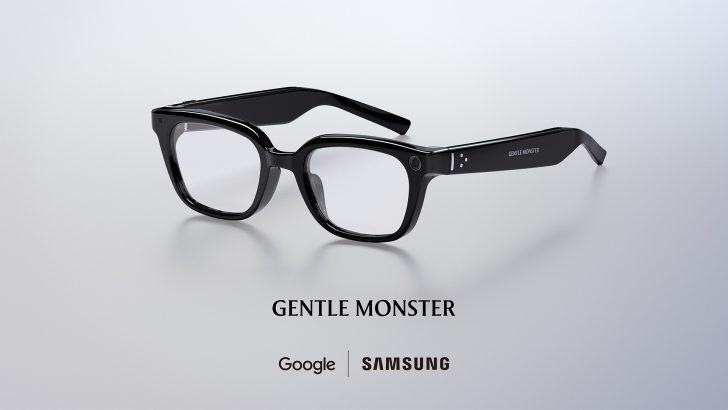
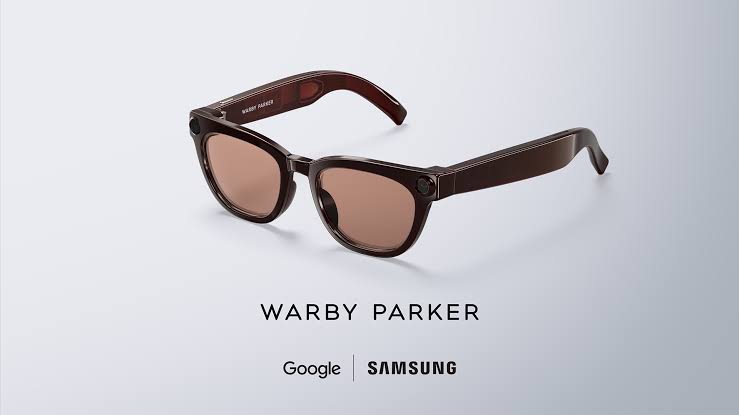
Samsung showed the eyewear in two designs, each co-developed with a name from the actual fashion world rather than a tech accessory brand. The Gentle Monster version is the statement pair — a bold, black, straight-topped frame. The Warby Parker version is the approachable one — a refined brown frame with an up-swept brow line, from a brand most people already associate with buying glasses they would genuinely wear.
The partnerships are not decoration. The entire category lives or dies on whether people are willing to put the thing on their face, and that is a fashion problem long before it is a technology problem. Signing Gentle Monster and Warby Parker is Samsung conceding that point up front — and it is arguably a stronger opening hand than Meta's, whose EssilorLuxottica deal gave it Ray-Ban and Oakley but nothing that reads as design-led.
Battery and hardware: all-day is the headline
Samsung quoted up to 9 hours of battery life on a single charge, with a charging case that refills the glasses more than seven times over. That number does real work here: Meta's Ray-Ban glasses are rated for roughly 6 hours, so a genuine all-day figure — if it survives real use — is one of the few hard, checkable advantages Samsung put on the table.
The rest of the hardware sheet is thinner than the leaks suggest. Samsung did confirm a camera, with a physical shutter button on the arm; captured photos land in a dedicated app and can be pushed to Samsung Notes on a paired device. What Samsung did not confirm on stage is just as notable: it named no chip and gave no weight. Widely-circulated reporting points to a Qualcomm Snapdragon AR1 platform and a roughly 50-gram frame, and both are plausible — but they are leaks, not launch facts, and we are flagging them as such.
The privacy question Samsung actually addressed
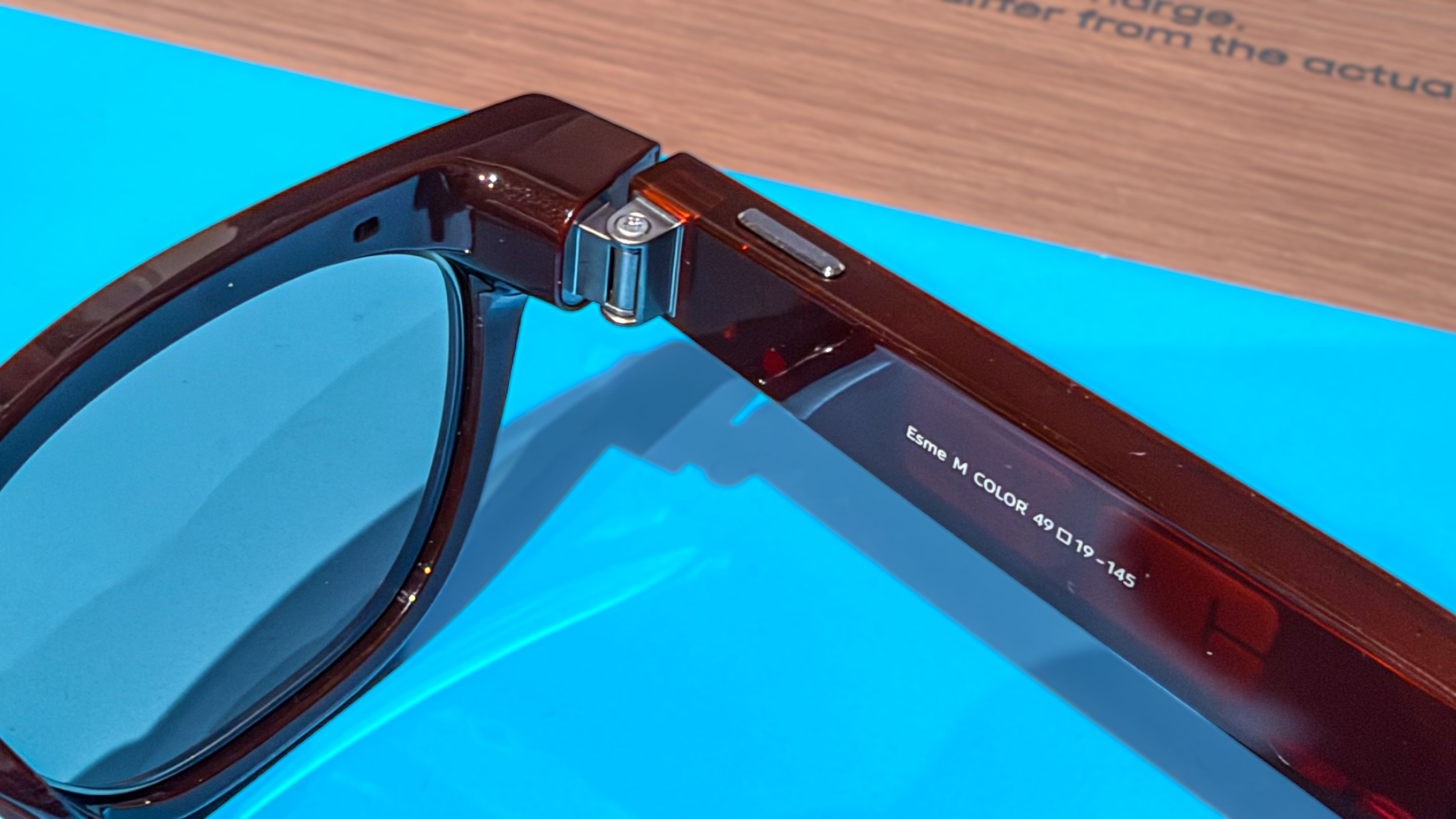
A camera you wear on your face is the part of this category that makes people uneasy, and Samsung at least gestured at it: alongside the shutter button, the arm carries a physical privacy-mode toggle. A hardware switch is a better answer than a buried software setting, because it is visible and unambiguous. Whether there is a clear capture indicator that the people around you can see — the thing that actually protects bystanders rather than the wearer — is something we will only be able to judge on final hardware.
Price and availability: the two things you most want to know
And here is the frustrating part. Samsung committed to a launch in select markets in fall 2026, but it gave no price and no firm on-sale date on stage. The widely-repeated ~$400 figure is an estimate from pre-event reporting, not a Samsung number, so treat it as a directional guess rather than a sticker. For a screen-free first-generation device competing with Ray-Ban Meta glasses that start well below that, price is the variable most likely to decide whether this is a hit or a curiosity.
What it adds up to
Read narrowly, Samsung showed a screen-free, camera-and-voice pair of glasses with a good battery, real fashion partners, and Gemini — and withheld the price. Read more broadly, this is the moment Android XR stopped being a headset story and became a wearable one, with Google's assistant and Samsung's distribution behind it. That is a serious challenge to Meta's early lead, and the first one that comes with frames people might actually choose to wear.
But a seconds-long tease is not a product, and Samsung left the two questions that decide everything — how much it costs and how well Gemini works untethered from a screen — unanswered. We will update this piece the moment Samsung fills in the price, the chip, and a firm release date.
See more of The Threshold on Google
Add us as a preferred source to see more of our stories in your Top Stories.
Frequently asked questions
What are the Samsung Galaxy Glasses?
They are Samsung's first Android XR smart glasses, teased at Galaxy Unpacked in London on July 22, 2026 and developed with Google. Samsung markets the category as Intelligent Eyewear. The first pair has no display — it is an audio-and-camera device driven by the Gemini assistant, in designs made with Gentle Monster and Warby Parker.
Do the Samsung Galaxy Glasses have a display or AR screen?
No. Samsung's first Intelligent Eyewear has no built-in screen and no AR overlay. It relies on speakers, microphones, a camera, and Gemini voice interaction. A display-equipped follow-up is widely expected in 2027 but has not been announced.
How much do the Samsung Galaxy Glasses cost?
Samsung did not announce a price at Unpacked. Pre-event reporting has pointed to an estimate of around $400, but that is not a Samsung figure and should be treated as a rough guess until Samsung confirms pricing closer to the fall 2026 launch.
When will the Samsung Galaxy Glasses be released?
Samsung confirmed a launch in select markets in fall 2026. It did not give a firm on-sale date at the announcement.
What is the battery life of the Samsung Galaxy Glasses?
Samsung quoted up to 9 hours on a single charge, with a charging case that can recharge the glasses more than seven times. For comparison, Meta's Ray-Ban glasses are rated at roughly 6 hours.
What chip do the Samsung Galaxy Glasses use?
Samsung did not confirm the chip on stage. Reporting points to a Qualcomm Snapdragon AR1 platform, but that remains a leak rather than an official spec.
Do the Samsung Galaxy Glasses have a camera, and is it private?
Yes, there is a camera with a physical shutter button on the arm, and captured photos can be sent to a dedicated app and to Samsung Notes. The arm also carries a physical privacy-mode toggle. Whether there is a clear capture indicator visible to people nearby will only be confirmable on final hardware.
How do the Samsung Galaxy Glasses compare to Ray-Ban Meta?
On paper, Samsung's advantages are longer battery life (about 9 hours vs roughly 6), fashion partners in Gentle Monster and Warby Parker, and the Gemini assistant running on Android XR with the Google and Galaxy ecosystem behind it. Meta's advantage is that its glasses are already on sale and proven, while Samsung's are a brief tease with no confirmed price.