Samsung Unpacked 2026: Galaxy Z Fold 8, Fold 8 Ultra and Z Flip 8 prices and specs
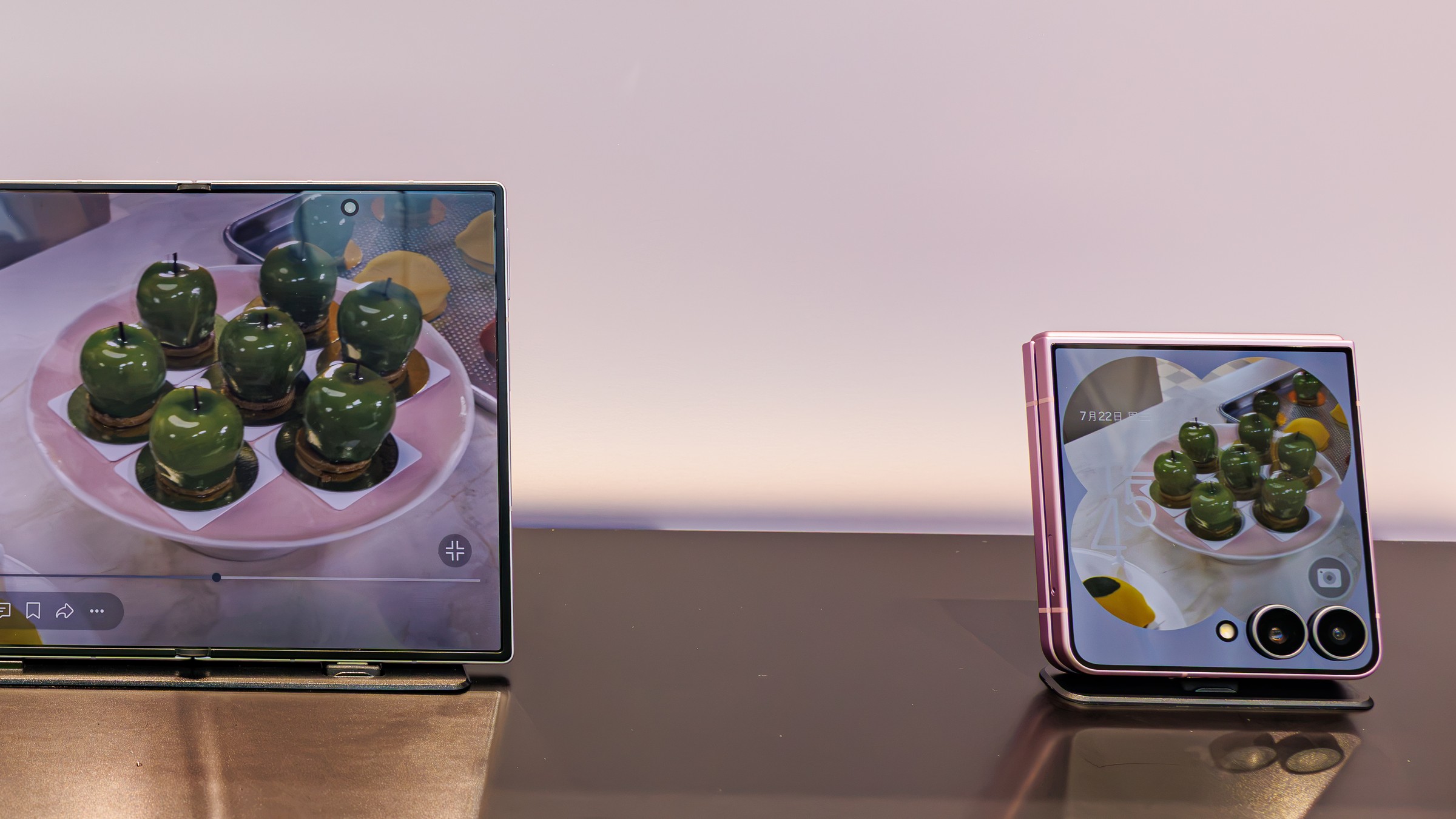
/ Samsung split the Fold in two. Confirmed prices and specs for the Galaxy Z Fold 8, Fold 8 Ultra, Z Flip 8, Watch 9 and Watch Ultra 2, straight from Unpacked.
by Hozefa Khety
· 14 min read
Samsung held Galaxy Unpacked in London today, and the headline is not a phone — it is an admission. After seven generations of trying to build one foldable that satisfies everybody, Samsung has split the Fold in two. There is now a tall, book-style Galaxy Z Fold 8 Ultra for people who use the inner screen to work, and a shorter, wider Galaxy Z Fold 8 for people who use it to watch things. Add the Galaxy Z Flip 8, the Galaxy Watch 9 and Watch Ultra 2, and this is Samsung's largest Unpacked slate in years.
It is also the most expensive. The Fold 8 Ultra starts at $2,099 — a hundred dollars up on last year's Fold 7 and the first Samsung foldable to open above two thousand. Everything below is confirmed from the launch itself rather than the leaks that preceded it, and where our pre-event preview got something wrong, we say so.
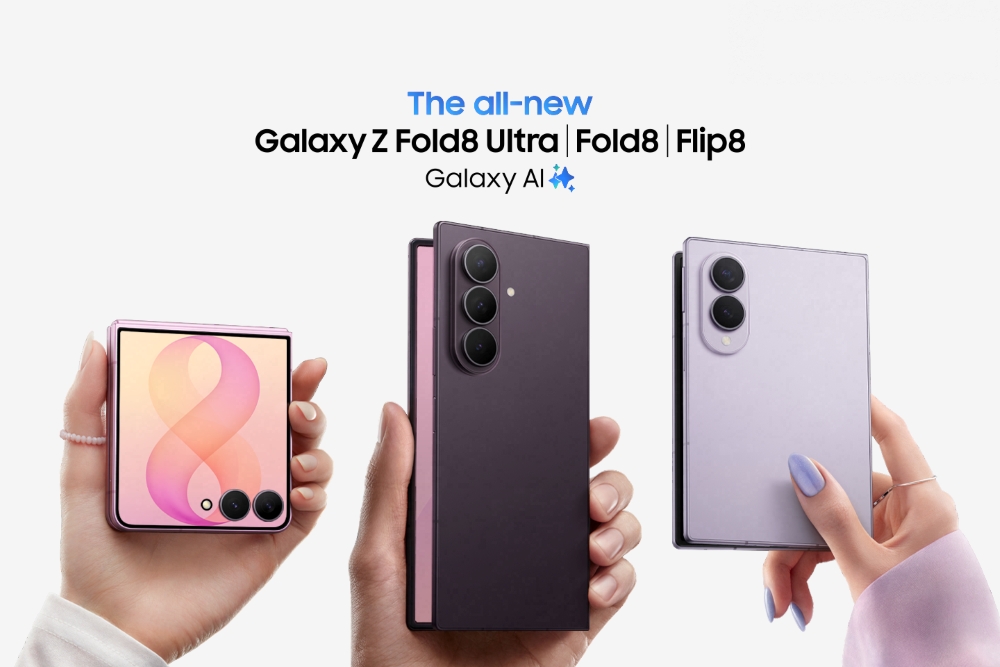
The naming, settled: the Ultra is the one you already know
This is the part worth getting straight before any spec sheet. The Galaxy Z Fold 8 Ultra is the direct continuation of the Fold 7 — the tall device that closes into a narrow slab and opens into a near-square. The plain Galaxy Z Fold 8 is not the entry rung of that ladder. It is an entirely new passport-shaped design: shorter, wider, and lighter. If you own a Fold 7 and buy on name alone, you will end up with a different phone than the one you meant to upgrade to.
The reason for the shape is not subtle. Apple is expected to show its first foldable iPhone in September, in roughly this passport aspect ratio — and Samsung Display supplies the foldable panels Apple will use, which puts Samsung in an unusually good position to know what is coming. Shipping a wide foldable seven weeks early takes some of the novelty out of that announcement.
Galaxy Z Fold 8 Ultra: thinnest yet, and the crease finally recedes
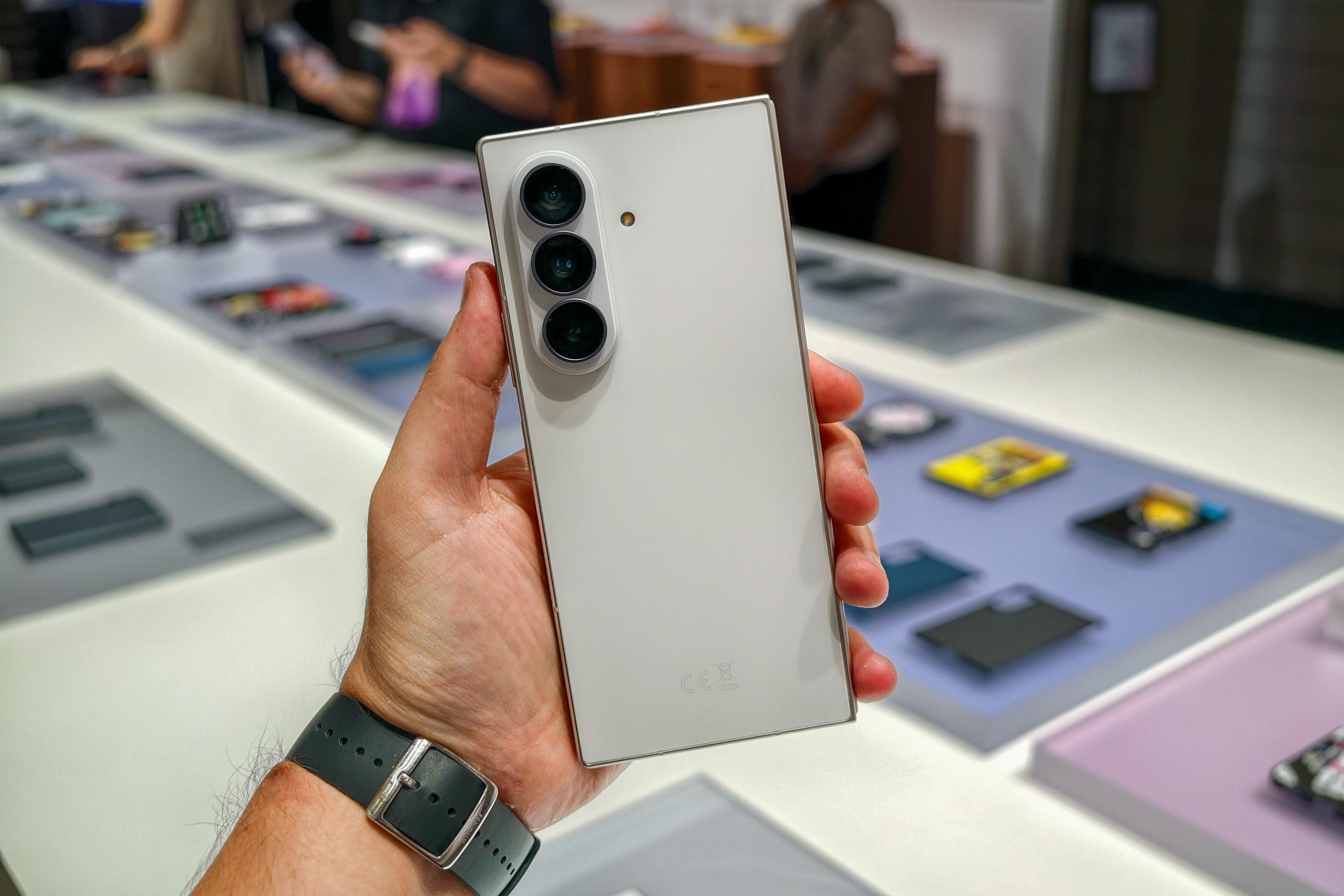
The Fold 8 Ultra opens to an 8.0-inch LTPO AMOLED at 2,256 x 2,504 and closes onto a 6.5-inch cover display at 1,080 x 2,520, both running at 120Hz with a 3,000-nit peak and the anti-reflective coating Samsung brought over from the S series. It runs the Snapdragon 8 Elite Gen 5 for Galaxy with 12GB or 16GB of RAM and 256GB to 1TB of storage. The body measures 4.1mm unfolded and 8.9mm folded at 215g, making it Samsung's slimmest foldable to date, and it carries an IP48 rating.
The cameras are a targeted update rather than an overhaul: the 200MP f/1.7 main with OIS and the 10MP 3x telephoto both carry over, though the main sensor gains HDR capture in full 200MP mode, while the ultra-wide jumps from 12MP to a 50MP f/1.9 sensor that doubles as the macro camera. For video, Samsung has added 8K recording through a new APV codec aimed at editing workflows, plus Cine LUT for colour grading on device. Battery is 5,000mAh typical (4,854mAh rated) in a dual-cell arrangement, with a new dual-path charging architecture driving 45W wired — up from 25W — and wireless rising from 15W to 20W. An expanded graphite cooling structure handles the thermals.
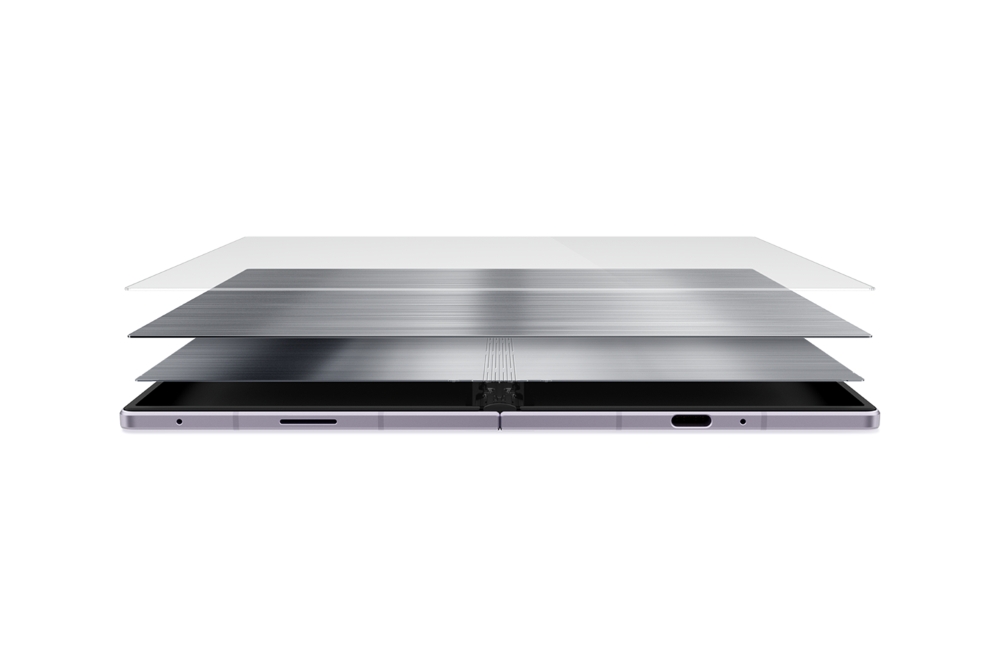
The genuine engineering story is the display stack, which Samsung is branding Flex Titanium. It replaces the polymer film that normally sits behind the OLED with a titanium alloy film — thinner than a third of a human hair — backed by an enhanced titanium plate. Samsung's own framing is careful: it says the structure absorbs pressure and impact and reduces crease visibility over time, rather than claiming the crease is gone. It also credits the same structure for the smoother opening action, by rebalancing hinge mechanics, display tension, and magnetic force. Alongside it, both Folds get up to 3,000 nits, Vision Booster, and a low-reflection finish.
That hedge is worth taking at face value. The crease is visibly reduced rather than eliminated — a real step, not a solved problem, and a clear response to rivals like the Oppo Find N6 that had pulled ahead of Samsung on exactly this point.
Galaxy Z Fold 8: the wide one, and the most divisive phone of the show
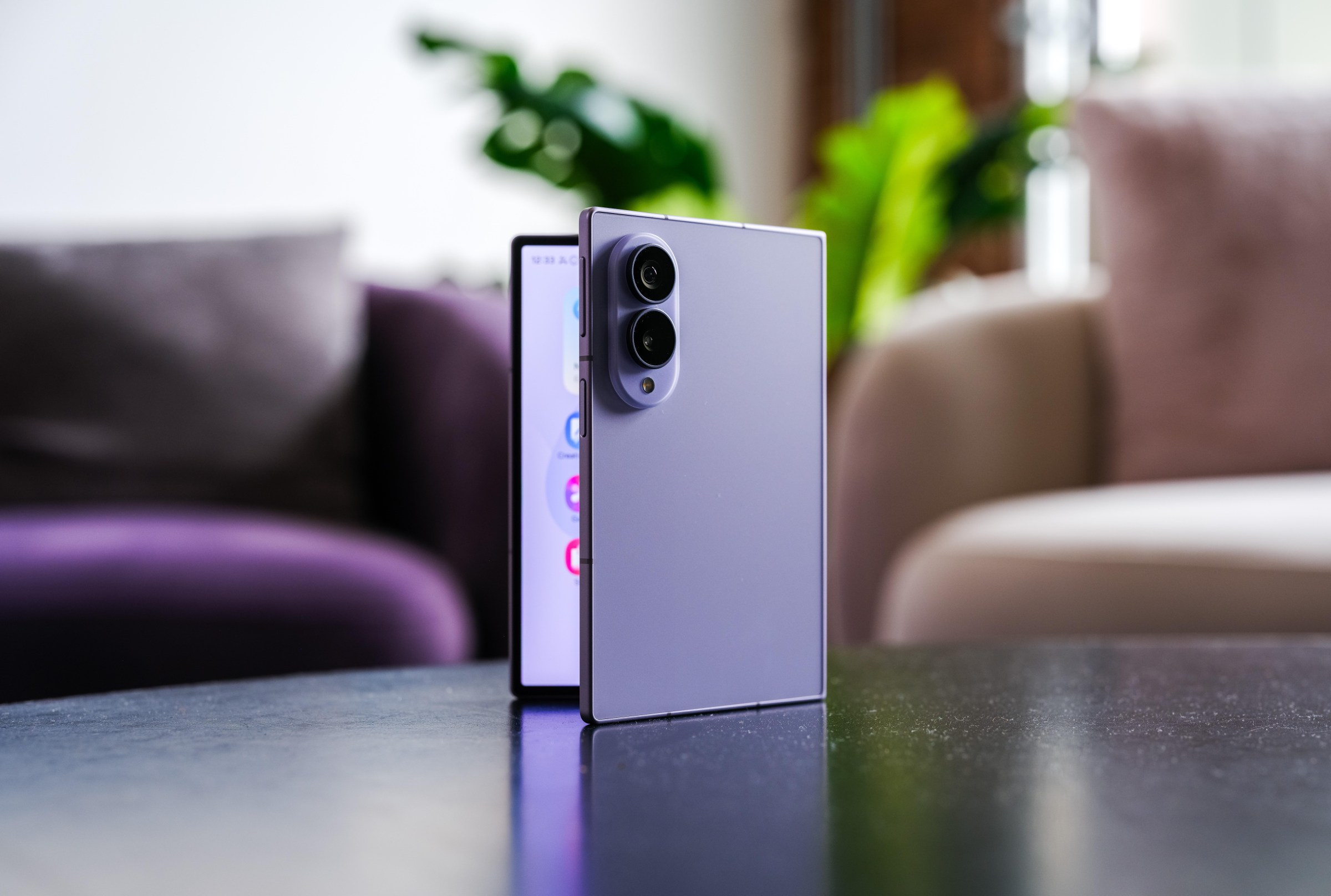
The new Fold 8 closes into a squat 5.5-inch cover screen and opens to a 7.6-inch inner display at 1,828 x 2,448 — a 4:3 shape that reads far more like a small tablet than any previous Fold. It shares the Snapdragon 8 Elite Gen 5 for Galaxy, the 3,000-nit anti-reflective panel, and the titanium display structure with the Ultra. It runs a 4,800mAh battery with the same 45W wired and 20W wireless charging, measures 4.5mm unfolded and 9.7mm folded, and weighs 201g — about the same as a Galaxy S26 Plus, but with two screens, and light enough that Samsung calls it the lightest Galaxy Z Fold it has made. It comes in Graphite, Cream, and Lavender, with a Pistachio finish sold only through Samsung.com.
The cuts are real. There are only two rear cameras — a 50MP f/1.8 main and a 50MP f/1.9 ultra-wide — with no telephoto at all, and the main sensor steps down from the 200MP unit used in the Ultra and the Fold 7. Both displays are smaller than the Fold 7's, and at 4.5mm it is actually slightly thicker unfolded than last year's 4.2mm. Measured strictly as a Fold 7 successor, it is a sidegrade.
But that is the wrong way to measure it, because Samsung is not positioning it as a Fold 7 replacement. Its own framing is built entirely around consumption: a cover screen sized for messaging, browsing, and short-form video; a 4:3 main display for games and films; and that same display rotated for reading, which Samsung pitches as a replacement for carrying an e-reader. The gains are shaped to match — a camera viewfinder that fills the closed screen with the controls in thumb reach, and 4:3 photos that fit the open panel exactly.
So the honest read is that the Fold 8 answers a different question from the Ultra. As an upgrade from a Fold 7 it is a lateral move with a weaker camera. As a first foldable for someone who mostly reads, watches, and shoots, it is the most comfortable one Samsung has built — and at $1,899 it competes uncomfortably closely with buying a flagship slab and a tablet separately. Samsung also gave both Folds a slightly wider gap between the halves plus assisting magnets, which makes them meaningfully easier to prise open — a small thing that compounds across a day.
Galaxy Z Flip 8: a tidy-up, and a cover screen that grew up
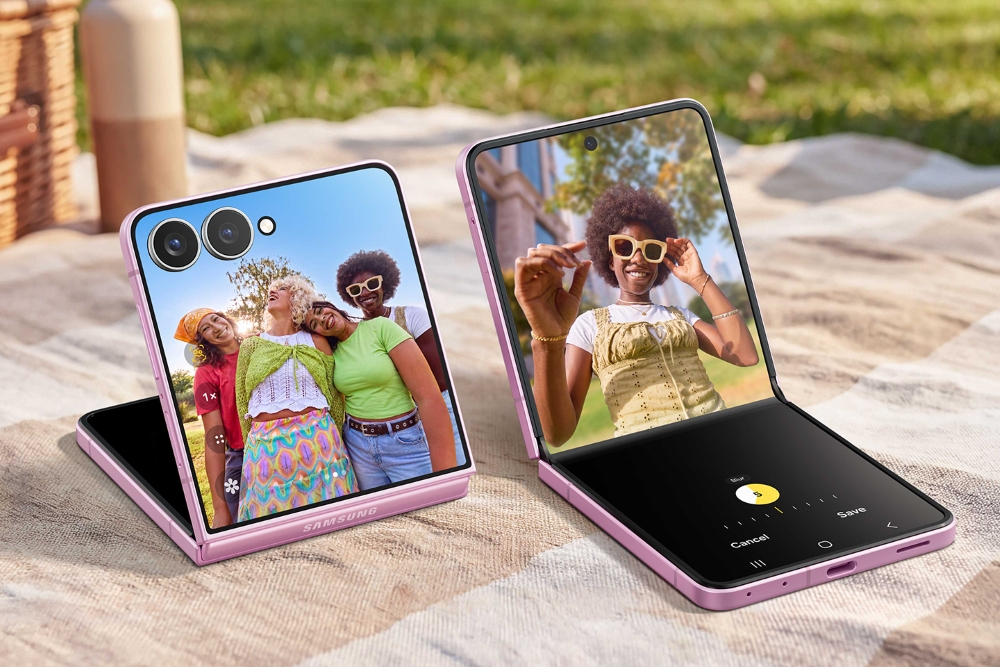
The Flip 8 is the most incremental of the three. It keeps a 6.9-inch 120Hz inner display and a 4.1-inch cover screen, now with slimmer bezels, and slims to 6.1mm unfolded — down from 6.5mm — at 180g, making it the thinnest and lightest Z Flip so far. Samsung claims a 10% more durable frame. The cameras are essentially unchanged — a 50MP main, now running Samsung's ProVisual Engine, plus a 12MP ultra-wide — with a 4,300mAh battery and 25W wired charging. It ships in Graphite, Cream, and Pink at 256GB or 512GB, with an online-exclusive Mint.
One correction to our pre-event guide, and it matters for buyers outside the US: the chipset does split by region, exactly as the leaks said. US units run the Snapdragon 8 Elite Gen 5 for Galaxy, matching the S26 series. UK and European units run Samsung's own 2nm Exynos 2600. Korea and, most likely, India fall on the Exynos side too. Anyone specifically wanting the Snapdragon Flip should check the regional model before ordering.
The substantive change is the cover screen, which now has a proper home screen and runs very nearly everything the inner display can. Samsung is now calling it an AI-native interface, and it is the end of a long climb from the two-inch window the first Flips shipped with. There is a trade-off buried in it, though: the small friction of having to open the phone was part of what made a Flip calming to own, and removing it makes the device more capable and slightly less distinctive. Samsung leans into the capability side with a redesigned Now Brief widget — a mix-and-match set of live tiles covering weather, pollen, UV index, step count, sleep score, and nutrition.
Galaxy Watch 9 and Watch Ultra 2: the quiet standout
The wearables were the surprise of the keynote, and both watches move to the Snapdragon Wear Elite platform — which appears to have finally fixed the sluggishness that has dogged Samsung watches for years. Apps now open close to instantly.
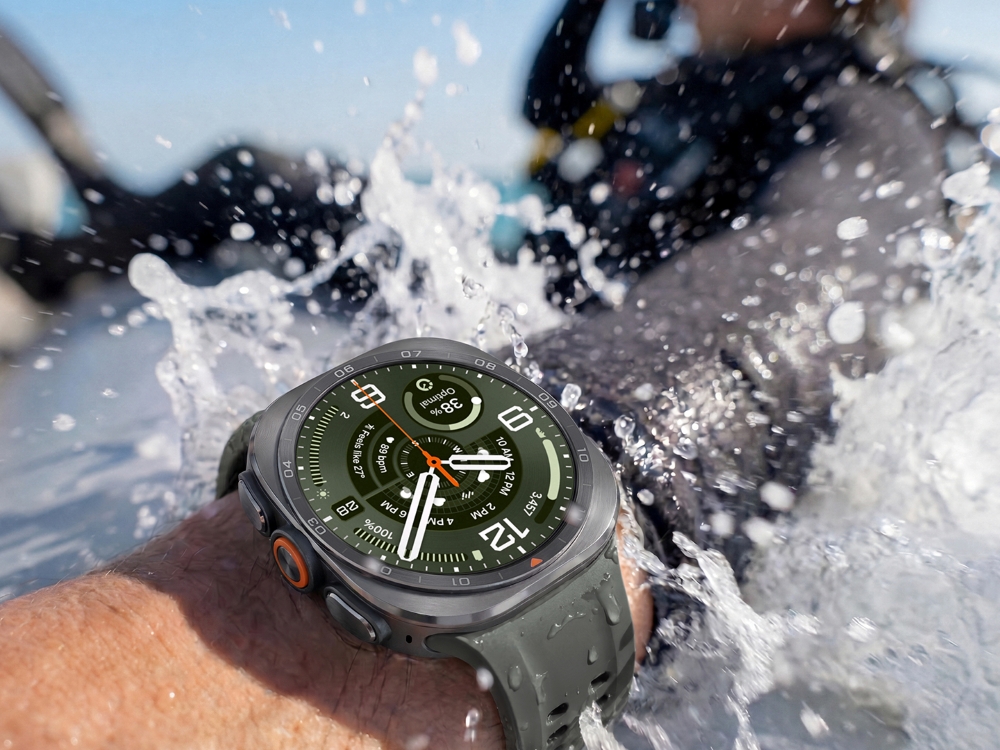
The Galaxy Watch Ultra2 is the one that earns its suffix. Samsung has cut thickness by 12% versus the previous Ultra while fitting an 800mAh battery — a 35% capacity increase — inside the same shock-resistant titanium casing. The display peaks at 5,000 nits, which Samsung calls a world first for a smartwatch. That is excessive on an ordinary day and exactly the point on an exposed one.
It is also now a serious dive watch. Rated IP69K and 10 ATM with EN13319 certification, it starts tracking depth, elapsed time, and water temperature automatically the moment you enter the water. A dedicated Ultra2 Diving app built with Mares — adding ascent and descent speed tracking and safe dive limits — is due later this year. For land, Trail Run tracks elevation, climbing progress, and terrain impact, while a new Nutrition Alert extends the existing Sweat Loss feature into real-time hydration guidance based on estimated sweat loss relative to body weight.
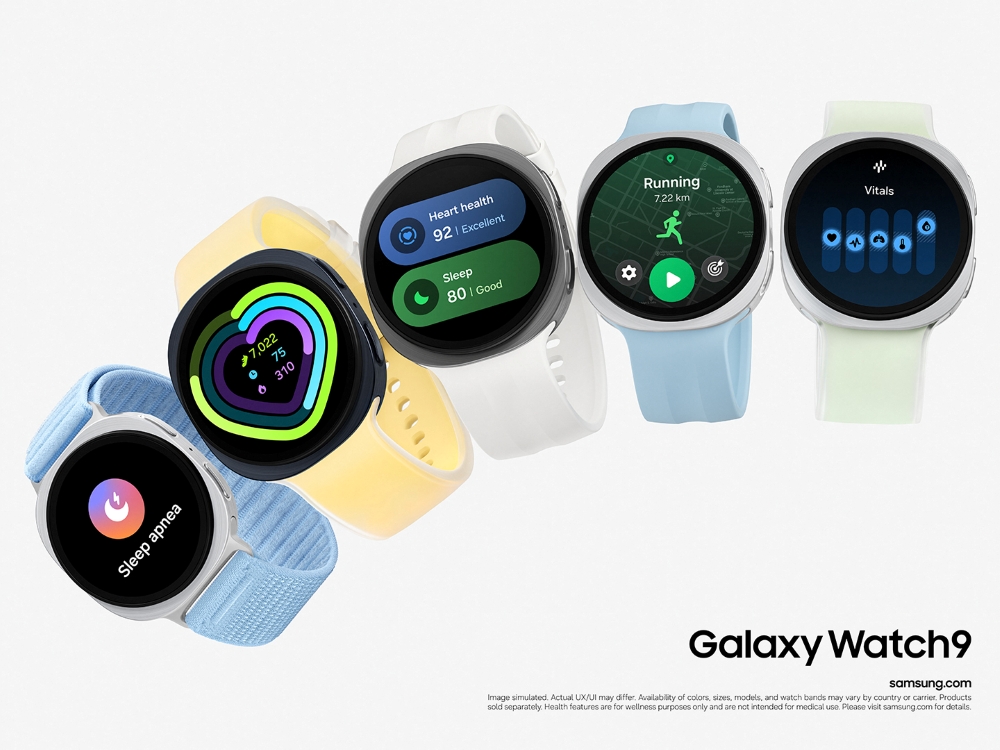
The Galaxy Watch9 is the everyday one: a lightweight aluminium case keeping the familiar cushion silhouette, refined for a closer fit, with a 390mAh battery and a 3,000-nit display. Samsung is leaning hard on comfort here, because continuous 24/7 wear is what makes the health tracking worth anything — hence a wider band range spanning soft silicone, hybrid, and fabric options, with the new designs built to cut weight.
The health software is the more interesting half, and it is identical across both watches. Vitals monitors your personal baseline during sleep and alerts you to significant deviations — the pitch being early warning that you are coming down with something. Heart Health Score condenses your cardiovascular data into one actionable number with lifestyle guidance; Daily Cardio Load advises on workout volume and recovery; and Fitness Index gives a broader read on physical fitness with personalised goals to work towards. The Sleep Apnea feature has picked up new FDA clearance, and a Hearing feature warns about unsafe noise exposure.
None of this is clinical-grade and should not be treated as such, but a single trackable number is a proven motivator. Samsung says the underlying work draws on clinical research with universities and medical institutions. Gemini also now runs on the watch without a wake word: raise your wrist toward your mouth and speak, and it distinguishes that from a glance at the time. Both watches ship with a 60-day Strava trial and a two-month iFIT trial.
One UI 9: My FanCam, Now Nudge and Gemini Intelligence
All three foldables ship on Android 17 with One UI 9, Wi-Fi 7, Bluetooth 6.0, an IP48 rating, and Samsung's seven-generation OS upgrade commitment. The most immediately practical of the AI additions is My FanCam: hand it a video, pick a subject in the frame, and it tracks and re-frames them automatically as they move, cropping to whichever aspect ratio you want — aimed squarely at anyone filming amateur sport or performances without an editor.
Now Nudge has expanded — it can surface a calendar entry when someone proposes meeting, offer a one-tap Google Maps handoff when a location comes up, and it no longer needs the keyboard open to trigger. Samsung notes the software on demo units is still pre-release, so it is worth treating as unproven until retail devices are out. Gemini Notebook looks the more substantial of the two: it collects notes, images, recordings, files, and documents into one persistent workspace and turns them into audio overviews, infographics, reports, or meeting recaps, with drag-and-drop from Split view. Samsung also says Gemini Intelligence app automation now reaches more than 40 apps and services, and every buyer gets a six-month Google AI Pro trial with 5TB of storage.
Prices and availability
All three phones start at 256GB. The Galaxy Z Flip 8 starts at $1,200. The Galaxy Z Fold 8 starts at $1,899 — notably, below the $1,999 the Fold 7 launched at, though it is also a smaller phone with one fewer camera. The Galaxy Z Fold 8 Ultra starts at $2,099, or £1,899 in the UK, making it the first Samsung foldable to open above $2,000.
That is roughly a hundred dollars of inflation across the lineup, and the cause is not a mystery: memory prices have climbed hard this year, and that cost is now reaching retail. Expect the same pressure on most flagships launching over the next few months, Apple's included.
In India, the Galaxy Z Flip 8 starts at ₹1,24,999, the Galaxy Z Fold 8 at ₹1,79,999, and the Galaxy Z Fold 8 Ultra at ₹2,59,999. The Ultra is the outlier: pre-launch reporting had pointed to roughly ₹1,99,990, so the real figure lands about ₹60,000 above what the leaks suggested, and it stretches the gap to the standard Fold 8 to a full ₹80,000. Samsung India has also been running ₹999 pre-reservations that convert to credit against a pre-order.
Samsung has confirmed pre-orders open in select markets today. Its global announcement did not carry a firm on-sale date — that comes per market — but retail availability is expected in early August. Galaxy Watch 9 and Watch Ultra 2 pricing was still settling as we published, and we will update this article as it lands.
What it adds up to
Samsung's foldables have improved on a slow, predictable curve for years — long enough that more aggressive competitors caught up and, on the crease specifically, passed them. This year does not break that pattern so much as widen it. The titanium display structure and the first silicon-carbon batteries in a Samsung phone are real engineering wins, and the Fold 8 Ultra is a better version of a device Samsung already understood well.
The Fold 8 is the actual bet. It is a shape Samsung tried and abandoned years ago, revived seven weeks before Apple is expected to arrive with something similar, and priced where it competes with a very good phone plus a tablet. Whether it reads as clever positioning or a hedge depends largely on what Apple shows in September — and, unusually, Samsung has a better idea of that than almost anyone.
Frequently asked questions
What did Samsung announce at Galaxy Unpacked 2026?
Samsung announced three foldables — the Galaxy Z Fold 8 Ultra, an all-new wide Galaxy Z Fold 8, and the Galaxy Z Flip 8 — alongside the Galaxy Watch 9 and Galaxy Watch Ultra 2. All three phones ship with Android 17 and One UI 9.
How much do the Galaxy Z Fold 8 and Flip 8 cost?
All three start at 256GB. The Galaxy Z Flip 8 starts at $1,200, the Galaxy Z Fold 8 at $1,899, and the Galaxy Z Fold 8 Ultra at $2,099 (£1,899 in the UK) — the first Samsung foldable to start above $2,000.
What is the Galaxy Z Fold 8 price in India?
In India the Galaxy Z Fold 8 starts at ₹1,79,999, the Galaxy Z Fold 8 Ultra at ₹2,59,999, and the Galaxy Z Flip 8 at ₹1,24,999. The Ultra came in well above pre-launch expectations of about ₹1,99,990. Samsung India is also running ₹999 pre-reservations that convert to credit against a pre-order.
Is the Galaxy Z Fold 8 or the Fold 8 Ultra the successor to the Fold 7?
The Galaxy Z Fold 8 Ultra is the Fold 7's successor — the tall, book-style design. The plain Galaxy Z Fold 8 is an entirely new passport-shaped foldable: shorter, wider, and lighter, with a 4:3 inner display. Buying on name alone will not get Fold 7 owners the upgrade they expect.
What is the difference between the Galaxy Z Fold 8 and Fold 8 Ultra?
They are different shapes, not just different tiers. The Fold 8 Ultra has an 8.0-inch inner display, a 6.5-inch cover screen, a 200MP main camera with a 10MP 3x telephoto and 50MP ultra-wide, a 5,000mAh battery, and a 4.1mm unfolded body at 215g. The Fold 8 has a 7.6-inch 4:3 inner display, a 5.5-inch cover screen, just two rear cameras (50MP main and 50MP ultra-wide, no telephoto), a 4,800mAh battery, and measures 4.5mm at 201g.
Does the Galaxy Z Flip 8 use Snapdragon or Exynos?
Both, depending on region. US units run the Snapdragon 8 Elite Gen 5 for Galaxy, while UK and European units use Samsung's 2nm Exynos 2600. Korea and most likely India also receive the Exynos version, so check the regional model number if the chipset matters to you.
Has Samsung fixed the foldable crease?
Not entirely, but it is much improved. Both Folds use a new display structure with a titanium alloy film behind the OLED plus a titanium support plate, which reduces crease visibility considerably compared with the Fold 7. Hands-on impressions put it close to, but still behind, the best in the category.
When do the new Galaxy foldables go on sale?
Samsung confirmed pre-orders opened in select markets on July 22, 2026, the day of the announcement. Its global release did not give a firm retail date, but availability is expected in early August 2026.
What is Flex Titanium?
Flex Titanium is Samsung's new foldable display structure, used on both the Galaxy Z Fold 8 and Fold 8 Ultra. It places a titanium-alloy film and an enhanced titanium plate beneath the OLED panel to strengthen display support, absorb pressure and impact, and reduce crease visibility over time — while allowing a thinner body.
What is new in the Galaxy Watch Ultra 2?
The Galaxy Watch Ultra 2 is 12% thinner than the previous Ultra while carrying a larger 800mAh battery (a 35% increase), and runs the Snapdragon Wear Elite platform. Its display reaches 5,000 nits, which Samsung says is a world first for a smartwatch. It is rated IP69K and 10 ATM with EN13319 dive certification, and tracks depth, time, and water temperature automatically underwater.
What health features do the Galaxy Watch 9 and Watch Ultra 2 have?
Both watches share the same health suite: Vitals (monitors your baseline during sleep and alerts you to significant deviations), Heart Health Score, Daily Cardio Load, Fitness Index, a Hearing feature for unsafe noise exposure, and a Sleep Apnea feature with new FDA clearance. None of it is clinical-grade and it should not be treated as a substitute for medical advice.