Nintendo wiped 400+ Switch emulator repos off GitHub in one day — Suyu took the hit
/ Seven DMCA anti-circumvention notices on August 17, 2026. Suyu's entire 311-repo fork network went with them. Nintendo's argument is keys and decryption, not a clean trial on emulators.
by Hozefa Khety
· 8 min read
On August 17, 2026, Nintendo filed seven DMCA anti-circumvention notices with GitHub. By the time the notices finished processing, more than 400 Switch emulator repositories were gone or marked unavailable. The biggest target was Suyu, a Yuzu successor whose fork graph had grown past 100 repos. GitHub took the entire network — 311 repositories — in one pass.
This was not a new fight. Yuzu settled in 2024. Ryujinx shut down the same year. Successors keep forking the code, and Nintendo keeps sending notices. What changed this week is the size of a single day: seven filings, one calendar date, and a wipe that reached projects that had been dormant for years.
What Nintendo filed, and what GitHub removed
The notices sit in GitHub's public DMCA archive under dated files for August 17, 2026. The most detailed one names vstyler96/suyu as the parent. Because the reported fork network was larger than 100 repositories, and Nintendo alleged the forks infringed to the same extent as the parent, GitHub processed the notice against the entire network — 311 repos, inclusive of the parent.
The other six notices were smaller but still broad. Skyline, the Android Switch emulator whose developers had already wound the project down years earlier, lost a 29-repo network. Leftover Yuzu forks and MonoNX, a C#-based emulator archive, were named in the same day's filings. Combined, the seven notices targeted more than 400 repositories.
Nintendo's legal theory: keys, not just code
Every notice leans on the same anti-circumvention argument under 17 U.S.C. § 1201. Nintendo says Switch games are protected by cryptographic measures, and that the emulators at the reported repositories use unauthorized copies of those keys — often discussed in the scene as prod.keys — to decrypt ROMs at or immediately before runtime without Nintendo's authorization.
That framing matters. A pure copyright claim about copying game code is one fight. A circumvention claim about bypassing access controls is another, and it is the one Nintendo has used to make GitHub's takedown machinery move fast. GitHub has said it reviews circumvention claims carefully and will err toward leaving content up when validity is unclear. After Yuzu, Nintendo's notices have become close to routine.
The precedents Nintendo cites — and what they did not decide
To back the circumvention claim, the notices point to two court outcomes. The first is the 2024 consent judgment against Tropic Haze, the company behind Yuzu, which ended in a $2.4 million settlement. The second is Nintendo's case against streamer Jesse Keighin, also known as EveryGameGuru, who was ordered to pay $17,500 after a Colorado court entered a default judgment.
Neither outcome was a full trial on whether Switch emulators, as a category, are illegal. One was a settlement. The other was a default after the defendant stopped responding. At the takedown stage Nintendo does not need a merits ruling. It needs a notice GitHub will process. That is a different, and lower, bar.
Why dead projects still get wiped
Skyline is the clearest example. Its developers shut the project down voluntarily in 2023. The open-source code survived in forks. Nintendo's August 17 notice still cleared a 29-repo Skyline network, including code that had sat untouched for years. From Nintendo's view, a dormant fork is still a distribution point. From the scene's view, this is a hydra: cut one head, and mirrors appear somewhere else.
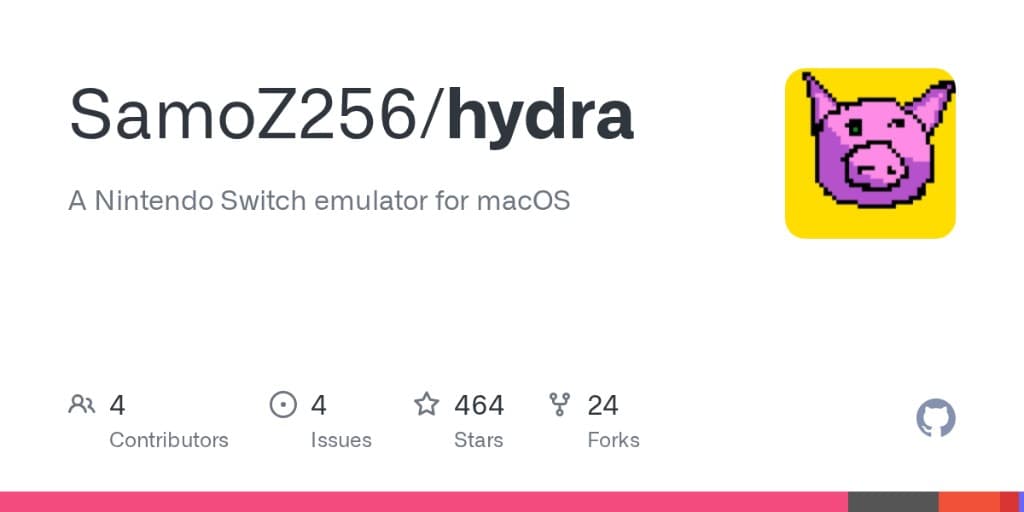
That hydra problem is why projects like SamoZ256/hydra — a Nintendo Switch emulator for macOS that was not named in the Aug 17 seven-notice set — still matter to the story. As long as people keep publishing clients, Nintendo's legal team is chasing a moving target. Taking GitHub repos offline is the easy part. Keeping the binaries offline is the hard part.
What this means if you follow Switch emulation
If you were watching Suyu mirrors disappear this week, you were watching Nintendo's standard playbook at scale. Expect more notices when fork counts climb again. Expect GitHub to process large networks when a submitter claims the forks match the parent. And expect the public debate to keep talking past itself: preservation and homebrew on one side, encryption keys and anti-circumvention on the other.
We are not linking to emulator downloads, key dumps, or instructions. The facts that matter for readers are public: the dates of the notices, the size of the Suyu network, Nintendo's stated legal theory, and the limits of the precedents it cites. The rest of the scene will rebuild whether or not this article lists a mirror. Nintendo will file again whether or not this article cheers it on.
The honest scoreboard after August 17 is simple. Nintendo cleared hundreds of repos in a day. The code is not gone from the internet. Both of those sentences can be true at once.
Frequently asked questions
What did Nintendo take down on GitHub in August 2026?
On August 17, 2026, Nintendo filed seven DMCA anti-circumvention notices targeting Switch emulator repositories and their forks. Coverage of the notices puts the combined reach above 400 repos. The largest single action was against the Suyu network — 311 repositories — because the fork graph exceeded 100 and GitHub processed the whole network.
What is Suyu, and why was it the main target?
Suyu is a Switch emulator project that grew popular after Yuzu's collapse. Nintendo's detailed Aug 17 notice named vstyler96/suyu as the parent. GitHub's rules for large fork networks meant the takedown applied to the entire reported network of 311 repos, not only the parent listing.
Is Nintendo saying emulators are illegal, or only that these repos circumvent DRM?
The notices argue anti-circumvention under the DMCA: that the listed emulators use unauthorized cryptographic keys to decrypt Switch games at runtime. That is a specific access-control claim, not a broad court ruling that every emulator is unlawful. No full trial on that emulator question is cited in the notices.
Which court cases does Nintendo cite in the notices?
Two outcomes: the 2024 Tropic Haze / Yuzu consent judgment that ended in a $2.4 million settlement, and a default judgment against streamer Jesse Keighin (EveryGameGuru) for $17,500. One was a settlement; the other was a default. Neither was a contested trial on the merits of Switch emulation generally.
Was Skyline still active when it was taken down?
No. Skyline's developers shut the Android Switch emulator down in 2023. Nintendo's Aug 17 notice still cleared a 29-repo Skyline network, including dormant forks. Nintendo treats leftover distribution points as live risks even when the original project is dead.
Was Hydra part of the August 17 takedown?
Hydra (SamoZ256/hydra), a Switch emulator for macOS, was not listed among the seven parent notices dated August 17, 2026. It is useful as ecosystem context — new clients keep appearing — not as a confirmed target of that specific day's filings.
Where can I read the original DMCA notices?
GitHub publishes DMCA notices in the public github/dmca repository. The Suyu notice for this wave is filed as 2026/08/2026-08-17-nintendo.md, with related nintendo-2 through nintendo-7 notices in the same August 2026 folder.