XREAL Aura price, release date and specs explained
/ XREAL Aura starts at $1,279, with pre-orders open to reservation holders. Prices by country, ship date, specs and how it compares with Meta's VR Glasses.
by Hozefa Khety
· 7 min read
XREAL AURA, the see-through Android XR glasses XREAL built with Google and Qualcomm, finally has a price. XREAL announced on October 7, 2026 that AURA starts at $1,279 in the US, with a second configuration at $1,499. There is a catch: for now, only people who already paid a reservation deposit can complete a pre-order. Everyone else has to wait for orders to open to the public "in the coming weeks". Here is what it costs in each launch country, when it ships, what you get in the box, and how it stacks up against Meta's VR Glasses. (Prices checked on XREAL's AURA page on October 7, 2026 at 13:33 UTC.)
XREAL AURA price in every launch country
AURA comes in two versions. The difference is in the compute puck, not the glasses: the cheaper one has 12GB of memory and 256GB of storage, the dearer one 16GB and 512GB. These are XREAL's official prices from its October 7 announcement, matching what its AURA page showed when we checked at 13:33 UTC.
United States: $1,279 (12GB/256GB) or $1,499 (16GB/512GB). Canada: C$1,829 or C$2,149. Japan: ¥229,800 or ¥269,800. South Korea: ₩1,990,000 or ₩2,290,000. Some early reports put the starting price at $1,299, but XREAL's release and store page both say $1,279.
That lands just under the ceiling XREAL had promised. Its reservation page previously said the base model would cost no more than $1,500 before tax, and the new top configuration sits right at $1,499. The Verge asked whether the extra 4GB of memory matters for any apps; XREAL could not say by the time of publication, so for now there is no clear reason to pay $220 more unless you want the bigger storage.
Who can order now, and when XREAL AURA ships
Pre-orders opened on October 7 at xreal.com/aura, but only for customers who placed a paid reservation before that date. XREAL says those customers will get an email the same day explaining how to finish the purchase, choose a configuration and pick a frame size. Orders for everyone else "will open to the general public in the coming weeks". Until then, new buyers can still put down a deposit to get in the queue.
On shipping, XREAL only says AURA "will begin shipping soon" and that the launch is "now just weeks away". XREAL co-founder and CEO Chi Xu told The Verge that the first 2,000 Founder's Edition pairs will ship this year. CGMagazine reports that buyers in the first markets should get their units in mid-November, but XREAL has not put a date on that in its announcement, so treat it as an estimate.
The first wave covers four countries: the United States, Canada, Japan and South Korea. XREAL says more markets follow in 2027. That is narrower than XREAL's reservation page, which still lists the UK and many EU countries among "supported launch regions". If you reserved from Europe or the UK, check your email for XREAL's timing rather than assuming you are in the first batch.
Reservation deposits: Launch Credit and Founder Priority Pass
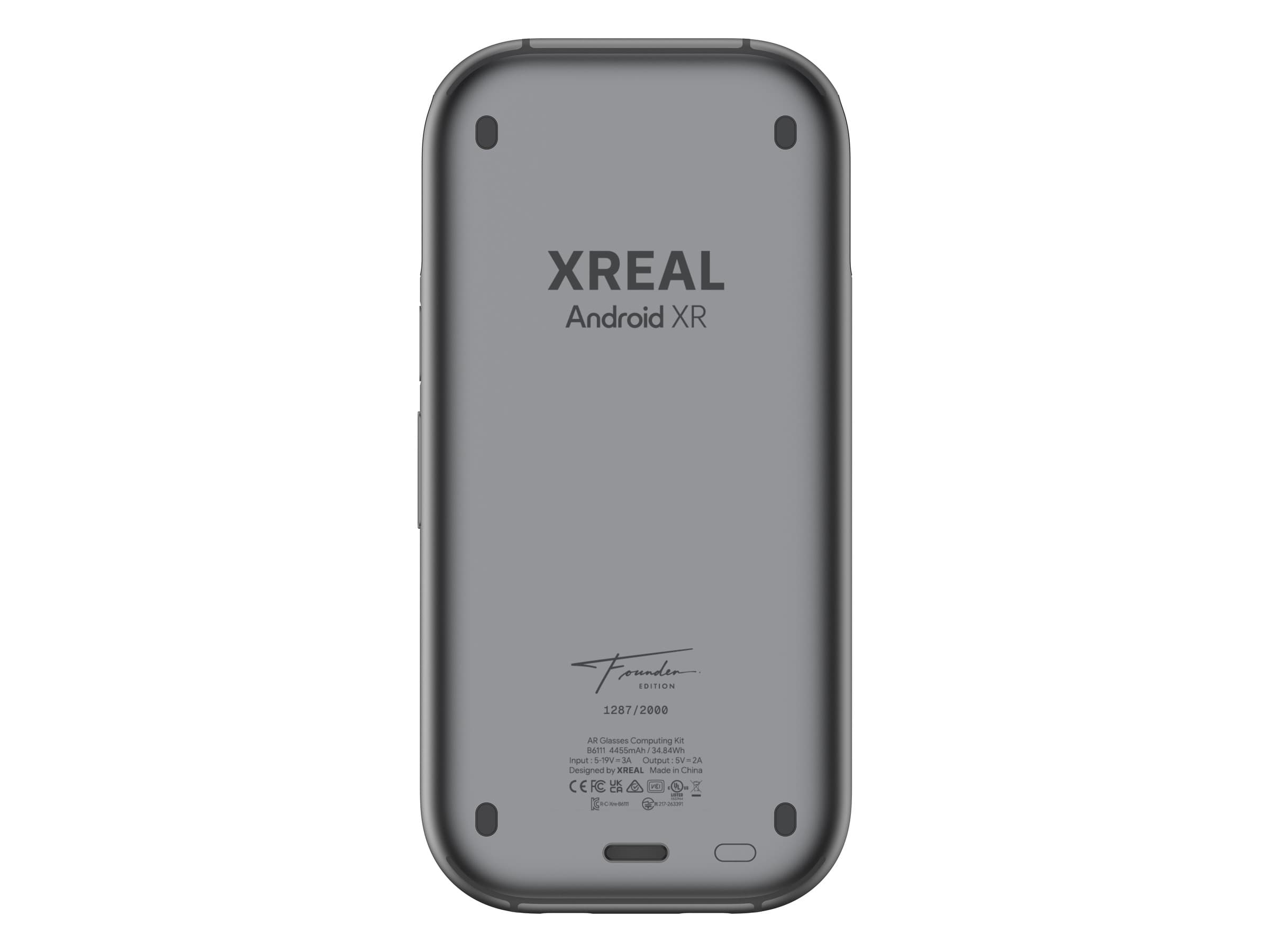
If you are thinking of reserving now, XREAL's page describes two options. Launch Credit costs $99 and gives you $199 off your AURA purchase at launch, with earlier reservations getting earlier access. Founder Priority Pass is a $299 deposit, limited to 2,000 reservations worldwide, that guarantees delivery in the earliest batch in launch regions and comes with a numbered Founder edition identifier. In both cases the deposit goes toward the final price, and XREAL says reservations are fully refundable until you confirm the final purchase.
XREAL AURA specs: what you get for $1,279
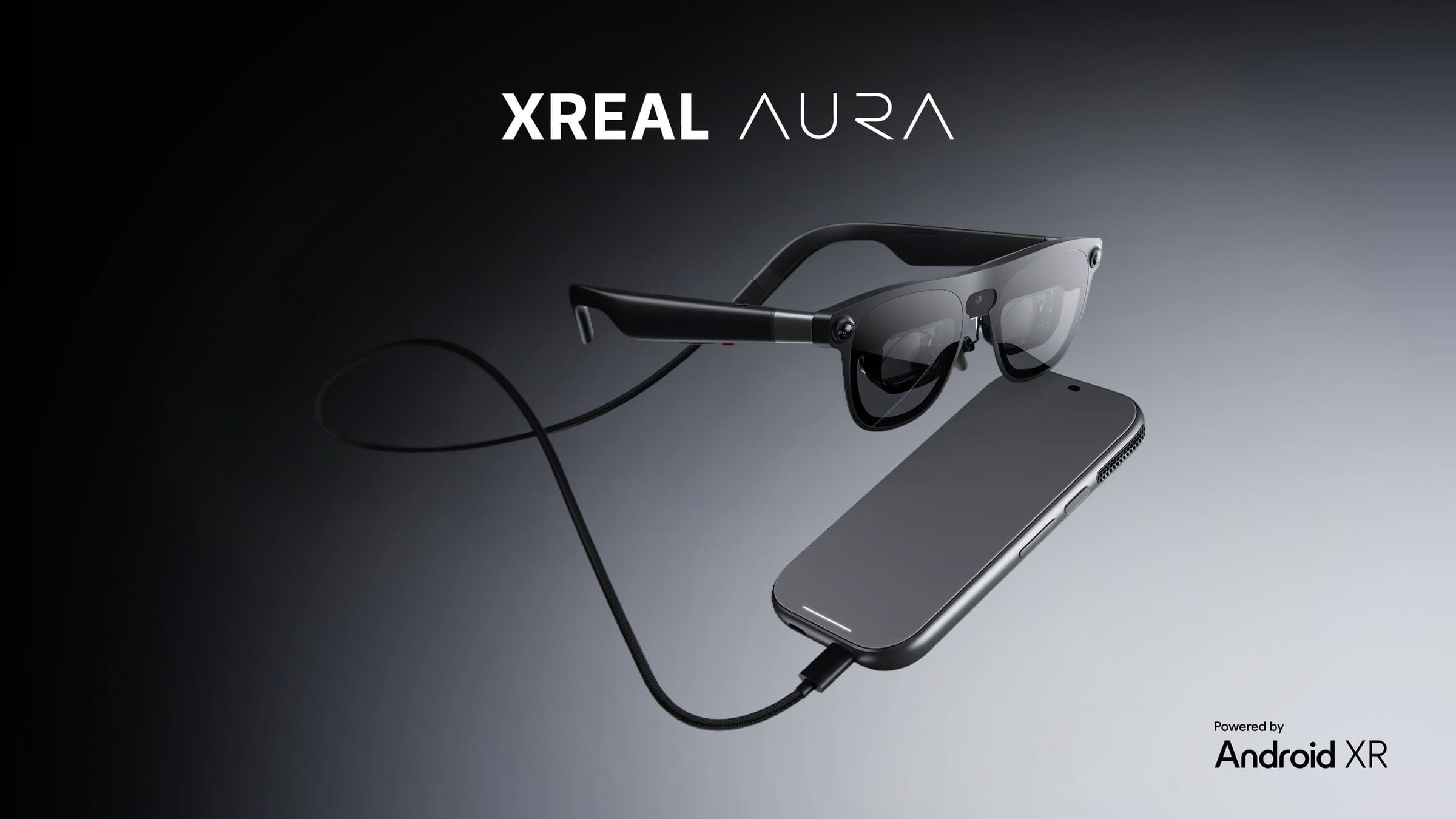
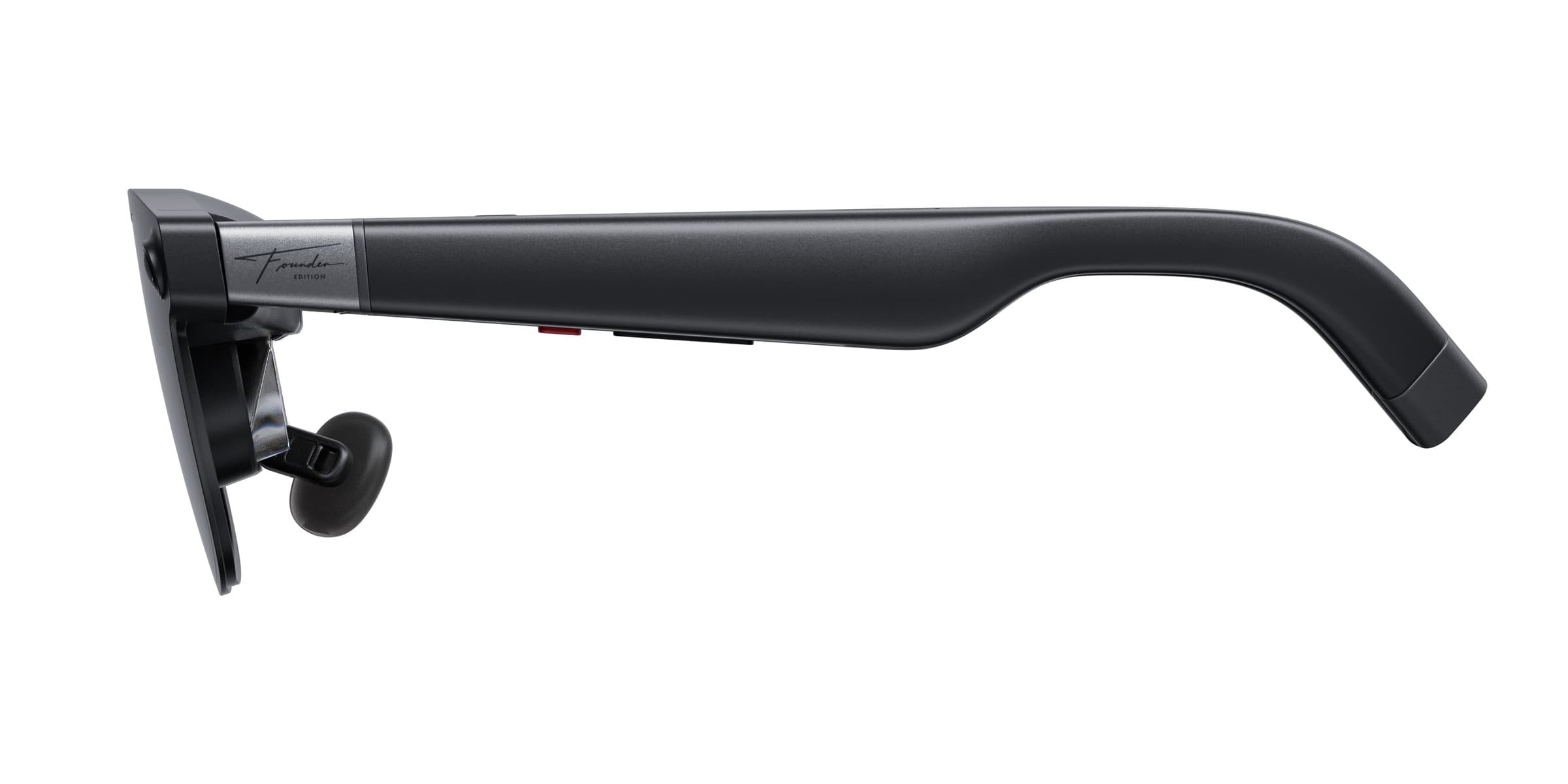
AURA splits the hardware in two. The glasses weigh less than 95 grams and use see-through lenses, so you look at the real world directly rather than through cameras. Inside are two Sony micro-OLED displays at 1920 x 1200 pixels per eye, refreshing at up to 120Hz with up to 1,050 nits of brightness, and the field of view is 70 degrees, one of the widest yet for see-through glasses. XREAL's own X1S chip in the glasses handles tracking and keeps the delay between moving your head and the image updating at 3 milliseconds, XREAL says.
The glasses also have electrochromic dimming, which darkens the lenses in five steps and can block up to 99.9% of outside light for movies. Two outward-facing cameras handle hand tracking and keep virtual windows pinned in place, and there is a higher-resolution camera with a privacy light, which XREAL says powers AI vision features with your permission. Sound is tuned by Bose, with four microphones. Frames come in two sizes for the distance between your eyes: M (60 to 66mm) and L (66 to 72mm), and prescription lens inserts are supported.
The compute puck does the heavy lifting. It runs Android XR on Qualcomm's Snapdragon Reality Elite chip, rated at 48 TOPS for AI tasks, and holds a 4,455mAh (34.84Wh) battery. XDA Developers puts its weight at about 270 grams, and Tom's Guide says it is roughly the size of an iPhone 15 Pro. Its top doubles as a touchpad, it has a fingerprint sensor for signing in to supported apps and approving payments, and it supports Wi-Fi 6E, Bluetooth 5.3 and GPS. One USB-C port connects the glasses; the other charges the puck at up to 57W and accepts a video signal, so you can plug in a laptop or a handheld console and use AURA as a big private screen.
XREAL has not published a battery life figure. In the box you get the glasses, the puck, a glasses cable, a charging cable, a carrying case, a belt clip, three sizes of nose pads, a prescription insert frame and a cleaning cloth, with a lanyard included in some editions.
What XREAL AURA can do with Android XR and Gemini
Because it runs Android XR, AURA gets Google Play from day one. XREAL says that means regular Android apps such as YouTube, Google Maps, Chrome and Google Photos, plus more than 150 apps built specifically for XR. You can open up to five virtual screens and place them around you, mirror a PC over a cable as a large private monitor, pair a Bluetooth keyboard or game controller, and use a travel mode meant to keep the picture steady on a plane.
Gemini is built in. You can talk to it about what is on your screen, for example asking questions about a YouTube video, or about what you are looking at in the real world. You control everything with your hands, your voice or the puck's touchpad.
XREAL AURA vs Meta VR Glasses
The obvious rival is Meta's VR Glasses, revealed at Meta Connect in September for $1,299.99 and due in spring 2027. At $1,279, AURA is $20 cheaper and should reach buyers months earlier, at least for early reservation holders. Both keep the glasses light by moving the chip and battery into a tethered puck, and both use Qualcomm's Snapdragon Reality Elite, according to The Verge.
The big difference is how you see the world. AURA's lenses are see-through, so the real world is always there with no camera delay, while Meta's glasses show it to you through cameras, which allows more immersion and a wider view than AURA's 70 degrees. Meta's glasses also track your eyes so you can select things by looking and pinching, while AURA relies on hand tracking, voice and the puck's touchpad. Then there are the apps: Android and Google Play on AURA, Meta's Horizon OS and Quest games on Meta's. Nobody has reviewed either yet, so if you are not in a hurry, waiting for reviews is sensible.
For context, Samsung's Galaxy XR headset, which also runs Android XR, costs $1,799, and XREAL's own display glasses, which work as a screen for your phone or laptop rather than a standalone computer, cost far less. AURA sits in between: more capable than a plug-in display, lighter and cheaper than a full headset.
Should you buy XREAL AURA?
If you already reserved one, you now know the price and can decide calmly: the deposit is refundable until you confirm. The $1,279 model is the one to pick unless you need 512GB of storage. If you have not reserved, you cannot buy yet, and the first shipments go to a limited number of people in four countries. The smart move for most people is to wait for public orders and the first full reviews, especially since XREAL has not shared battery life yet.
Frequently asked questions
How much does XREAL AURA cost?
In the US, XREAL AURA costs $1,279 with 12GB of memory and 256GB of storage, or $1,499 with 16GB and 512GB. In Canada it is C$1,829 or C$2,149, in Japan ¥229,800 or ¥269,800, and in South Korea ₩1,990,000 or ₩2,290,000 (checked October 7, 2026, 13:33 UTC).
When does XREAL AURA come out?
XREAL says shipping starts "soon" and the launch is weeks away. CEO Chi Xu told The Verge the first 2,000 Founder's Edition pairs ship this year. Orders for people without a reservation open in the coming weeks.
Can I pre-order XREAL AURA now?
Only if you paid a reservation deposit before October 7, 2026. New customers can put down a deposit at xreal.com/aura to get priority, and full orders open to the public in the coming weeks.
Which countries get XREAL AURA first?
The United States, Canada, Japan and South Korea. XREAL says more markets will follow in 2027.
Does XREAL AURA need a phone?
No. AURA comes with its own compute puck that runs Android XR and Google Play apps. You can also plug in a laptop, PC or handheld console over USB-C to use the glasses as a large private screen.
Is XREAL AURA cheaper than Meta's VR Glasses?
Slightly. AURA starts at $1,279 and Meta's VR Glasses cost $1,299.99. Meta's glasses are not due until spring 2027, while AURA's first units ship this year.
What is the battery life of XREAL AURA?
XREAL has not published a battery life figure. The compute puck has a 4,455mAh (34.84Wh) battery and charges at up to 57W.
Does XREAL AURA work with prescription glasses?
XREAL says AURA supports insertable prescription lenses, and an insert frame comes in the box.