Googlebook on sale: five models from $899
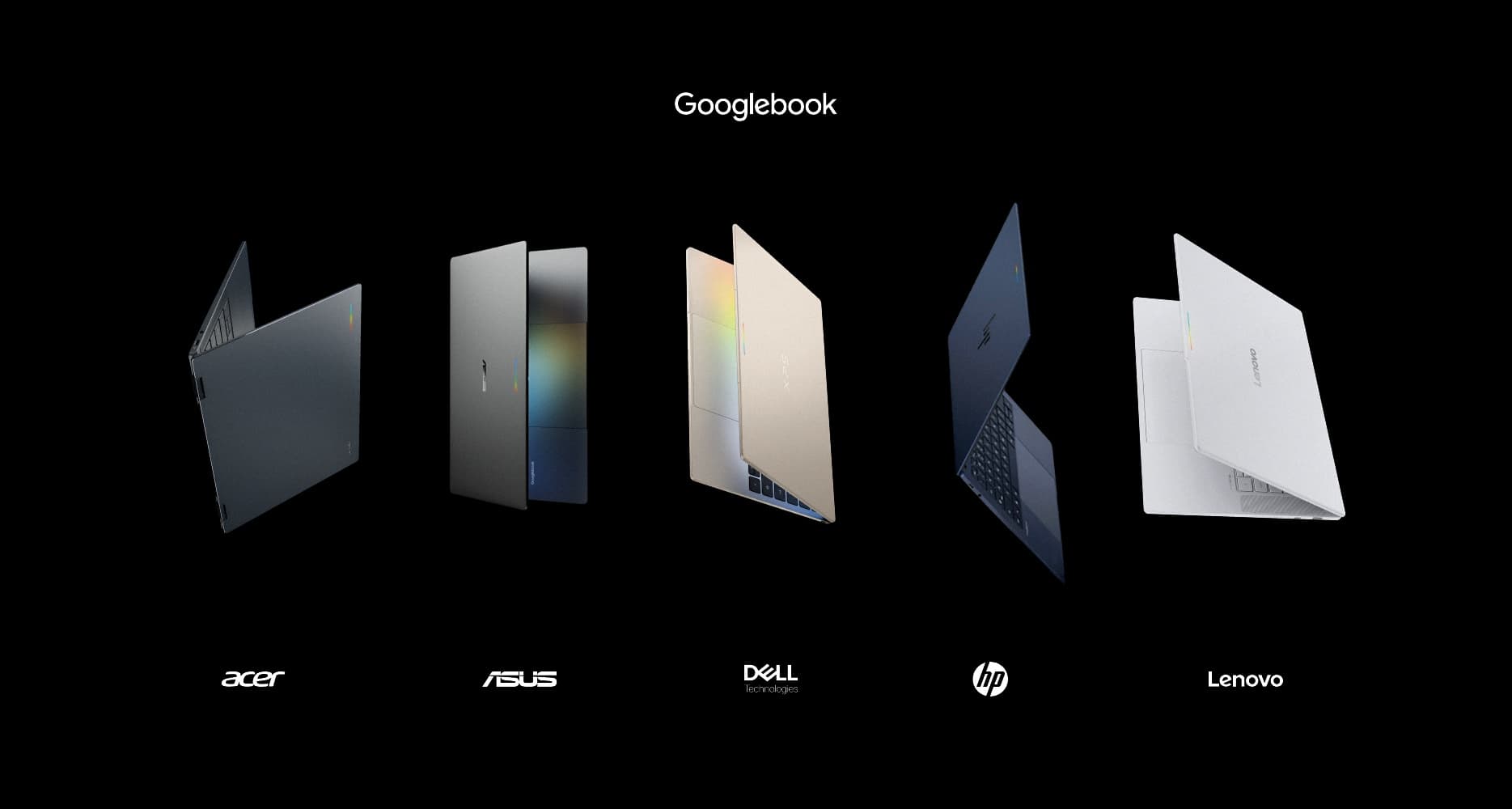
/ Googlebook laptops hit US shelves Oct 4, 2026 — Acer, ASUS, Dell, HP and Lenovo from $899, with Gemini, Android sync, and 12 months of Google AI Pro.
by Hozefa Khety
· 9 min read
Googlebook laptops hit U.S. store shelves on October 4, 2026, after weeks of pre-orders — with Canada, the U.K., Ireland, France, Germany, and Australia following on October 5. Five partner flagships from Acer, ASUS, Dell, HP, and Lenovo start at $899. Every model includes 12 months of Google AI Pro (5TB of cloud storage and higher Gemini limits), plus software perks such as months of YouTube Premium, Adobe Photoshop, and a year of GeForce NOW, according to Google. USD prices and shelf dates checked October 3, 2026 against Google's blog and partner newsrooms.
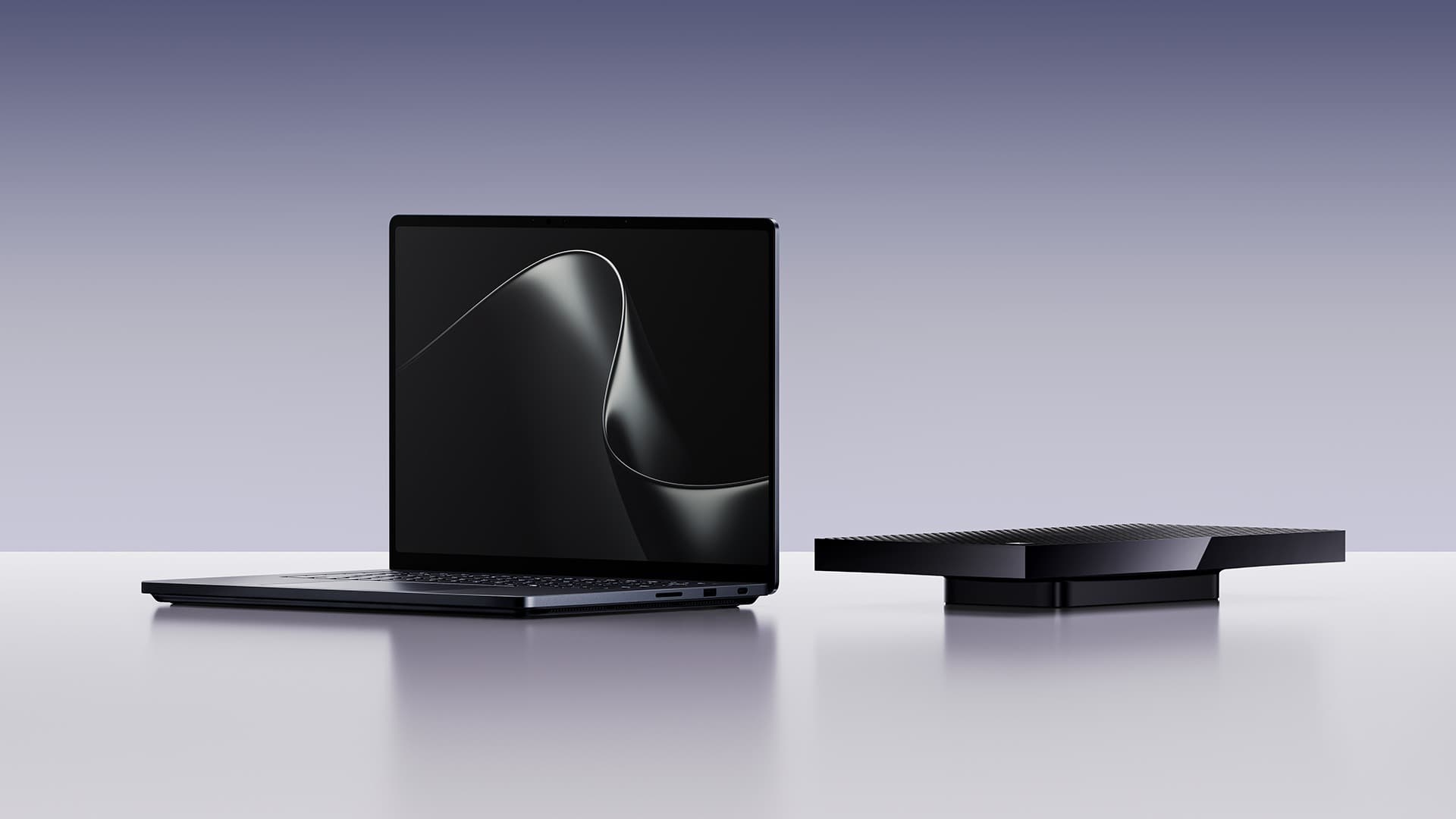
Googlebook is not a Chromebook rebadge. Google describes it as a new laptop category built on the Android technology stack with desktop foundations from ChromeOS, designed for Gemini Intelligence and deep Android phone sync. John Maletis, Vice President of Laptops & Tablets, and John Solomon, VP and General Manager of Laptops, Tablets & Android Enterprise, laid out the pitch on the Google blog on September 21, 2026: premium partner hardware, on-device AI, and phone-to-laptop continuity that Windows and macOS do not match for Android users.
When and where Googlebooks go on sale
Pre-orders opened September 21, 2026 on the Google Store, Best Buy, and other select retailers. Devices arrive on shelves October 4 in the United States and October 5 in Canada, the U.K., Ireland, France, Germany, and Australia, Google says. Acer separately lists North America availability in October from $899, EMEA from €1,199, and Australia in November from A$2,599 (limited-time offers; specs and stock vary by region).
Five launch models and starting prices
Google is not building its own Googlebook chassis for launch. Partners ship the hardware. Across the portfolio, Google promises a baseline of 16GB of RAM (some configs up to 32GB), touchscreens with up to about 2.8K–3K OLED panels depending on the model, haptic glass trackpads on most machines, the lid Glowbar, Intel Core Ultra Series 3 or Snapdragon X Elite processors with NPUs rated over about 45 TOPS, and up to roughly 14 hours of video playback / 16 hours of web browsing in Google's own claims. Ars Technica notes the launch designs are fanless.
Acer Googlebook 14 — from $899. The only convertible at launch (360° hinge: clamshell, tent, stand, tablet). Acer's newsroom lists Intel Core Ultra 5 325 or Ultra 7 355 (Panther Lake), a 14-inch 2880×1800 (3K) OLED touch panel at 500 nits with Gorilla Glass, up to 32GB LPDDR5X and 512GB SSD, 71Wh battery (up to 16 hours web / 14 hours local video in Acer's tests), aluminum-magnesium Elemental Blue chassis, about 13.9mm thin and 1.14kg (2.51 lbs), Thunderbolt 4 plus dual USB-C, Wi-Fi 7, fingerprint on the power button, and Titan C security.
Dell XPS Googlebook — from $999 (Ars Technica updated this starting price on September 28, 2026). Snapdragon X Elite, 13.4-inch 2.5K IPS touch display at 500 nits, 16–32GB RAM, 512GB+ storage, machined aluminum, haptic touchpad, about 12.5mm / 2.5 lbs, fingerprint sensor — the most compact screen in the launch set, and the one without an OLED panel.
Lenovo Googlebook 15 — from $1,099.99 (Lenovo StoryHub, September 28, 2026). The workhorse screen: 15.3-inch 2880×1800 OLED touch at 120Hz and 500 nits, Intel Core Ultra 5 325, 16 or 32GB LPDDR5X, 256 or 512GB SSD, magnesium/metal chassis under 3 lbs (from 1.29kg), haptic touchpad, quad speakers with Dolby Atmos, face unlock plus fingerprint, Glowbar, Wi-Fi 7, and up to about 12.5 hours of battery life in Lenovo's tests. Available starting October 4, 2026.
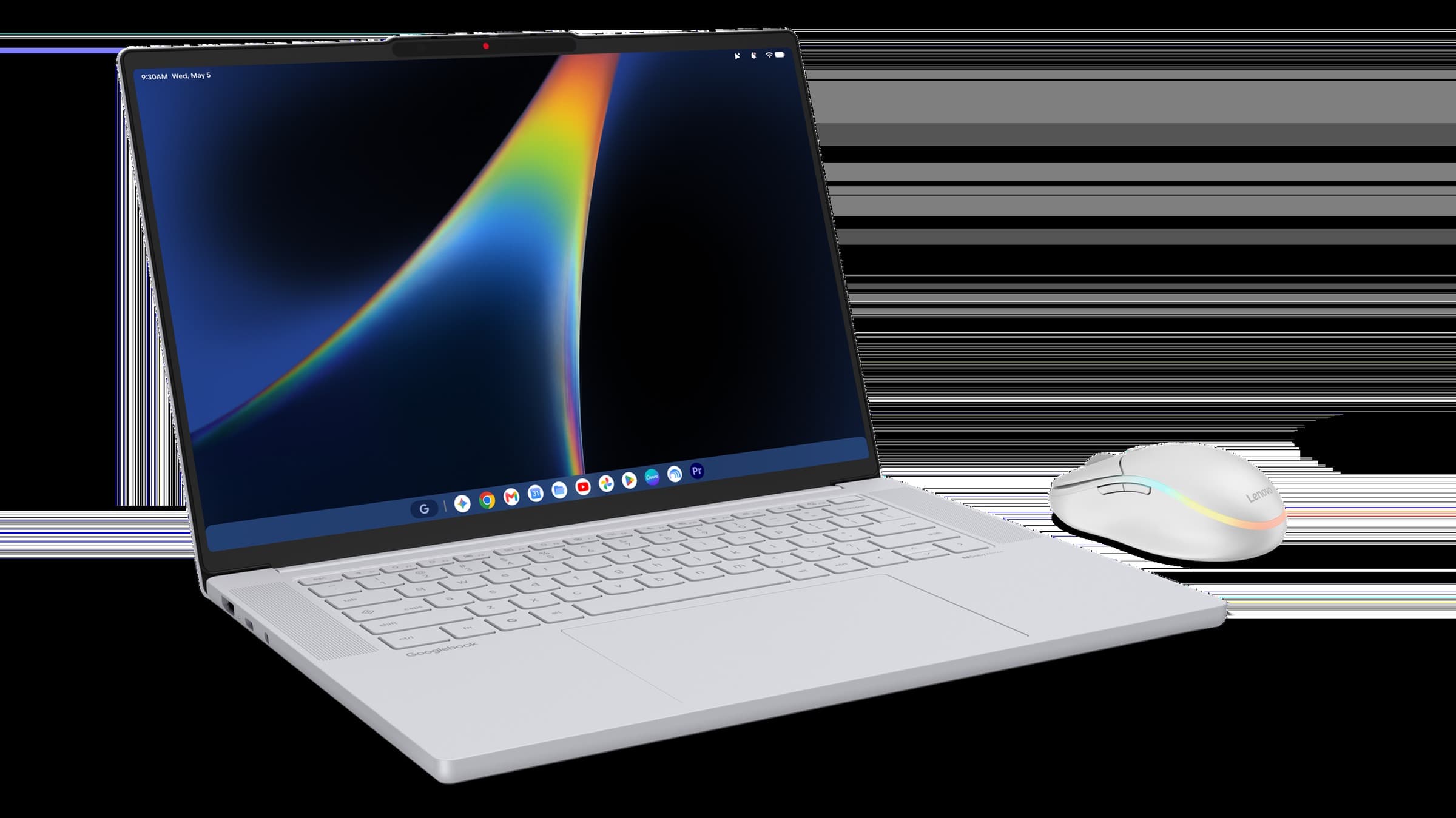
ASUS Googlebook 14 — from $1,299. Ars lists Intel Core Ultra 5/7, 14-inch 3K OLED touch at 500 nits, 16–32GB RAM, 256GB+ storage, aluminum-and-magnesium chassis, about 14.0mm / 2.2 lbs (the travel weight champ in Google's own partner blurbs), haptic touchpad, and fingerprint. ASUS Pressroom highlights a 16:10 3K OLED HDR touchscreen with up to 1000 nits peak HDR, 120Hz, Gorilla Glass Victus with matte anti-glare, six speakers, and dual Thunderbolt ports.
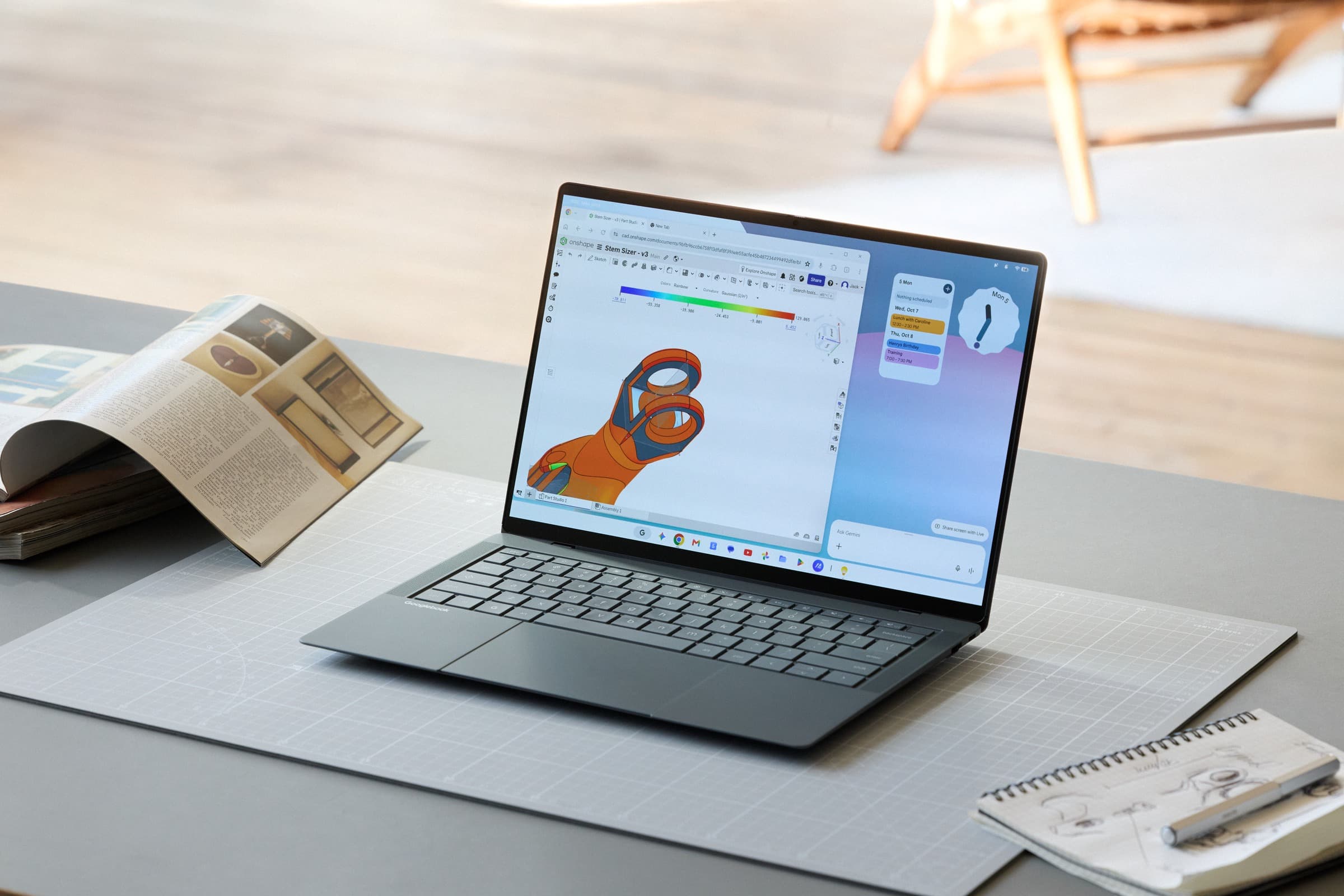
HP Googlebook 14 — from $1,199.99 at HP.com and Best Buy in October, per HP's September 21, 2026 newsroom post (Ars previously tabulated $1,299; prefer HP's own starting price). Snapdragon X Elite, ultra-thin 10.91mm design, up to 19 hours of battery life in HP's video-playback test methodology, vapor chamber cooling, 3K OLED touch with up to 120Hz VRR on select configs, 5MP IR camera with face unlock, quad speakers with HP Audio Boost 2.0, Glowbar, recycled metal and ocean-bound plastic materials, and EPEAT Gold with Climate+ where registered.
Gemini, Magic Pointer, and Android phone sync
Software is the differentiator Google is selling. Magic Pointer lets you wiggle the cursor to aim Gemini at whatever is on screen — for example, pulling dates from an email into Calendar or asking whether a message looks like a scam. Rambler is voice-to-text that cleans filler words and can format notes (it also shipped on Pixel 11). Create My Widget builds desktop widgets from plain-language prompts. Google also highlights Proactive Suggestions that react to on-screen context.
Phone sync is pitched for Android 17 and newer supported devices: Continue On resumes a phone app session on the laptop when the app supports it; Files can browse phone storage; Cast My Apps streams phone apps into desktop windows without a separate install. Setup moves Wi-Fi networks, saved passwords, and messages with end-to-end encryption, Google says. The Play Store is the primary app source, with a desktop-class Chrome browser included. Google confirmed to Ars that developer-verification rules for sideloaded APKs will apply similarly to phones.
Builders get Antigravity (Google's agent development platform) plus a full terminal, and Googlebook adds a Level 5 security-certified pKVM hypervisor for an isolated Linux environment on the Titan hardware root of trust shared with ChromeOS. OS feature drops and updates are promised for up to 10 years.
What is included with every purchase
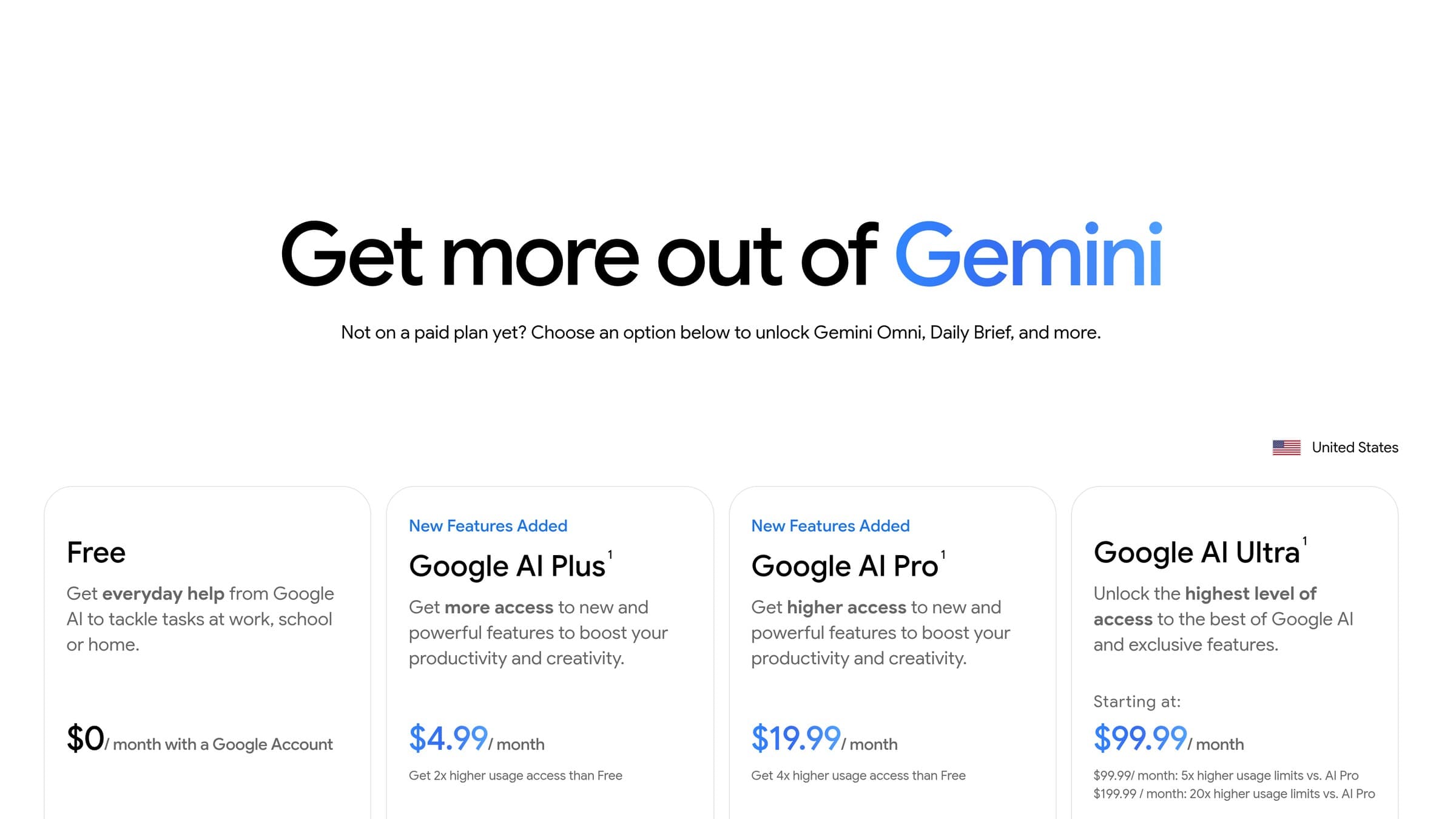
Every Googlebook includes 12 months of Google AI Pro — Google and partners value the monthly auto-renewal rate at $239.88 — with 5TB of storage and expanded Gemini, Flow, and Gemini Notebook access. The trial is for eligible buyers who purchase and activate on or after October 1, 2026 in the U.S., Canada, U.K., Ireland, France, Germany, Australia, and New Zealand, redeemable by March 31, 2027; then it converts to the then-current Google AI Pro price (listed as $19.99/month in partner footnotes) unless canceled. Bundled app credits commonly include periods of YouTube Premium, Adobe Photoshop (and on some partner sheets Premiere or CapCut), and a year of NVIDIA GeForce NOW. HP cites a curated bundle valued at up to $350; exact titles and lengths vary by partner terms on googlebook.com.
Which Googlebook should you buy on day one?
Pick Acer if you want the lowest entry price and the only convertible. Choose Dell if you prefer Snapdragon, a smaller 13.4-inch chassis, and the $999 rung — knowing it is IPS, not OLED. Lenovo is the productivity canvas if you want a true 15.3-inch OLED. ASUS is the featherweight 14-inch OLED travel pick. HP is the Snapdragon 14-inch OLED with the thinnest claimed chassis and the longest partner battery claim (up to 19 hours under HP's test). All five are premium-priced versus everyday Chromebooks; Google is aiming at MacBook Air / Windows ultraportable money, not school Chromebook money.
Hands-on reviews were still scarce as shelves opened — Ars noted outsiders had not had long-term units before launch day — so treat battery, fanless thermals, and desktop-class Android app quality as claims to verify after October 4 stock arrives. Prices above are U.S. dollar starting tags from Google and OEM newsrooms as of late September / early October 2026; retailer promos and configs will move.
Frequently asked questions
When do Googlebook laptops go on sale in the US?
Google says devices hit shelves on October 4, 2026 in the United States. Canada, the U.K., Ireland, France, Germany, and Australia follow on October 5. Pre-orders opened September 21, 2026 on the Google Store, Best Buy, and other select retailers.
How much does a Googlebook cost?
Launch starting prices: Acer Googlebook 14 from $899; Dell XPS Googlebook from $999 (Ars Technica Sep 28 update); Lenovo Googlebook 15 from $1,099.99 (Lenovo); HP Googlebook 14 from $1,199.99 (HP newsroom); ASUS Googlebook 14 from $1,299 (Ars). USD checked October 3, 2026.
Which companies make Googlebook laptops?
The first flagships come from Acer, ASUS, Dell, HP, and Lenovo. Google designs the Googlebook software platform and partners build the hardware.
Does every Googlebook include Google AI Pro?
Yes. Google and OEM partners say every Googlebook includes 12 months of Google AI Pro with 5TB of cloud storage and higher Gemini limits, for eligible activations on or after October 1, 2026 in listed countries. After the trial it converts to the then-current subscription price unless canceled.
How does Googlebook sync with an Android phone?
On supported Android 17+ devices after setup, Google highlights Continue On (resume phone app work on the laptop), Files access to phone storage, and Cast My Apps (use phone apps in desktop windows). Sign-in can bring over settings, Wi-Fi networks, passwords, and messages with end-to-end encryption, per Google.
What is Magic Pointer on Googlebook?
Magic Pointer is Gemini tied to your cursor: wiggle the pointer to aim Gemini at on-screen content (for example calendar dates in an email, scam checks, or image edits). Google says it only acts when asked and can be turned off.
Is Googlebook the same as a Chromebook?
No. Google positions Googlebook as a new premium laptop category using the Android stack plus ChromeOS desktop foundations, with native Android apps, Gemini-first features, and phone continuity. Chromebooks remain Google's broader ChromeOS laptop line; Googlebooks are the partner flagship tier starting at $899.
Where can I read Google's official Googlebook announcement?
See John Maletis's "Googlebook is raising the bar for premium laptops" and John Solomon's pre-order post on blog.google (Devices), both dated September 21, 2026, plus partner newsrooms from Acer, ASUS, Dell, HP, and Lenovo.