nubia NaviX Ultra: the first mass-produced AI agent phone is a ByteDance collab — and it learned from a failure
/ ZTE and ByteDance certified the NaviX Ultra with China's MIIT on September 1. Doubao runs the OS, apps grant it credentials via MCP instead of being scraped, and the primary model runs on-device. On sale in China this month.
by Hozefa Khety
· 9 min read
The first phone built around an AI agent instead of an app grid cleared its final regulatory hurdle this week. China's Ministry of Industry and Information Technology granted network access to the nubia NaviX Ultra — the second-generation "Doubao phone" built by ZTE's sub-brand with ByteDance — completing a compliance path that ran from large-model filing in July to terminal certification on September 1. Nubia says it goes on sale in China this month. It is billed as the world's first mass-produced AI agent phone, which is a marketing claim until you remember the first one sold 30,000 developer units and then got blocked inside WeChat.
The NaviX Ultra matters less as a phone than as an answer to a question the whole industry is asking: when an AI is supposed to operate your apps for you, how does it get permission to touch them? Nubia tried the obvious answer with the M153 in December — let the agent see the screen and tap like a human. It was exactly as fragile as it sounds. The second answer is a bet on open protocols, a dedicated orange button, and doing the AI's math on the phone instead of in a cloud. The rest of the industry is watching this experiment from a safe distance, which is what companies do when they have an assistant of their own to protect.
The first Doubao phone worked until WeChat noticed
The story starts in December 2025, when ZTE and ByteDance quietly shipped the nubia M153 at RMB 3,499 — about $505 — to developers and industry professionals only. The idea was genuinely new: Doubao ran at the operating-system level, and a GUI agent executed multi-step tasks by literally looking at the screen and simulating the taps a person would make. Book a restaurant, compare a price across three shopping apps, track a parcel — one voice command, no hands. ByteDance was careful to say it had no plans to build its own phone; it wanted to be the AI layer inside everyone else's. ZTE/nubia took hardware duty. Doubao led product definition. The M153 sold out its 30,000-unit run.
Then it hit the wall every screen-scraping agent eventually hits. Simulated taps look identical to a malicious overlay to an app's security system. Per Baidu's encyclopedia entry and Chinese press coverage, WeChat and financial apps activated their anti-automation policies against the M153's GUI approach — the most important app in China treating the phone's headline feature as an attack. The companies answered with a two-week update cadence through March, but the architectural problem was not patchable. An agent that works by impersonating your fingers will always be one security policy away from being locked out.
The pivot: from reading screens to Model Context Protocol
The NaviX Ultra is the corrected architecture. According to LatePost reporting, nubia and ByteDance abandoned screen-reading entirely. Instead of simulating taps, the phone asks app makers to expose direct integrations through the Model Context Protocol — the Anthropic-originated standard that has quietly become the plumbing of the agent world — plus open APIs and A2A (agent-to-agent) cooperation. Tencent and Alibaba are at the table, and Doubao's engineering team is negotiating pipelines with top app developers one by one. The agent no longer impersonates the user; it holds a credential the app granted on purpose. That is the difference between picking a lock and being handed a key, and it is why the second-generation phone can survive contact with WeChat.
The trade is scope for stability. A GUI agent can theoretically operate anything a human can — until it cannot. A protocol agent only works with apps that have signed up, and the early list will be uneven: strong where Tencent and Alibaba have opened doors, absent everywhere else. ByteDance frames the agent's job in four priorities — comprehension, action, memory, and data safety — with multi-step tasks like comparison shopping and full travel itineraries as the marquee demos. The honest review of this phone, when it comes, will be a list of which apps said yes. That list is the actual spec sheet.
There is also a regulatory dimension that does not exist anywhere else. China requires generative AI models to complete a filing with the Cyberspace Administration of China before public deployment — the "Nubia Doubao mobile phone large model" was registered on July 8 for use on ZTE terminals, in the same batch as Apple Intelligence, Huawei's Xiaoyi, vivo's BlueLM, and Xiaomi's MiLM. An AI-agent phone is not a feature you can quietly roll out there; the assistant itself cleared a regulator before the hardware cleared a network test. It is the first consumer device whose headline capability shipped with a compliance file attached.
The button, the battery, and the rumours
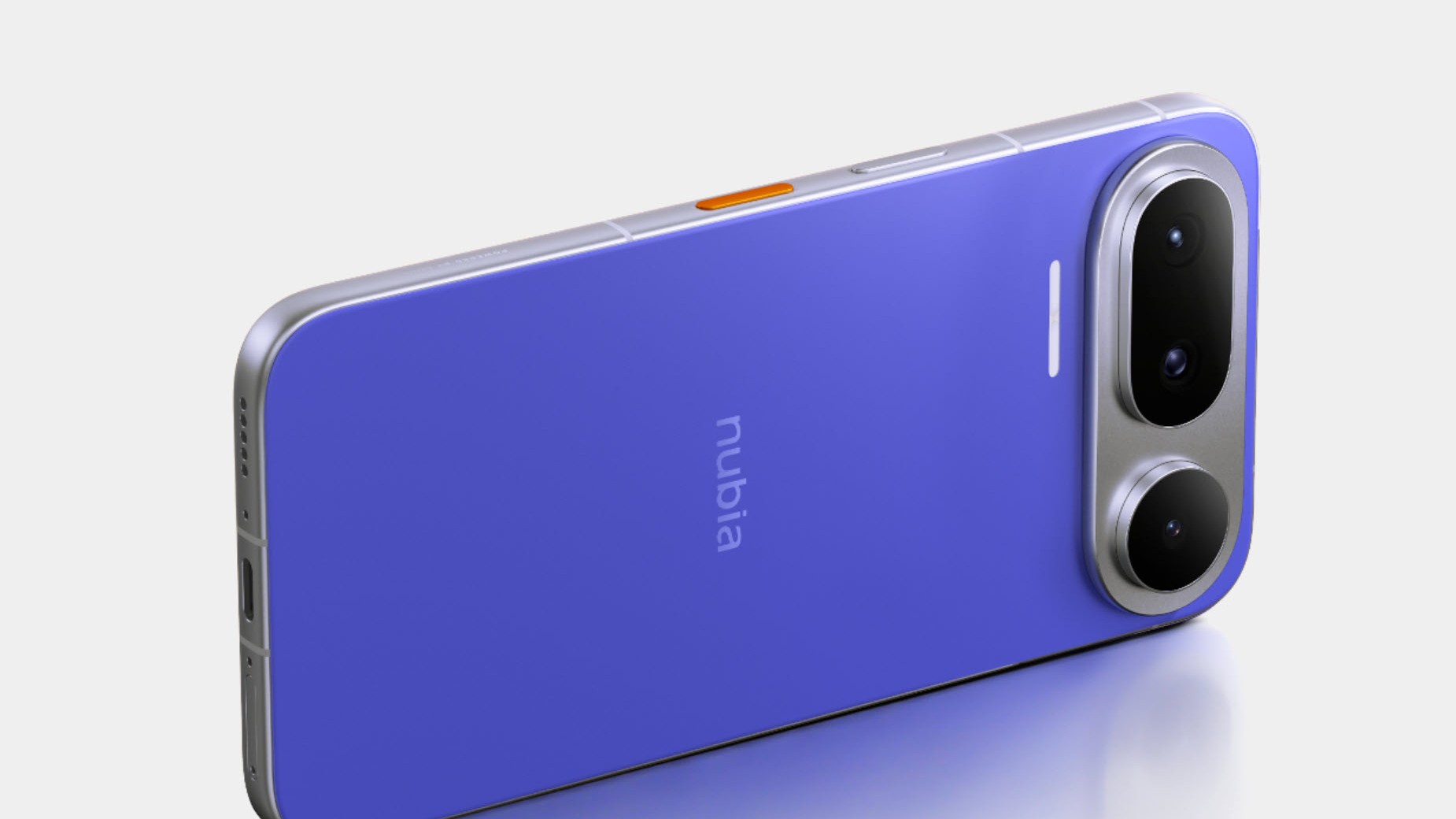
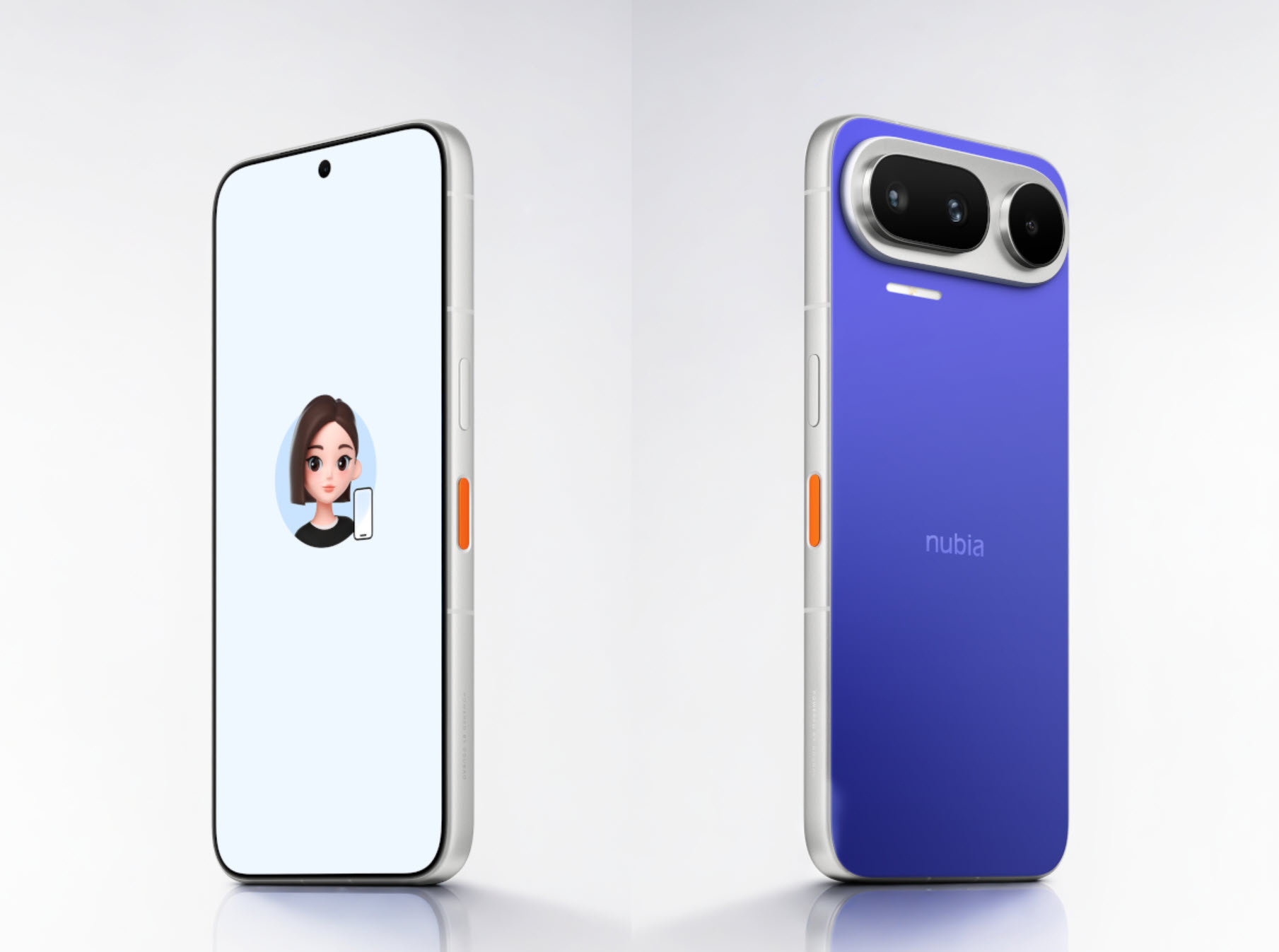
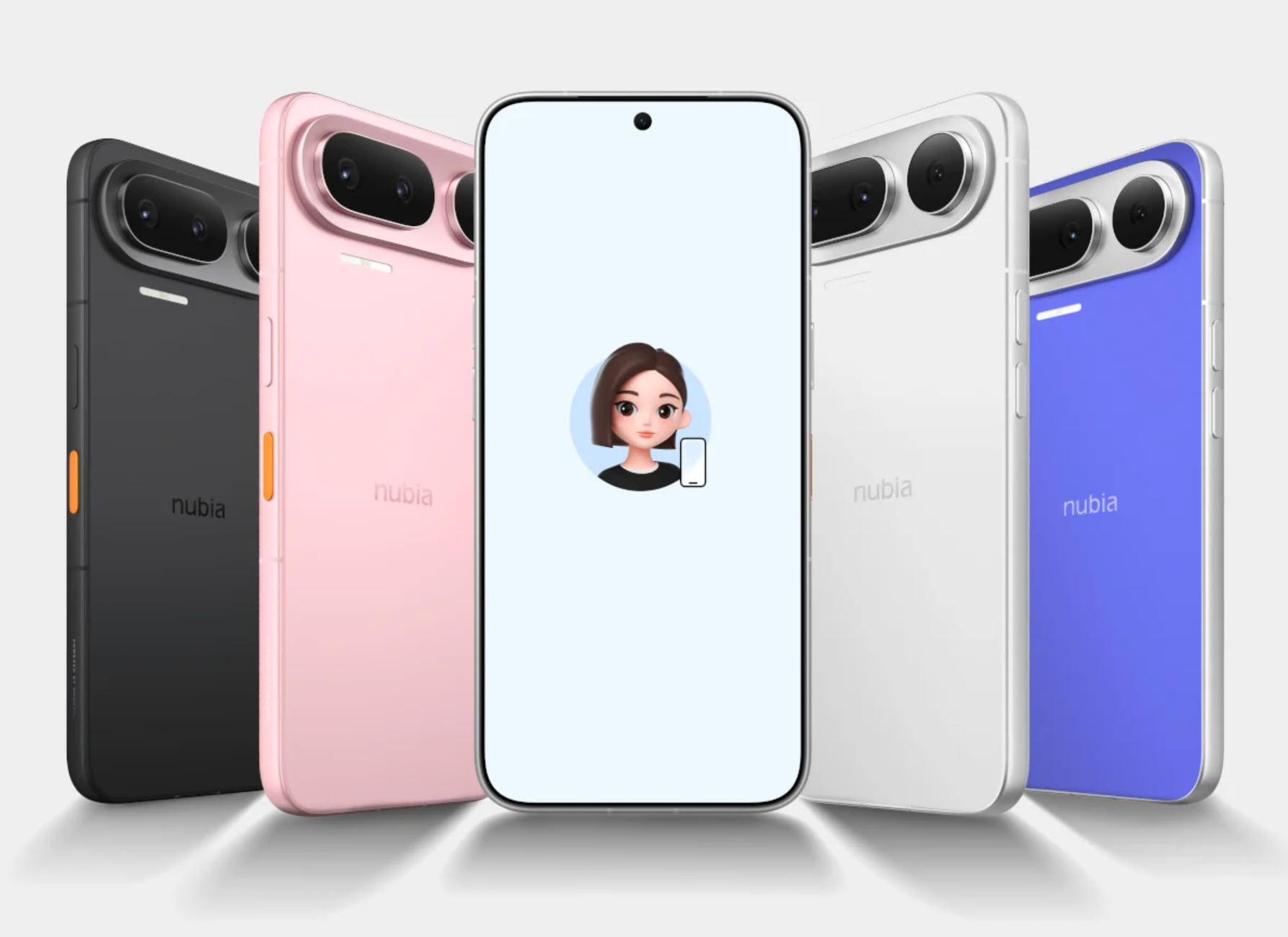
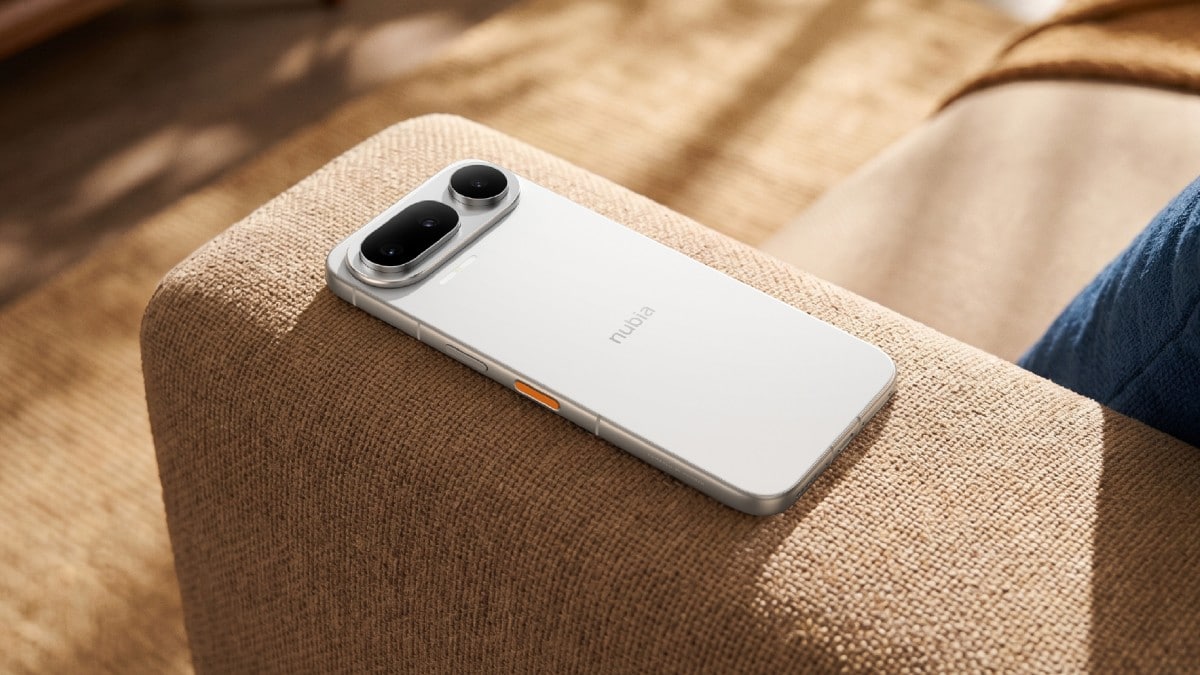
Nothing is officially confirmed beyond the certification, so treat the hardware as a well-sourced rumour until Nubia's keynote. The consistent leaks: Snapdragon 8 Elite Gen 5, a 6.78-inch 1.5K display at 144Hz, a triple 50MP rear camera (main, ultrawide, periscope) with camera modules supplied by Sunny Optical, a 50MP front camera, and a roughly 7,000–7,100mAh silicon-carbon battery with 80W to 100W wired charging plus wireless. Four colours are locked in — black, white, blue, and a pinkish "Dream" — and official promo material shows a horizontal camera island, very slim bezels, a centered punch hole, and the design's one signature: an orange AI key on the side rail.
The button is a statement about where AI phones are going. Honor's Robot Phone made its bet physical with a motor; nubia's bet is a key you press to summon an agent that then acts for you. Apple has done side-button AI shortcuts; the difference is that this one is wired to a third company's model — ByteDance's, not the phone maker's own. That split is the actual product: nubia builds the body and the silicon, Doubao defines the experience, and the orange key is the treaty between them made physical.
Two spec-sheet caveats are worth printing before the keynote does. First, a 7,100mAh silicon-carbon cell in a 6.78-inch body is now table stakes in China — Honor's Robot Phone shipped 7,060mAh a month ago, and Poco's F9 Ultra just shipped 8,050mAh — so the battery is not the story. Second, Snapdragon 8 Elite Gen 5 is last year's flagship silicon in a month where Qualcomm is about to announce the Gen 6 line (Summit runs September 22–24, and our earlier coverage expects LPDDR6 and Adreno 850 across the Gen 6 Pro tier). Nubia is shipping a phone whose chipset will be superseded before some buyers' pre-orders land. The bet is that nobody buys an agent phone for its SoC.
On-device AI is the pitch. It is also the constraint
The genuinely defensible feature is where the model runs. Per coverage of the MIIT filing, the NaviX Ultra's primary model computation runs locally on the phone rather than in ByteDance's cloud, which lowers the odds of personal data leaking through a round trip to a server — and which the marketing will not let you forget, because it already carries official generative-AI clearance for on-device use. The capability ceiling is real: on-device models are smaller, tasks that need frontier-level reasoning will lean on whatever the phone can run, and "runs locally" in a phone this thin means a distillation, not Doubao's biggest cloud model. The NaviX Ultra is betting that for bookings, orders, and itineraries, a small model with deep system access beats a giant model asking for screenshots.
That bet has a shape the West has not tested. The AI-phone pitch in the US has been a rebrand of software features — writing tools, photo cleanup, a chatbot in a sidebar. The NaviX Ultra is the first phone where the agent is the product, with the hardware chosen to serve it: an agent key instead of a camera button, OS-level permissions instead of app store access, a compliance filing instead of a keynote. If it works, the interesting question stops being which phone maker has the best model — nubia, notably, does not have one — and becomes which lab gets to be the default agent inside everyone's hardware. ByteDance is trying to do to phone OSes what Android did to phone software, one orange key at a time.
Price, availability, and the India question
China only, this month, price unannounced. Nubia has confirmed the September launch window and the four colours; it has not published pricing, full specifications, or any availability outside China. The M153's RMB 3,499 developer pricing is a floor, not a forecast — a mass-market flagship with a periscope camera and Sunny Optical optics will not carry the same tag. There is no India date, no US date, and no European date, and nubia's export position (as a ZTE brand) gives it little reason to test sensitive markets with a phone whose party trick is a Chinese super-app integration. For everyone outside China, this is a preview of 2027's software, not a purchase decision for 2026's hardware.
What it adds up to
The M153 was the interesting failure: an agent that worked until the most important app on the phone declared war on it. The NaviX Ultra is the corrected thesis — credentials instead of impersonation, negotiation instead of scraping, on-device inference as a privacy story regulators can sign. If the app integrations hold up in daily use, ByteDance will have built the first working template for agent phones, and the interesting sequel becomes whether Samsung, OPPO, and vivo adopt Doubao's layer or defend their own. If the integrations feel thin — if the agent can book a restaurant but not touch the apps you actually use — the orange key becomes the most honest button in tech: a physical reminder that the industry still has not solved permissions.
Either way, the question this phone answers is no longer "can an AI use a phone." It is "who gets to say yes." Watch the app list at launch. It will tell you more about the next decade of phones than any benchmark chart this month.
Frequently asked questions
What is the nubia NaviX Ultra?
It is a ZTE/nubia smartphone co-developed with ByteDance and built around the Doubao AI agent, which runs at the OS level to complete multi-step tasks across apps. Nubia bills it as the world's first mass-produced AI agent phone and the second-generation Doubao phone, after 2025's developer-only nubia M153.
When does the nubia NaviX Ultra launch and how much does it cost?
It is certified for Chinese mobile networks as of September 1, 2026, and goes on sale in China this month. Nubia has not announced pricing; the M153 launched at RMB 3,499 (about $505) for developers. There is no India, US, or Europe availability.
What are the leaked specs of the NaviX Ultra?
Unconfirmed leaks point to a Snapdragon 8 Elite Gen 5, a 6.78-inch 1.5K 144Hz display, triple 50MP rear cameras (main, ultrawide, periscope) with Sunny Optical modules, a 50MP front camera, and a roughly 7,000–7,100mAh silicon-carbon battery with 80W–100W wired charging. Colours: black, white, blue, and 'Dream'.
How is the Doubao agent different from other AI assistants?
It does not just answer questions — it acts. The first-generation M153 used a GUI agent that simulated screen taps; that approach got blocked by WeChat and financial apps. The NaviX Ultra drops screen-reading for direct integrations via Model Context Protocol connections, open APIs, and A2A agent cooperation, so apps grant the agent permission instead of being scraped.
Does the NaviX Ultra run AI in the cloud?
No — primary model computation is reported to run on-device, which reduces personal-data exposure and was part of how the phone cleared China's generative-AI regulatory filing. On-device models trade some capability for that privacy and speed.
What is the orange key on the NaviX Ultra?
A dedicated physical AI button on the side rail that summons the Doubao agent. It is wired to ByteDance's model rather than an assistant built by nubia or ZTE — a phone maker shipping a third company's AI as its headline hardware feature.
Will the nubia NaviX Ultra launch in India or the US?
There is no announcement for any market outside China. As a ZTE sub-brand product whose core feature depends on Doubao's ecosystem and Chinese app integrations, an international launch in this generation is unlikely.