GPT-6.1 Terra: price, access and how it compares
/ OpenAI's GPT-6.1 Terra costs $1/$5 per million tokens, half GPT-5.6 Terra's price. Here's who gets it in ChatGPT, benchmarks and how it compares to Sol.
by Hozefa Khety
· updated · 7 min read
OpenAI released GPT-6.1 Terra on Monday, October 26, 2026. It is the company's new mid-priced model, built for everyday computer work: reading screens and documents, filling in forms, interpreting technical drawings and writing clearly. The headline is the price. In the API it costs $1 per million input tokens and $5 per million output tokens, half of what OpenAI charged for GPT-5.6 Terra.
You can use it now in ChatGPT Work and Codex if you pay for ChatGPT, and developers can call it in the API as gpt-6.1-terra. Here is what it costs, who gets it, how it compares with OpenAI's bigger models and Anthropic's Claude, and when it is the right pick.
GPT-6.1 Terra price
OpenAI's standard API price for GPT-6.1 Terra is $1 per million input tokens, $0.05 per million cached input tokens and $5 per million output tokens. A token is a small chunk of text, roughly three quarters of an English word, so a million tokens is a long book's worth of text.
That is a big cut. According to Artificial Analysis and The Decoder, GPT-5.6 Terra cost $2 per million input tokens, $12 per million output tokens and $0.20 per million cached input tokens. OpenAI says Terra's standard prices are 50% lower than both GPT-5.6 Terra and GPT-6.1 Sol, the more capable model it launched at DevDay in September.
OpenAI's developer page lists the fine print. Writing to the prompt cache costs $1.25 per million tokens with 30-minute retention, or $2.50 for 12-hour retention. Prompts longer than 272,000 input tokens are billed at twice the input rate and 1.5 times the output rate for the whole request. Batch and Flex processing are 50% cheaper, Fast mode costs twice the standard rate, and regional processing adds 10% where it is offered.
For comparison, The Decoder puts Anthropic's mid-tier Claude Sonnet 5.5 at $2 per million input tokens and $10 per million output tokens, so Terra undercuts it by half on both.
Who can use GPT-6.1 Terra in ChatGPT
OpenAI says GPT-6.1 Terra is available to all Plus, Pro, Enterprise and Edu users in ChatGPT Work and Codex. The ChatGPT release notes also list Business plans and say the rollout reaches accounts gradually, depending on plan, region and workspace settings. Once it arrives, you pick GPT-6.1 Terra from the model list.
Your plan's overall usage limits do not change, but OpenAI says the same allowance covers more tasks with Terra than with GPT-5.6 Terra, and substantially more than with GPT-6.1 Sol or GPT-6 Astra. Some Plus and Pro users may notice that the default Power presets in Work now use GPT-6.1 Terra at Medium effort instead of GPT-6.1 Sol at Light.
OpenAI's announcement does not mention the free ChatGPT tier, so free users should not expect Terra in the model picker for now. Standard and Fast modes are supported where available. Terra also does not support UAE inference residency, a restriction OpenAI says is about where the model runs, not where you are.
What GPT-6.1 Terra is good at
OpenAI pitches Terra as a model for the communication and computer tasks that fill a workday: drafting proposals, reading technical drawings, filling out forms and editing videos. Its developer page adds examples like matching product photos to catalogue entries and acting on application screens. A typical job OpenAI describes is reading incoming invoices and typing their details into accounting software.
The model takes text and images as input and writes text. It does not handle audio or video input. It has a 1,050,000-token context window (up to 922,000 input tokens), can write up to 128,000 tokens in one reply, and its knowledge stops at June 1, 2026. Developers can set reasoning effort from none up to max, with medium as the default, and it supports tools such as web search, file search, code interpreter and computer use in the Responses API.
GPT-6.1 Terra benchmarks
These are OpenAI's own numbers unless stated, so treat them as claims until more independent tests arrive.
Computer use: on Agents' Last Exam, a set of professional tasks such as turning architectural drawings into a 3D model, Terra at medium effort scores 15 percentage points higher than GPT-5.6 Terra at about a third of the cost. OpenAI says it performs on par with GPT-6 Astra, its flagship, at one tenth of the price per token, and finishes tasks more than three times faster than both Astra and GPT-6.1 Sol.
Against Claude: at max effort, OpenAI says Terra is over three times as token efficient as Claude Opus 5.5 at a quarter of the price per token, which works out to roughly nine times lower cost per task.
Fewer made-up answers: on OpenAI's internal test of error-inducing prompts, the error rate at low effort fell from 53.6% with GPT-5.6 Terra to 16.7%. At max effort it fell to 4.3%, close to Astra and Sol. Independent tester Artificial Analysis saw a similar trend: on its AA-Omniscience benchmark, Terra guesses 38% of the time when it does not know an answer, down from 88% for GPT-5.6 Terra.
Coding: on Terminal-Bench 4.0, which tests coding agents working from the command line, Terra solves 50.3% of tasks at max effort, more than double GPT-5.6 Terra's 21.5%. Artificial Analysis scores it 48 on its Coding Agent Index v2.0, six points below GPT-6.1 Sol (54) and 17 above GPT-6 Luna (31). At max effort it puts Terra's cost per task at about $0.40, against $1.40 for GPT-5.6 Terra.
GPT-6.1 Terra vs Sol vs Astra: which to use
Terra is not OpenAI's smartest model. OpenAI itself says GPT-6.1 Sol and GPT-6 Astra remain the better choice for the most complex coding work. Terra's pitch is that it gets close on visual reasoning and computer use for a fraction of the price, and it is much faster.
OpenAI's Ted Sanders summed up the lineup in a rule of thumb reported by The Decoder: "If you care about quality only, pick Astra. If you're a bit price sensitive, pick Sol. If you're very price sensitive, pick Terra or Luna."
In practice: use Terra for high-volume office automation, form filling, document and screenshot reading and everyday writing in ChatGPT Work. Step up to Sol or Astra for hard, multi-step software engineering or research where quality matters more than cost.
Safety
OpenAI says GPT-6.1 Terra meets the Critical threshold in cybersecurity under its Preparedness Framework and keeps the protections built for GPT-6 Astra. It says the model is more likely than GPT-5.6 Terra to stay within the scope of a task and to tell users honestly about limits and blockers, and that it held up well against prompt-injection attacks in its tests. The details are in the system card.
That matters because OpenAI pulled GPT-6.1 Astra earlier this month after safety tests flagged problems with scope, authorization and disclosure. Terra ships with the GPT-6 series alignment work rather than as a replacement for that model.
The bottom line
GPT-6.1 Terra is OpenAI's cheapest way yet to get near-flagship computer use. If you pay for ChatGPT, look for it in Work and Codex, where it should stretch your usage further. If you build with the API, it is worth testing against GPT-5.6 Terra and Claude Sonnet for any high-volume task, since the price has halved and OpenAI's and Artificial Analysis's numbers both point to fewer wrong answers. Keep Sol or Astra for the hardest coding jobs.
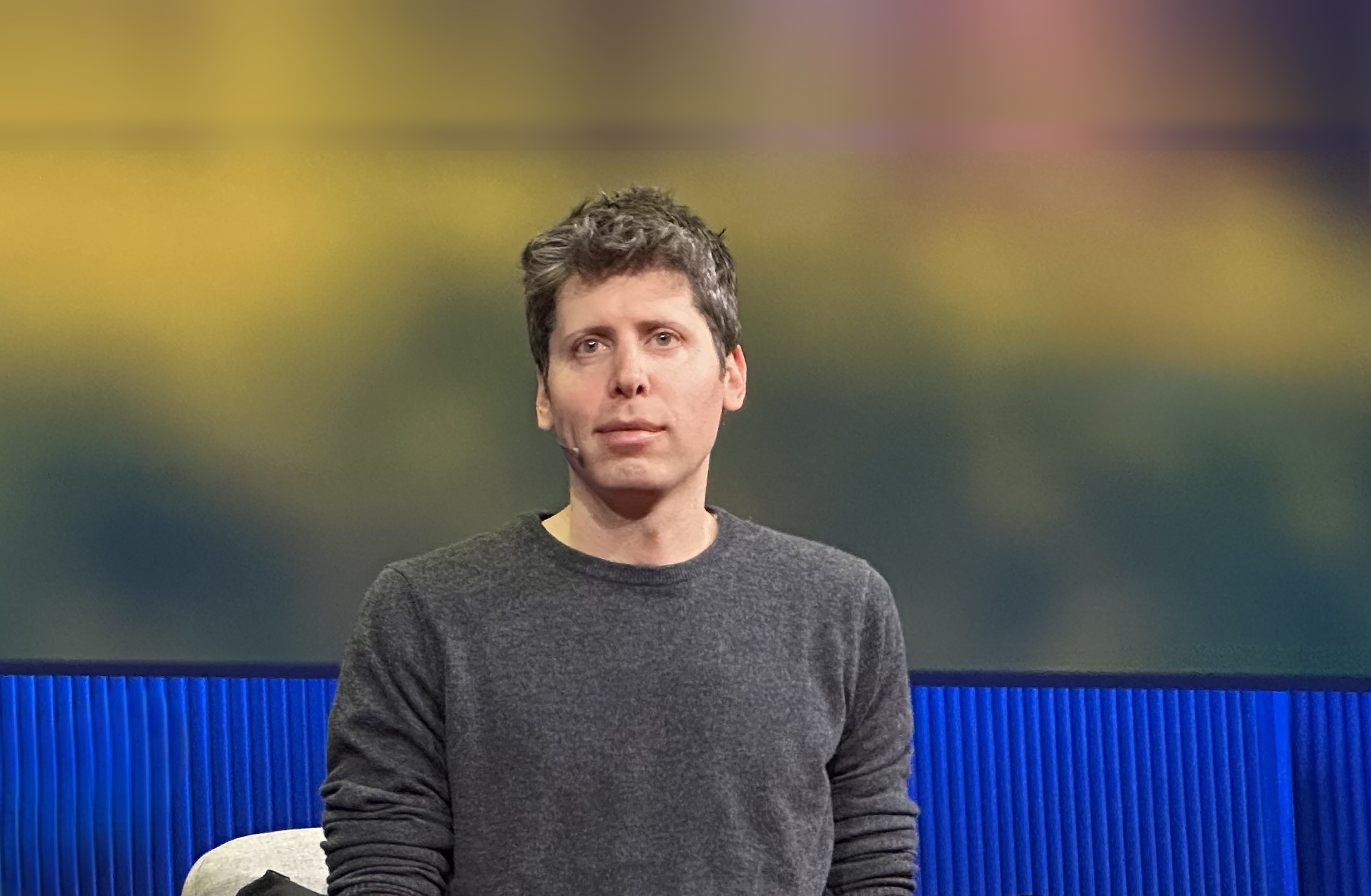
Top photo: OpenAI CEO Sam Altman on stage. (File photo: Steve Jurvetson, CC BY 2.0 via Wikimedia Commons)
See more of The Threshold on Google
Add us as a preferred source to see more of our stories in your Top Stories.
Frequently asked questions
How much does GPT-6.1 Terra cost?
In the API, GPT-6.1 Terra costs $1 per million input tokens, $0.05 per million cached input tokens and $5 per million output tokens. That is half the price of GPT-5.6 Terra, which cost $2 and $12.
When was GPT-6.1 Terra released?
OpenAI released GPT-6.1 Terra on Monday, October 26, 2026, in ChatGPT Work, Codex and the OpenAI API at the same time.
Is GPT-6.1 Terra free in ChatGPT?
Not for now. OpenAI lists Plus, Pro, Enterprise and Edu users, and the release notes add Business. The announcement does not mention the free tier.
Where can I use GPT-6.1 Terra in ChatGPT?
In ChatGPT Work and Codex. Choose GPT-6.1 Terra from the model list once the rollout reaches your account. Your plan's usage limits stay the same.
Is GPT-6.1 Terra better than GPT-6.1 Sol?
Not overall. Terra is cheaper and over three times faster, and OpenAI says it matches GPT-6 Astra on computer-use tasks. For the hardest coding work, OpenAI still recommends Sol or Astra.
How does GPT-6.1 Terra compare with Claude?
OpenAI says Terra at max effort costs about nine times less per task than Claude Opus 5.5. The Decoder notes Claude Sonnet 5.5 costs $2 and $10 per million tokens, double Terra's price.
What is GPT-6.1 Terra's context window?
OpenAI lists a 1,050,000-token context window with up to 922,000 input tokens and up to 128,000 output tokens. Its knowledge cutoff is June 1, 2026.
What is the GPT-6.1 Terra API model name?
Developers call it as gpt-6.1-terra. It works with the Responses API, Chat Completions and Batch, and supports tools like web search and computer use.