The Pixel 11 costs $899 now, and Google said the quiet part out loud

/ Google's devices VP confirmed on the record that memory costs are pushing Pixel prices up — RAM went from $2.80 a gigabyte to $12 in a year. Leaked listings put the Pixel 11 at $899. The Pro tier is worse: $100 more for 4GB less RAM.
by Hozefa Khety
· 9 min read
Phone prices go up all the time. What almost never happens is a company explaining why. Manufacturers have spent two decades hiding component costs behind vague talk of premium materials and added value, because 'we are charging you more because our suppliers are charging us more' is a sentence nobody in marketing wants to sign off on. On July 24, Google's VP of devices and services, Shakil Barkat, said a version of it out loud in an interview with 9to5Google: memory costs have exploded, and Pixel prices are going up because of it. Leaked Amazon listings — pulled down shortly after they appeared — put a number on what that means. The base Pixel 11 is expected to start at $899, a $100 jump over the Pixel 10's $799.
The admission matters more than the number, because it confirms something we have been tracking all year: the AI build-out has quietly repriced consumer electronics, and the bill is now arriving at the checkout page. Below, what Google actually said, what the leaked price list shows, the one spec change that makes this worse than a $100 increase, and what any of it should change about your buying plans before August 12.
What Google actually said
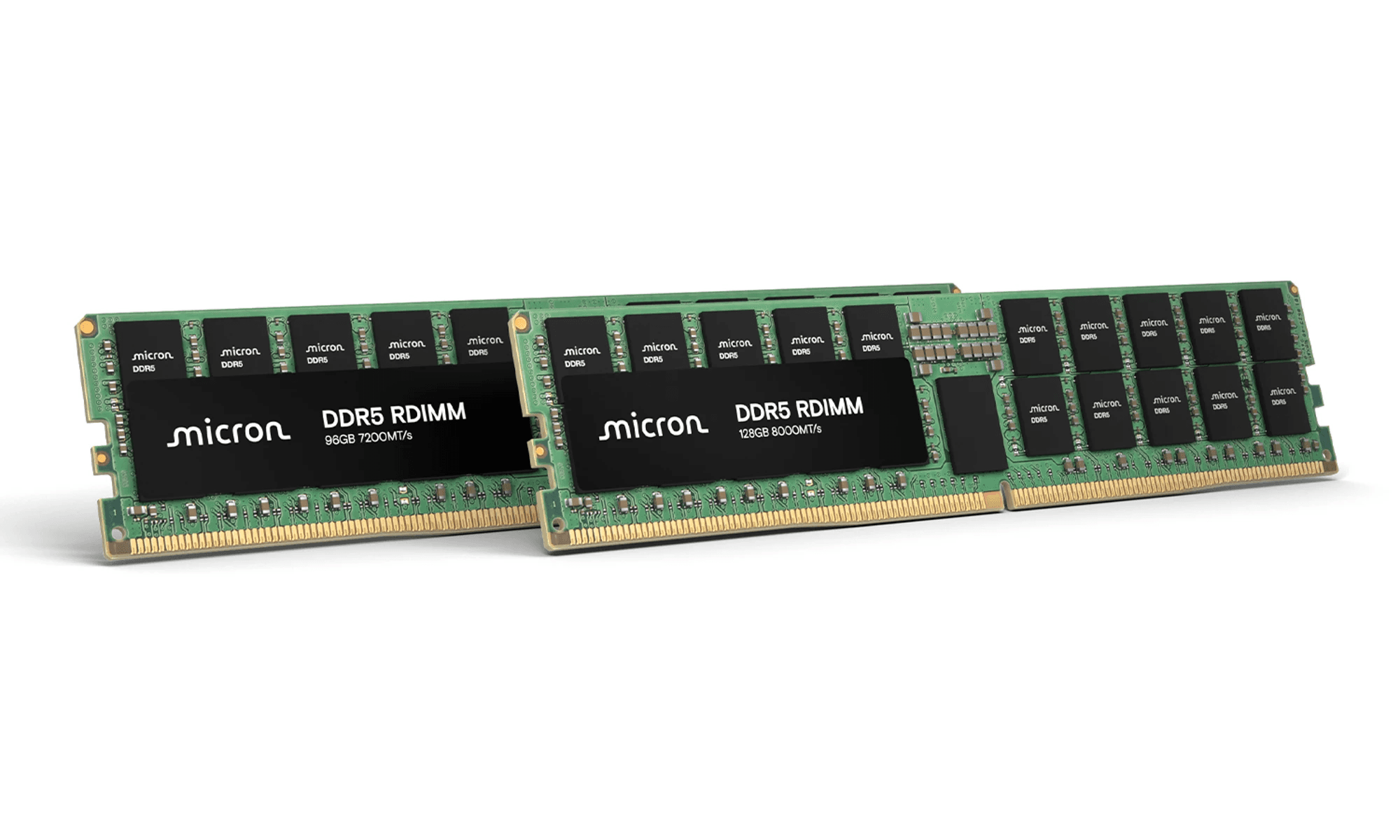
Barkat's framing was blunt: the economics, he said, have now fundamentally shifted. He pointed to Morgan Stanley figures putting the cost of a single gigabyte of RAM at roughly $2.80 in 2025 and about $12 in 2026 — a sixfold increase in a year. The cause is not a shortage in the traditional sense. Memory makers have redirected wafer capacity toward the high-bandwidth memory that AI data centers buy at far better margins, and consumer LPDDR is what gets squeezed out of the fab calendar as a result.
Run that through a flagship's bill of materials and the scale becomes obvious. The RAM in a 16GB phone went from costing roughly $45 to roughly $192 per handset. That is not a rounding error a manufacturer can absorb across a hardware line that has never been Google's profit engine — and Barkat said the adjustments will be rolled out dynamically to match supply realities, which is a carefully-worded way of saying prices will move when costs move, rather than once a year at launch.
The leaked price list
Google has not published pricing — that comes at Made by Google on August 12 in New York, when pre-orders open. But retail listings that briefly went live on Amazon before being deleted, reported in detail by Android Authority and 9to5Google, line up neatly with what Barkat described. The Pixel 11 is listed at $899, up from the Pixel 10's $799. The Pixel 11 Pro moves to $1,099 from $999, the Pixel 11 Pro XL to $1,299 from $1,199, and the Pixel 11 Pro Fold to $1,899 from $1,799. A consistent $100 across every model in the range.
One important caveat before you read those numbers as gospel: the prices are a leak, not an announcement. What Google has confirmed is the direction and the reason, not the figures. Deleted retail listings have a good track record for Pixel pricing, but they have been wrong before, and Google still has two weeks to soften a tier or bundle something in.
It is not quite a $100 price hike — the storage math matters
Here is the part most coverage has skipped. The same listings show Google killing the 128GB tier entirely and making 256GB the new baseline across the lineup. So the honest comparison is not $799 versus $899 for the same phone — it is $799 for 128GB versus $899 for 256GB. Measured per gigabyte of storage, you are getting more for your money than you did last year, and anyone who was going to click up to the 256GB model anyway is arguably paying less than they would have. On the base Pixel 11, the increase is real but partly bought back.
That framing falls apart the moment you look at the Pro models, and this is where the story gets genuinely bad for buyers.
The catch: pay more, get less RAM
According to the same leaked listings, the Pixel 11 Pro and Pro XL ship with 12GB of RAM at the base 256GB tier. The Pixel 10 Pro shipped with 16GB across the board. Sixteen gigabytes returns only if you step up to the 512GB or 1TB configurations — so the full memory allocation is now something you buy your way back to, bundled behind storage you may not need. Pay $100 more, receive 4GB less of the exact component causing the price increase.

As engineering decisions go, it is at least a rational one. At $12 per gigabyte, trimming 4GB claws back roughly $48 of bill-of-materials cost per unit — nearly half the price increase, on a component most buyers will never check the spec sheet for. But it lands awkwardly on a phone whose entire pitch is on-device Gemini AI, because running models locally is precisely the workload that wants headroom in RAM. Google is asking buyers to pay more for an AI phone while giving the AI less room to work in, and the honest answer on whether 12GB is enough will not arrive until reviewers can test how aggressively the Pixel 11 Pro evicts background apps.
'Dynamically' is the word to watch
The most consequential thing Barkat said was not about the Pixel 11 at all. He indicated Google would also adjust pricing on in-market Pixel phones — the ones already sitting on shelves. The Pixel 10a, currently $499, is the obvious candidate. That breaks a convention buyers have relied on for years: a phone's launch price is its ceiling, and it only ever drifts down through discounts as the model ages. If component costs start pushing sticker prices up mid-cycle, then waiting for a better deal stops being the safe default and starts being a gamble.
Google is not alone here, which is the clearest sign this is structural rather than a Pixel problem. Apple raised list prices across much of its non-iPhone hardware for the same reason. Samsung's recent phones have arrived with less base storage at higher prices. In India, launch prices across the market have climbed roughly 15% on DRAM and NAND costs alone. Every company selling a device with memory in it is running the same spreadsheet; Google is just the one that answered the question directly when asked.
Google's actual fix is a software one
The more interesting response is happening below the price tag. Barkat described a dedicated effort to reduce memory requirements across Android and its app ecosystem, so devices can run well on less RAM without degrading the experience. Read that alongside the Pro's 12GB base configuration and the strategy comes into focus: if memory is going to cost six times more for the foreseeable future, the durable answer is not to keep buying more of it but to need less of it.
This is a genuinely good outcome hiding inside a bad one. Android's memory appetite has grown largely unchecked for a decade, on the assumption that RAM would keep getting cheaper. A serious optimisation push benefits every Android phone, especially the budget devices that never had headroom to spare. It just will not arrive in time to make the Pixel 11's price sting any less. In the meantime, Google says trade-in credits and bundle offers will continue — which is where the real discounts on a Pixel have always lived anyway.
What this should change about your buying plans
If you want a Pixel 11, budget for the leaked prices rather than hoping they are wrong, and decide before August 12 which tier you actually need — because the tiers are doing more work this year than usual. On the base Pixel 11, $899 for 256GB is a defensible deal given what storage costs now. On the Pro, think carefully about whether 12GB of RAM will hold up over the four or five years you are likely to keep the phone, and price out the 512GB model to see what the 16GB configuration really costs you.
If you were considering a Pixel 10 or the Pixel 10a instead, the calculus has genuinely inverted. Existing stock at today's price is now the thing at risk, not the thing that gets cheaper — Barkat's comments point directly at in-market phones going up. Buying the outgoing model has usually meant waiting for the new launch to push prices down. This year, waiting may mean watching the old phone get more expensive.
And if your current phone is fine, none of this is an argument to replace it. The one thing worth internalising is that the cheap-memory era that quietly subsidised a decade of spec upgrades is over for now, and the industry has stopped pretending otherwise. Google just said so on the record. Expect everyone else to follow — with considerably less candour.
Frequently asked questions
How much will the Google Pixel 11 cost?
Leaked Amazon listings put the Pixel 11 at $899, the Pixel 11 Pro at $1,099, the Pixel 11 Pro XL at $1,299, and the Pixel 11 Pro Fold at $1,899 — a $100 increase on each model versus the Pixel 10 generation. Google has not confirmed these figures; official pricing arrives at the Made by Google event on August 12, 2026.
Why is the Pixel 11 more expensive than the Pixel 10?
Memory costs. Google's VP of devices and services, Shakil Barkat, told 9to5Google on July 24, 2026 that the economics have fundamentally shifted, citing Morgan Stanley data showing RAM rising from about $2.80 per gigabyte in 2025 to about $12 in 2026. Memory makers have shifted capacity toward high-bandwidth memory for AI data centers, squeezing supply for consumer devices.
Is the Pixel 11 really a $100 price increase?
Not exactly. Google is reportedly dropping the 128GB tier and making 256GB the baseline, so the comparison is $799 for 128GB versus $899 for 256GB. Per gigabyte of storage you get more than last year. The Pro models are the worse deal: the same $100 increase, but with 12GB of RAM at the base 256GB tier instead of the 16GB the Pixel 10 Pro shipped with across the board.
How much RAM does the Pixel 11 Pro have?
Leaked listings indicate 12GB at the base 256GB configuration, with 16GB reserved for the 512GB and 1TB models. That is a downgrade from the Pixel 10 Pro, which shipped with 16GB on every configuration. It has not been confirmed by Google.
Will existing Pixel phones like the Pixel 10a get more expensive?
Possibly. Barkat said pricing adjustments would be rolled out dynamically to match supply realities and indicated in-market Pixel phones could be affected, not just new models. The Pixel 10a currently starts at $499. If you are considering a current-generation Pixel, buying existing stock is lower-risk than waiting for a price drop that may not come.
What is Google doing about high memory prices?
Beyond raising prices, Google says it has started a dedicated effort to cut memory requirements across Android and its app ecosystem so phones run well on less RAM. It also plans to keep offering trade-in credits and bundle deals, which historically provide the biggest real-world savings on a Pixel.
When does Google announce official Pixel 11 pricing?
At the Made by Google event on August 12, 2026 in New York City, where pre-orders are expected to open the same day. Retail availability is reportedly set for around August 20.