Snapdragon 8 Elite Extreme Gen 6 is official: specs, phones, and what the Gen 6 Pro leaks got wrong

/ Qualcomm's 2nm, 5GHz flagship launched as the Snapdragon 8 Elite Extreme Gen 6, alongside a regular Gen 6 that loses more than you'd expect. Here are the confirmed specs, the first phones, and how to tell the two chips apart.
by Hozefa Khety
· 8 min read
Qualcomm's next flagship phone chip is official. It is not called the Snapdragon 8 Elite Gen 6 Pro, the name that ran through months of leaks. At Snapdragon Summit on September 22, Qualcomm announced two chips: the Snapdragon 8 Elite Extreme Gen 6 at the top, and the Snapdragon 8 Elite Gen 6 below it. Both are 2nm chips. Both are the first phone processors to reach 5GHz. The first phones using them were announced the next day.
The new name is not just cosmetic. The gap between the two chips is wider than last year's, and the Extreme's extras are the parts that decide how a phone games, records video and runs AI models. Here is what Qualcomm confirmed, which leaks were wrong, and what the split means if you plan to buy an Android flagship in the next six months.
Snapdragon 8 Elite Extreme Gen 6: the confirmed specs
Both chips have the same CPU: a custom Qualcomm Oryon design with two Prime cores at up to 5.0GHz and six Performance cores at up to 4.0GHz, sharing 16MB of cache. There are no small efficiency cores. Qualcomm made that change last generation, and MediaTek has now done the same with its Dimensity 9600 Pro. Both chips are built on TSMC's 2nm process.
Against last year's Snapdragon 8 Elite Gen 5, Qualcomm's product brief claims the Extreme has 13% faster CPU performance, 37% better CPU power efficiency, 44% faster GPU performance, 40% better GPU efficiency, 35% faster NPU performance and 33% better AI performance per watt. Qualcomm adds its usual caveat: results depend on how each phone maker implements the chip. These are Qualcomm's lab numbers, not independent tests.
Other headline specs on the Extreme: a Qualcomm X105 modem rated at up to 14.8Gbps down and 4.2Gbps up, with 5G-over-satellite support. FastConnect 8800 Wi-Fi, built for Wi-Fi 8 with up to 11.6Gbps peak speeds, plus Bluetooth 6.0 and ultra-wideband. And a Spectra ISP with three 20-bit AI image processors and support for up to 320MP photos.
Extreme vs regular Gen 6: what the cheaper chip loses
The CPU is where the two chips match. Almost everything else differs. According to Qualcomm's figures, as reported by GSMArena and 9to5Google, the regular Gen 6 claims a 10% CPU gain over Gen 5 (against 13% for the Extreme), a 35% GPU gain (against 44%), and a 14% NPU gain (against 35%). The gap in AI performance is the biggest.
Four features are exclusive to the Extreme. First, Adreno matrix cores: dedicated AI hardware inside the GPU. Second, Adreno Neural Fusion, which uses those cores for AI upscaling and frame generation in games. 9to5Google reports Qualcomm claims up to 40% power savings from it. Third, 18MB of dedicated Adreno high-performance memory on the GPU. Fourth, 50% more shared memory for the Hexagon NPU, which Qualcomm says lets the chip run mixture-of-experts AI models with more than 30 billion parameters.
Video is the other clear dividing line. The Extreme records 8K at 60fps and 4K slow motion at 240fps. The regular Gen 6 is limited to 8K30 and 4K120. Android Authority reports the regular chip also loses the APV professional video codec and the hardware H.266 (VVC) decoder. APV was supported on Gen 5, so on that point the cheaper Gen 6 goes backwards.
One more detail from Android Authority is easy to miss: the regular Gen 6 does not have the dedicated Adreno GPU memory that last year's Gen 5 had. It is still the faster chip on paper, but for gaming phones the Extreme is clearly the part Qualcomm wants them to use.
What the leaks got wrong
We published a detailed pre-Summit preview in August based on the leaked SM8975 platform. Some of it held up: TSMC 2nm, 18MB of GPU memory on the top chip, matrix cores in the GPU, UFS 5.0 support, the X105 modem and Wi-Fi 8. Several important details did not.
The name. "Gen 6 Pro" became "Extreme Gen 6". The CPU layout. Leaks described a 2+3+3 arrangement with efficiency cores. Qualcomm shipped two Prime cores and six Performance cores. Clock speeds. The 4.8–5.0GHz range we treated as speculative turned out to be accurate: 5.0GHz is official. The gaming feature. The leaked "AI Frame Fusion" launched as Adreno Neural Fusion.
LPDDR6 memory is the least clear point. Qualcomm's own product brief does not list memory support, and launch reports disagree on whether the regular Gen 6 supports LPDDR6 at all. One thing is clear: the first phones do not use it. Reports on Xiaomi's 18 Pro series list LPDDR5X, and Tech Times reported this week that Samsung's LPDDR6 has passed Extreme Gen 6 validation for 2027 flagships. The LPDDR6 upgrade is coming, just not in the first wave of phones.
First phones: Xiaomi, Motorola, OnePlus and iQOO
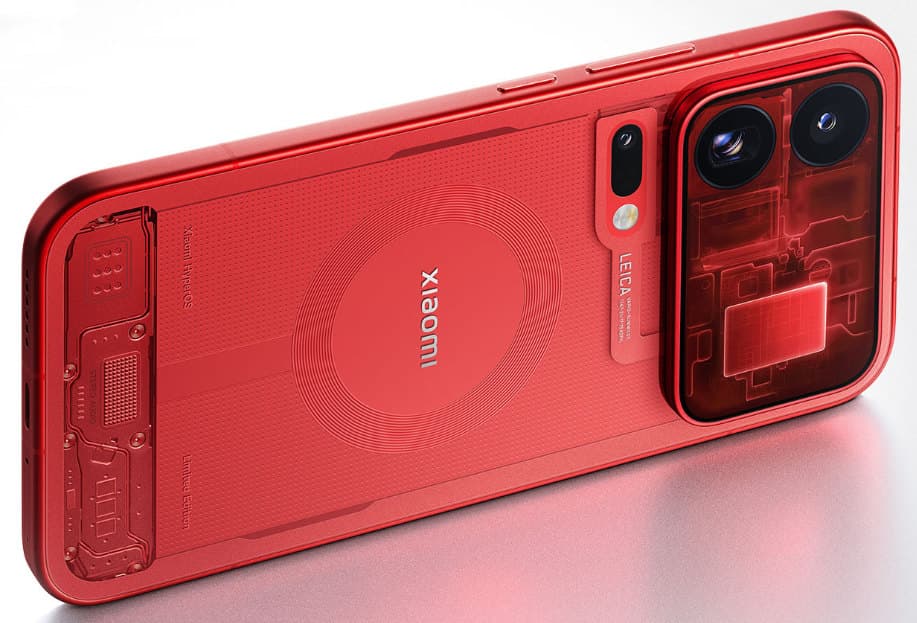
Xiaomi was first, launching the 18 Pro and 18 Pro Max in China on September 23. Its lineup shows the split clearly. The 18 Pro (from 5,999 yuan) uses the regular Snapdragon 8 Elite Gen 6. The 18 Pro Max (from 6,999 yuan) gets the Extreme. Both have Leica cameras with dual 200MP sensors, a rear display and a hardware privacy screen. Xiaomi has confirmed a global launch later this year but has not given a date.
Price matters here too. The 18 Pro starts 1,000 yuan higher than its predecessor, roughly a 20% increase. Xiaomi president Lu Weibing also warned that memory prices may keep rising through 2027. A new chip plus expensive RAM means this year's Android flagships are likely to cost more in India as well.

Motorola showed the Signature 27 on stage during Qualcomm's keynote. It uses the Extreme with a vapour chamber Motorola says is 40% larger than before, a 50MP Sony LYT-910 main camera, a 200MP periscope telephoto and Bang & Olufsen-tuned audio. OnePlus has confirmed the Extreme for the OnePlus 16, has opened China pre-orders, and will share more on September 28. iQOO says the iQOO 16 and iQOO Pad Ultra, both on the Extreme, launch on September 29.
Qualcomm's partner list also includes HONOR, OPPO, REDMI, RedMagic and vivo. Samsung is not on it. Snapdragon Galaxy phones usually arrive with the Galaxy S series, so expect the Galaxy S27 in early 2027 rather than anything this year.
When will these phones reach India?
No Indian launch dates are confirmed yet. Based on previous years, OnePlus and iQOO flagships have usually reached India within a few months of their China launch, and Xiaomi's global rollout is scheduled for later this year. A realistic expectation is late 2026 to early 2027 for the first Indian launches, but treat that as a pattern, not a promise.
Snapdragon vs MediaTek: the 2nm race is closer this year
MediaTek announced first. The Dimensity 9600 Pro launched on September 15 on a 2nm process with an eight-core, all-big-core CPU, the same approach Qualcomm uses. The regular Dimensity 9600 stays on 3nm. Apple's A20 Pro in the iPhone 18 Pro is also a 2nm chip. For the first time, all three major flagship chipmakers ship on the same process generation in the same season. That makes sustained performance and cooling, not the process node, the real point of difference.
Early benchmarks are already appearing. A OnePlus 16 listing reportedly scored more than 5.38 million on AnTuTu v12, but pre-launch scores come from software the manufacturer controls. Wait for reviews that run long gaming sessions in retail phones.
Should you wait for a Snapdragon 8 Elite Extreme Gen 6 phone?
If you play demanding games or record a lot of video, yes, and check the spec sheet carefully. "Snapdragon 8 Elite Gen 6" on a box does not mean the Extreme. Xiaomi's own lineup puts one chip in each of its two Pro phones. Look for the word "Extreme" if you want 8K60 recording, Neural Fusion, and the full GPU and NPU gains.
If you are happy with a Snapdragon 8 Elite Gen 5 phone, or can get one on discount after these launches, you lose less than the slides suggest. The regular Gen 6's 10% CPU gain is modest, and it drops some of Gen 5's video features. Qualcomm now has three tiers of flagship chip, and the name on the box has never mattered more.
Frequently asked questions
What is the Snapdragon 8 Elite Extreme Gen 6?
It is Qualcomm's most powerful smartphone chip, announced on September 22, 2026 at Snapdragon Summit. It is built on TSMC's 2nm process and has an eight-core Oryon CPU with two Prime cores at up to 5.0GHz and six Performance cores at up to 4.0GHz. It also adds exclusive GPU matrix cores, 18MB of dedicated GPU memory, Adreno Neural Fusion and 8K60 video recording.
Is the Snapdragon 8 Elite Extreme Gen 6 the same as the Gen 6 Pro?
Yes. Leaks referred to Qualcomm's top chip (SM8975) as the Snapdragon 8 Elite Gen 6 Pro. It launched as the Snapdragon 8 Elite Extreme Gen 6. Several leaked details, including a 2+3+3 CPU layout, did not match the final chip.
What is the difference between Snapdragon 8 Elite Gen 6 and Extreme Gen 6?
Both have the same 5GHz CPU layout. The Extreme adds GPU matrix cores, Adreno Neural Fusion, 18MB of dedicated GPU memory, 50% more NPU shared memory, 8K60 and 4K240 video, and the APV codec. Qualcomm claims the Extreme is 13% faster on CPU, 44% on GPU and 35% on NPU than Gen 5. The regular Gen 6 claims 10%, 35% and 14%.
Which phones use Snapdragon 8 Elite Extreme Gen 6?
Confirmed so far: Xiaomi 18 Pro Max, Motorola Signature 27, OnePlus 16, iQOO 16 and iQOO Pad Ultra. The Xiaomi 18 Pro uses the regular Snapdragon 8 Elite Gen 6. HONOR, OPPO, REDMI, RedMagic and vivo are also launch partners.
Does Snapdragon 8 Elite Extreme Gen 6 support LPDDR6?
Samsung's LPDDR6 has reportedly passed validation on the Extreme Gen 6 for 2027 flagships. The first phones, including Xiaomi's 18 Pro series, are reported to use LPDDR5X. Qualcomm's product brief does not list memory support, so check each phone's spec sheet.
When will Snapdragon 8 Elite Gen 6 phones launch in India?
No Indian dates are confirmed yet. Xiaomi has promised a global launch later in 2026, and OnePlus and iQOO flagships have historically reached India a few months after China. Late 2026 to early 2027 is a reasonable expectation, not a confirmed date.
Is Snapdragon 8 Elite Extreme Gen 6 better than Dimensity 9600 Pro?
It is too early to say. Both are 2nm chips with all-big-core CPUs, and MediaTek announced first on September 15. Independent tests of sustained gaming and battery life in retail phones will decide it; pre-launch benchmark scores will not.