Samsung just out-earned Nvidia — and lost money selling phones
/ Q2 operating profit hit ₩89.5 trillion (~$62B), clearing Nvidia's $53.5B record on the back of AI memory. The same price spike pushed Samsung's phone and TV division into its first-ever quarterly loss.
by Hozefa Khety
· 10 min read
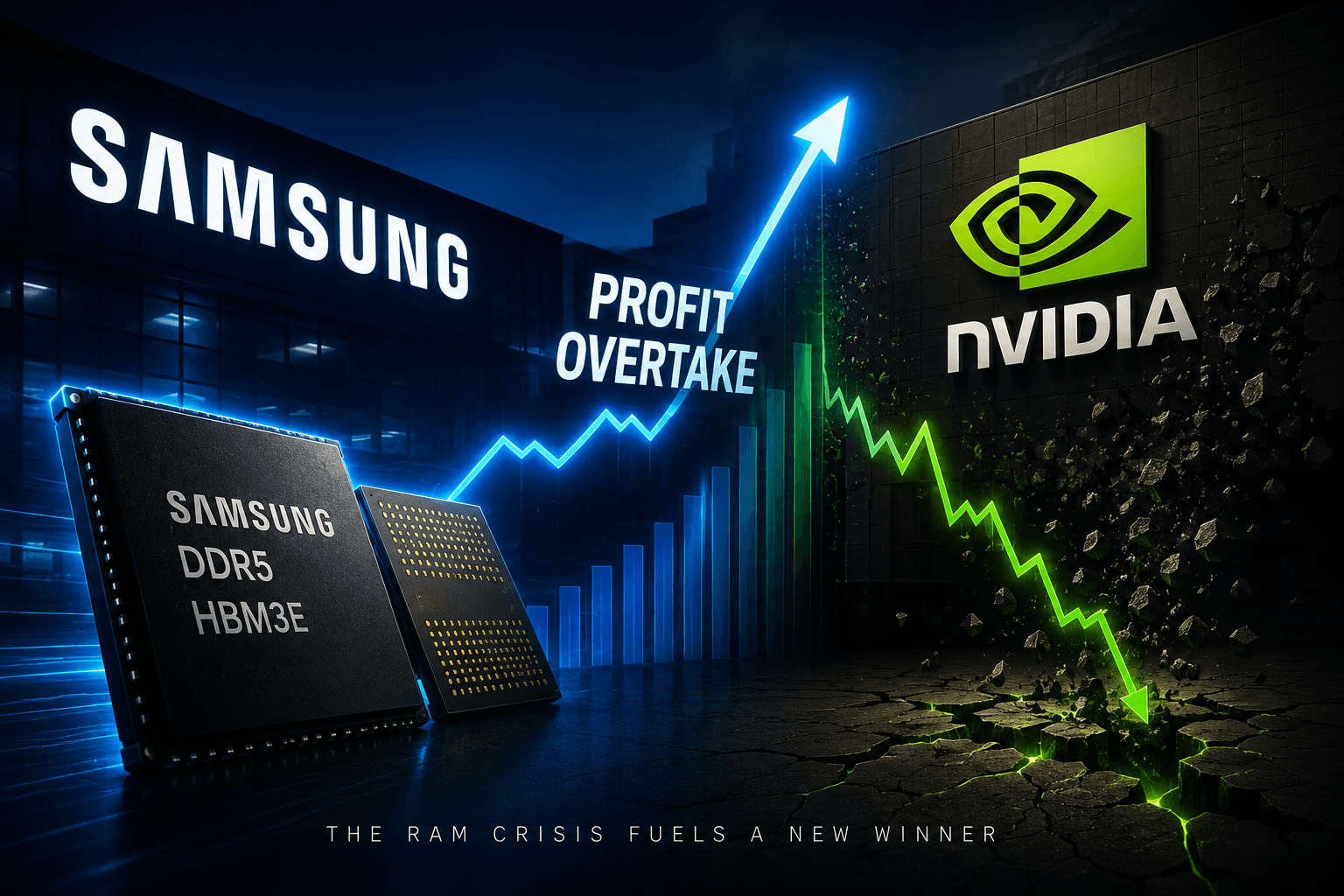
For two years, Nvidia has been the face of AI money. The company that sold the picks and shovels of the boom posted record after record, and for a while it looked like nothing in tech could touch its quarterly operating profit. That reign ended with Samsung Electronics' second-quarter results. On July 30, 2026, Samsung reported consolidated operating profit of 89.5 trillion won — about $62 billion — for the April–June quarter. That is more than Nvidia's previous record of $53.5 billion, more than Apple's recent peak, and more than SK Hynix and Alphabet posted in their latest quarters. For one quarter, Samsung is the most profitable technology company on earth.
The twist is almost as important as the headline. The same memory-price spike that made Samsung's chip division print money crushed the margins on its phones and TVs. The Device Experience (DX) division — the finished-product business most people still think of as 'Samsung' — posted its first quarterly operating loss on record. AI did not just crown a new profit king. It rearranged who pays whom inside the same company.
The numbers, straight from the filing
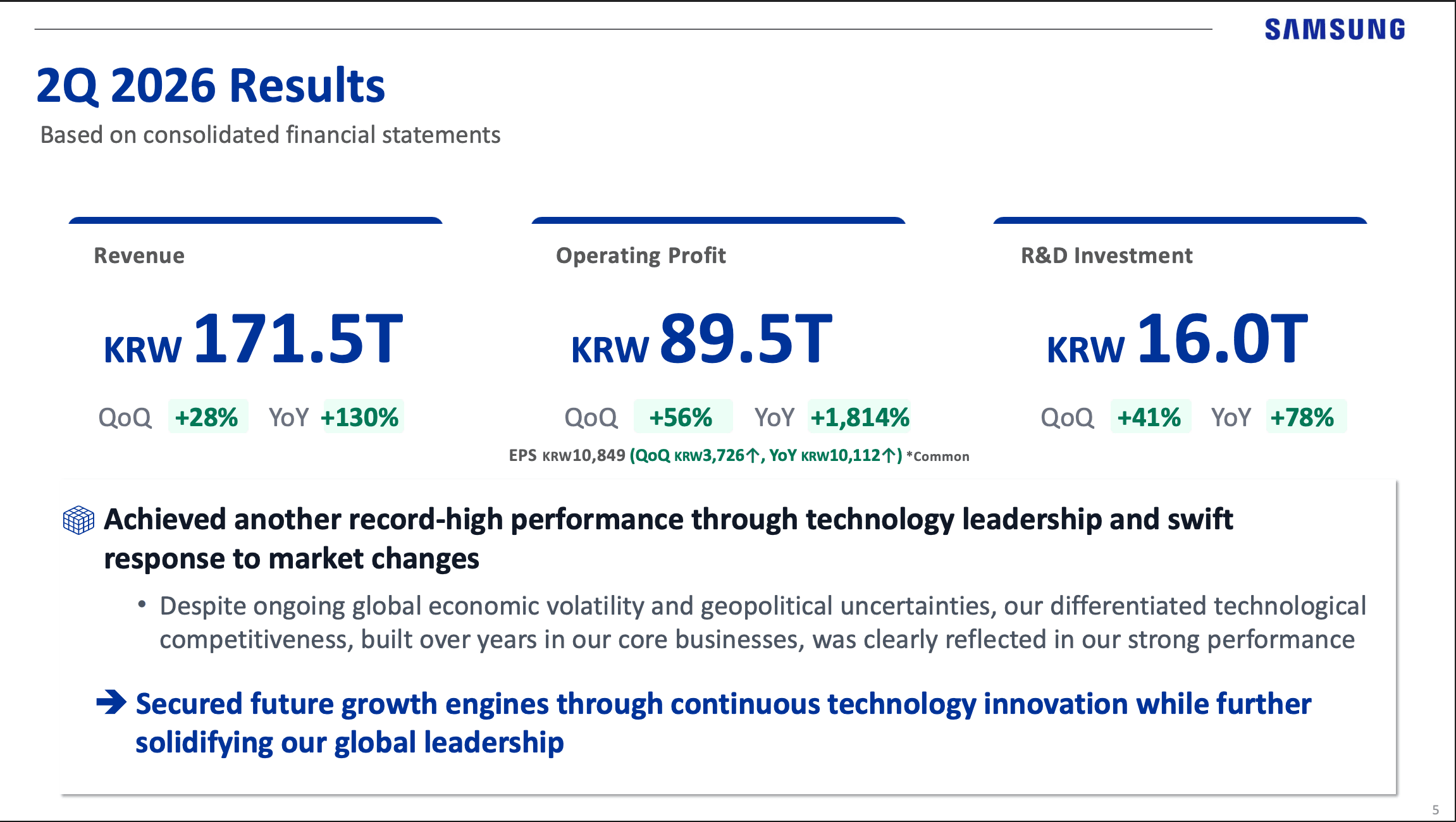
Samsung's investor materials for the quarter are unusually clean. Consolidated revenue hit 171.5 trillion won, up 130% year on year and 28% from the first quarter. Operating profit was 89.5 trillion won — up 1,814% from a year earlier and 56% from Q1's already-record 57.2 trillion. Operating margin landed at 52.2%. Net profit attributable to owners was 71.3 trillion won. Earnings per share on common stock reached 10,849 won. R&D spend hit a company record of 16.0 trillion won in a single quarter.
Almost all of that profit came from one place. The Device Solutions (DS) semiconductor division booked 127.5 trillion won in sales and 89.2 trillion won in operating profit — a 70% operating margin. Memory alone generated 120.8 trillion won of DS sales. In other words, the chip business essentially accounted for Samsung's entire group operating profit; everything else either broke even, made a little, or lost money.
Context helps. A year earlier, in Q2 2025, DS operating profit was just 0.4 trillion won. The jump to 89.2 trillion is a 223-fold increase. Samsung also earned more operating profit in this one quarter than it did in all of 2025 — and, by some tallies of earlier reporting, more than 2023, 2024, and 2025 combined. Cash on the balance sheet ended June at roughly 190 trillion won; net cash was about 168 trillion. Operating cash flow for the quarter alone was 105 trillion won.
How Samsung cleared Nvidia, Apple, and the rest
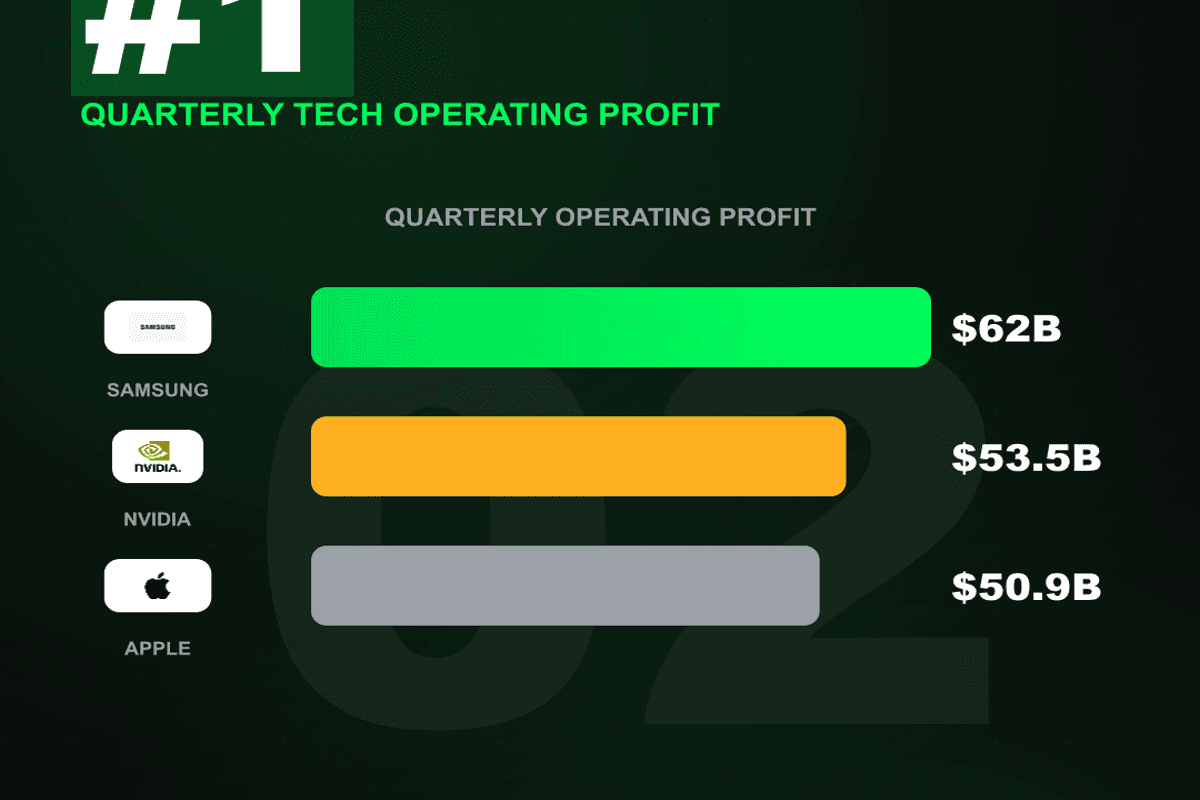
The comparison that matters for the headline is Nvidia. In its fiscal first quarter ended April 26, 2026, Nvidia posted a record $53.5 billion in operating income — the previous high-water mark for a tech company in the AI era. Samsung's 89.5 trillion won converts to roughly $62 billion at prevailing rates, clearing that bar by a wide margin. Korean reporting also stacks the result against Apple's recent peak near $50.85 billion, SK Hynix's own blockbuster second-quarter operating profit of about 60.5 trillion won (announced a day earlier), and Alphabet's roughly $40.8 billion in the same quarter.
Two caveats keep the claim honest. First, this is quarterly operating profit among major technology companies — not a claim that Samsung is the most profitable firm in every industry on earth, and not a market-cap crown (Nvidia and Apple still dominate that contest). Second, the Nvidia figure is from a slightly earlier reporting period (February–April), so it is a comparison of recent peaks, not identical calendars. Even with those hedges, the ranking is unambiguous: for this window, memory beat GPUs on the P&L.
Why: AI memory, not phones
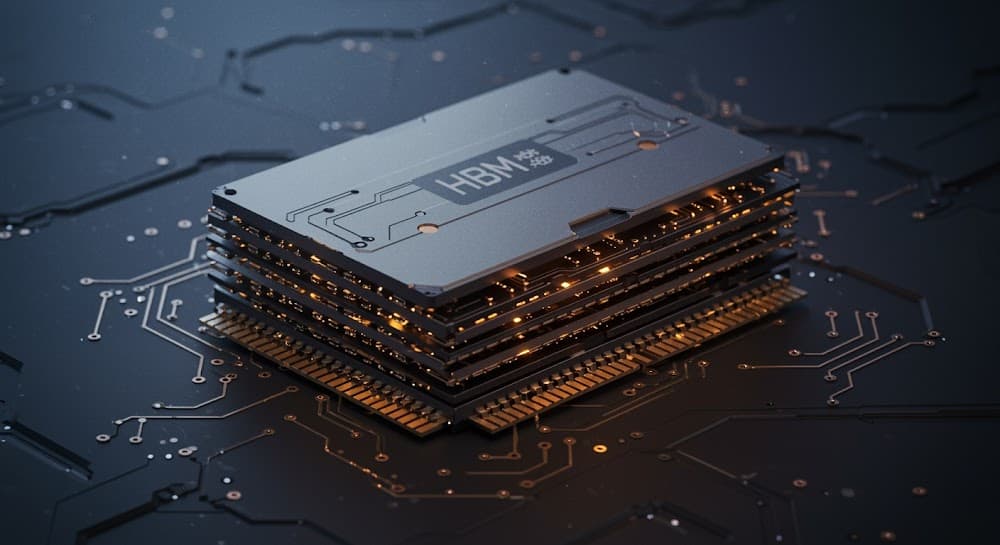
Samsung's own outlook language is blunt: robust server demand, agentic AI adoption, and an undersupplied market for server DRAM, enterprise SSD, and HBM even as mobile and PC demand cool. The company says it achieved all-time-high bit sales for both DRAM and NAND, pushed the server mix to a record, scaled HBM4 with what it calls industry-leading performance, and shipped the industry's first HBM4E samples to major customers. Supply constraints, it adds, will continue despite efforts to raise production.
The price tape explains the margin. According to DRAMeXchange figures cited in Korean business coverage, a common DDR4 8Gb spot reference that traded near $2.60 in Q2 2025 was around $21 by the end of Q2 2026 — roughly an eightfold move in a year, and up more than 60% from about $13 in the prior quarter alone. That is a spot SKU, not a perfect proxy for every contract or for HBM ASP, but it captures the direction: conventional memory that used to be a cyclical commodity became a scarce AI input.
HBM is the premium tip of that spear. Seoul Economic Daily reported that Samsung was first to mass-produce and ship sixth-generation HBM4 starting in February 2026, and that cumulative HBM4 revenue from those shipments through June reached about $1 billion (roughly 1.4 trillion won). A billion dollars is small next to 89 trillion won of group profit — but it is the thin, high-margin wedge that sits under Nvidia's GPUs and legitimizes Samsung's claim to have rejoined the AI memory race after trailing SK Hynix earlier in the HBM cycle.
The twist: phones and TVs lose money
Here is the part most headlines bury. Samsung's Device Experience division — Mobile eXperience, Visual Display, and Digital Appliances — recorded 48.0 trillion won in sales and an operating loss of 0.8 trillion won (800 billion won). Samsung's materials and subsequent reporting call this the first quarterly operating loss for the finished-product business since modern segment records began; Seoul Economic Daily notes the drought stretches back through the old IM and CE reporting structures to 2011.
The division breakdown makes the squeeze visible. MX/NW sales were still healthy at 33.2 trillion won, lifted by Galaxy S26 flagships and the A series, but MX alone swung to roughly a 0.7 trillion won operating loss as component costs — especially memory — ripped through the bill of materials. VD and home appliances roughly flatlined near break-even. Display (SDC) and Harman still made money (0.7 trillion and 0.4 trillion won of operating profit respectively), but not enough to offset the set-business hole. In plain language: Samsung the chipmaker subsidized Samsung the phone-and-TV company, inside one consolidated P&L.
That is not a quirk unique to Samsung. Every handset and PC brand is living through the same 'chipflation.' Google has already said on the record that memory costs are pushing Pixel prices up. Apple raised list prices across much of its non-iPhone hardware earlier in the cycle. The difference is that Samsung sits on both sides of the invoice — it collects the inflated memory ASP in DS and pays it again in DX. When memory is this scarce, the factory wins and the showroom bleeds.
What this means for the AI stack
The popular mental model of the AI boom still puts Nvidia at the center and everyone else as a customer. Samsung's quarter forces a rewrite. The money is migrating toward the capacity that is scarcest. GPUs remain essential, but they are useless without HBM and server DRAM glued beside them — and those memory wafers are now some of the highest-margin silicon on earth. Micron, SK Hynix, and Samsung have all posted memory margins that would have looked fictional in 2023. SK Hynix's own Q2 print, a day before Samsung's, was itself a statement: Korea's memory industry is having a historic year.
Samsung's second-half messaging doubles down rather than soft-pedals. Memory will keep prioritizing high-value products — HBM4 and HBM4E, DDR5, SOCAMM2, enterprise SSD — against continued undersupply. Foundry wants a 2nm Gen-2 mobile ramp and more AI/HPC design wins. MX plans to defend profitability by leaning harder into Ultra and foldable mix, including the new Z8 series, while acknowledging that cost pressure is not going away. None of that sounds like a company that expects DRAM to crash back to $2.60.
There is also a currency footnote that investors will not ignore. Samsung said the strong dollar contributed roughly 3.1 trillion won of sequential operating-profit benefit, mainly in the parts businesses. That does not invent the record, but it sweetens it — and it reminds everyone that Korean chip earnings are also an FX story when the won moves.
The bottom line
Samsung did not dethrone Nvidia because it built a better AI model or a hotter consumer gadget. It dethroned Nvidia — on this particular scoreboard, for this particular quarter — because the AI buildout ran into a wall of scarce memory, and Samsung still owns one of the three factories that can relieve it. The $62 billion operating-profit print is real. The 70% DS margin is real. The first-ever DX loss is real. Together they tell a sharper story than 'Samsung had a good quarter': in 2026, the company that supplies the chips under the chips can out-earn the king of AI — and still lose money selling you a phone.
Frequently asked questions
Did Samsung really beat Nvidia to become the most profitable tech company?
On quarterly operating profit, yes — among major tech firms. Samsung's Q2 2026 operating profit was ₩89.5 trillion (~$62B), above Nvidia's prior record of $53.5B (Feb–Apr quarter), Apple's recent ~$50.9B peak, SK Hynix's ~₩60.5T, and Alphabet's ~$40.8B. This is not a market-cap crown, and the Nvidia comparison is of recent peaks rather than identical calendars.
How much profit did Samsung make in Q2 2026?
Consolidated revenue was ₩171.5 trillion and operating profit was ₩89.5 trillion (52.2% margin). The DS semiconductor division alone made ₩89.2 trillion in operating profit on ₩127.5 trillion in sales. Net profit attributable to owners was ₩71.3 trillion.
Why did Samsung's profits surge?
AI-driven demand for memory — especially server DRAM, enterprise SSD, and HBM — pushed prices and margins to extremes. Samsung reported record bit sales for DRAM and NAND, scaled HBM4 shipments after being first to mass-produce that generation, and said supply remains constrained despite efforts to raise production. A DDR4 8Gb spot reference cited in Korean coverage rose from about $2.60 a year earlier to around $21.
Did Samsung's phone business lose money?
Yes. The Device Experience (DX) division — phones, TVs, and appliances — posted an operating loss of ₩800 billion on ₩48 trillion in sales, its first quarterly operating loss in the modern reporting era. Mobile (MX) accounted for most of that hole (~₩700 billion) as memory and other component costs spiked, even while Galaxy S26 and A-series sales stayed solid.
What is HBM4 and why does it matter?
HBM4 is the latest generation of high-bandwidth memory stacked beside AI accelerators like Nvidia GPUs. Samsung says it scaled HBM4 sales with industry-leading performance and shipped the industry's first HBM4E samples. Korean reporting put cumulative HBM4 revenue since February mass shipments at about $1 billion through June — a small slice of total profit, but proof Samsung is back in the premium AI-memory race.
Will memory prices stay high?
Samsung's own outlook says server DRAM, enterprise SSD, and HBM demand should keep the market undersupplied in the second half of 2026 despite some softening in mobile and PC. The company is prioritizing high-value products (HBM4/HBM4E, DDR5, SOCAMM2, eSSD) rather than flooding conventional supply. That points to continued pressure on device makers — and continued windfall margins for memory producers.